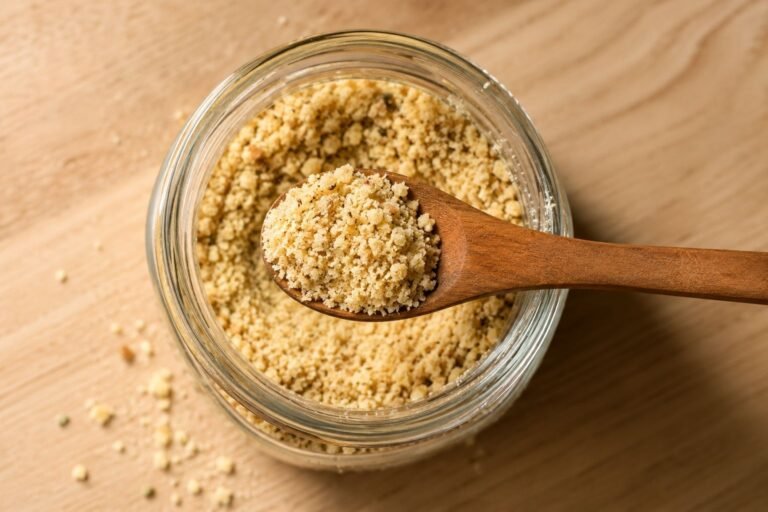
Vegan Alfredo Pasta (Classic Cashew-Based Recipe)
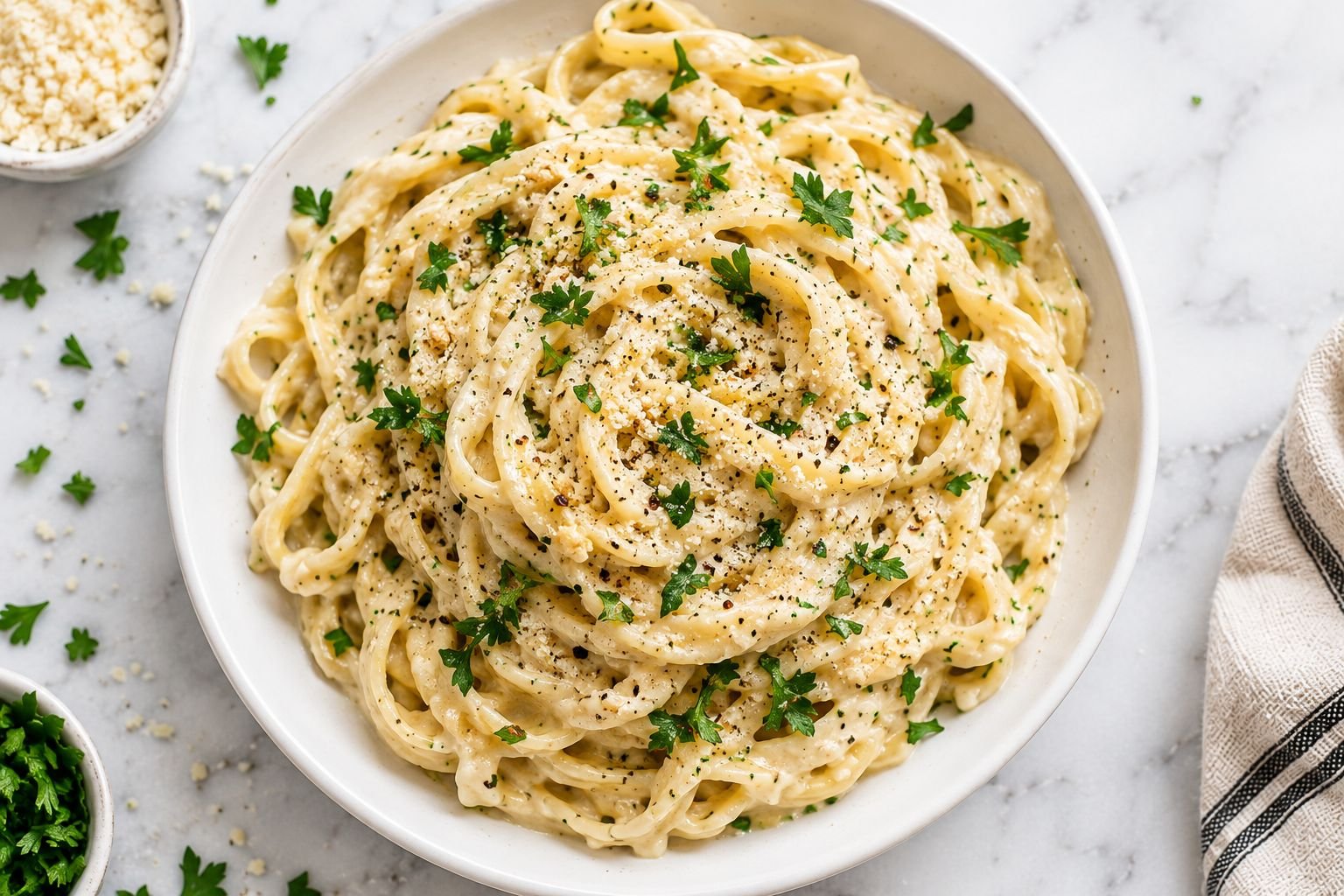
There’s a very specific kind of comfort that only a bowl of creamy Alfredo can deliver, and for years I assumed I’d left it behind when I stopped eating dairy. I tried the powdery boxed mixes, the ones that lean too hard on garlic powder and taste vaguely of nothing, and I tried thinning down store-bought vegan cream cheese until it resembled a sauce. Neither one was it.
Then one weeknight, out of pure stubbornness and a bag of cashews I’d bought for a completely different recipe, I blended together the sauce that’s basically stayed the same in my kitchen ever since.
It went glossy in the pan exactly the way real Alfredo does, clung to every strand of fettuccine, and disappeared off everyone’s plates in about four minutes flat. Nobody at the table asked if it was vegan. They just asked for more.
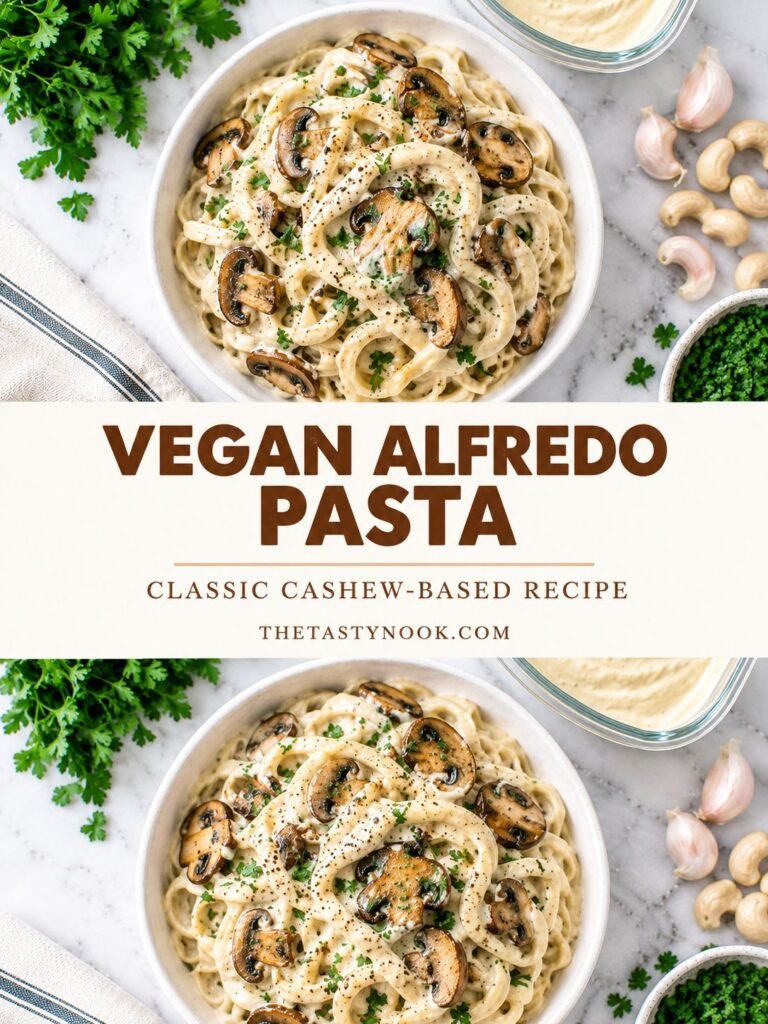
This is that sauce, refined down over probably a dozen versions to the one I actually make on repeat: rich, garlicky, deeply savory, and blended completely smooth so there’s no telltale graininess. If you’ve made my Vegan Cashew Parmesan Cheese, this uses that same cashew-forward approach to build real richness without a drop of dairy.
A quick note if you’re comparing recipes: I also have an Oat Milk Alfredo Sauce on the blog that skips cashews entirely in favor of a roux, and it’s ready in less time with no blender needed. That one is the better pick if you’re nut-free or short on time. This cashew version is the one to reach for when you want maximum richness and that classic, ultra-silky Alfredo texture.
Why You’ll Love This
Genuinely creamy, no dairy required. The cashew base blends into something rich and velvety, not thin or “healthified.”
Deep, restaurant-style flavor. Roasted garlic and a good hit of nutritional yeast give this real depth instead of a flat, one-note sauce.
Freezer-friendly. Unlike a lot of dairy-free sauces, this one holds up well after freezing, which most roux-based versions can’t say.
Easy to bulk up. Toss in mushrooms, spinach, or Tofu That Tastes Like Chicken and it turns into a complete meal.
What Makes This Cashew-Based Sauce Different
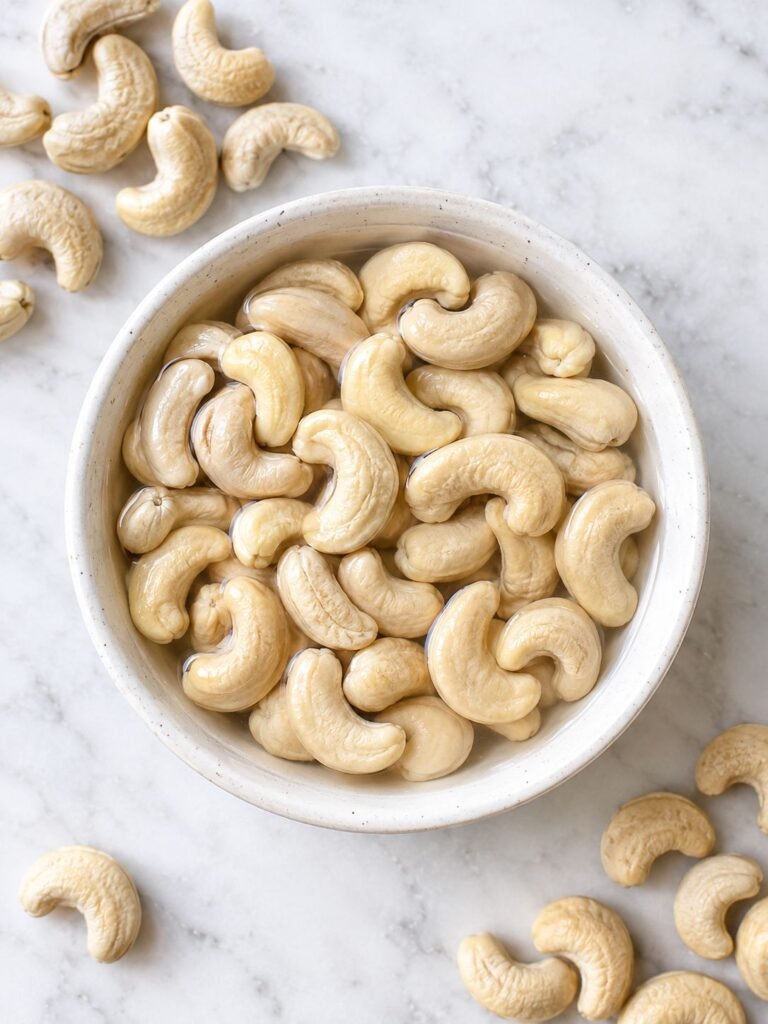
Cashews are naturally high in fat and blend down into something remarkably close to heavy cream once they’re softened and pureed.
That’s the whole trick behind this style of vegan Alfredo: you’re not thickening a thin liquid the way a roux does, you’re building the sauce’s entire body directly out of the cashews themselves.
That difference matters for texture. A roux-based sauce (like my oat milk version) gets its cling from cooked flour, which is fast and doesn’t require a blender, but it can never get quite as dense and luxurious as a properly blended cashew sauce.
This version takes a few extra minutes for soaking and blending, but the payoff is a sauce with real weight to it, the kind that coats a fork and holds a shape rather than pooling thin on the plate.
Nutritional yeast and roasted garlic do the rest of the flavor work, standing in for parmesan and giving the sauce a savory backbone instead of tasting like flavored cream.
Equipment You’ll Need
A high-speed blender. This is the one non-negotiable tool here. A standard blender works, but plan to soak the cashews the full time and blend a bit longer to get things fully smooth.
A large skillet. Wide enough to toss the finished pasta directly in the sauce.
A large pot for the pasta. Standard, but worth having ready before you start blending so everything finishes around the same time.
Recipe Ingredients
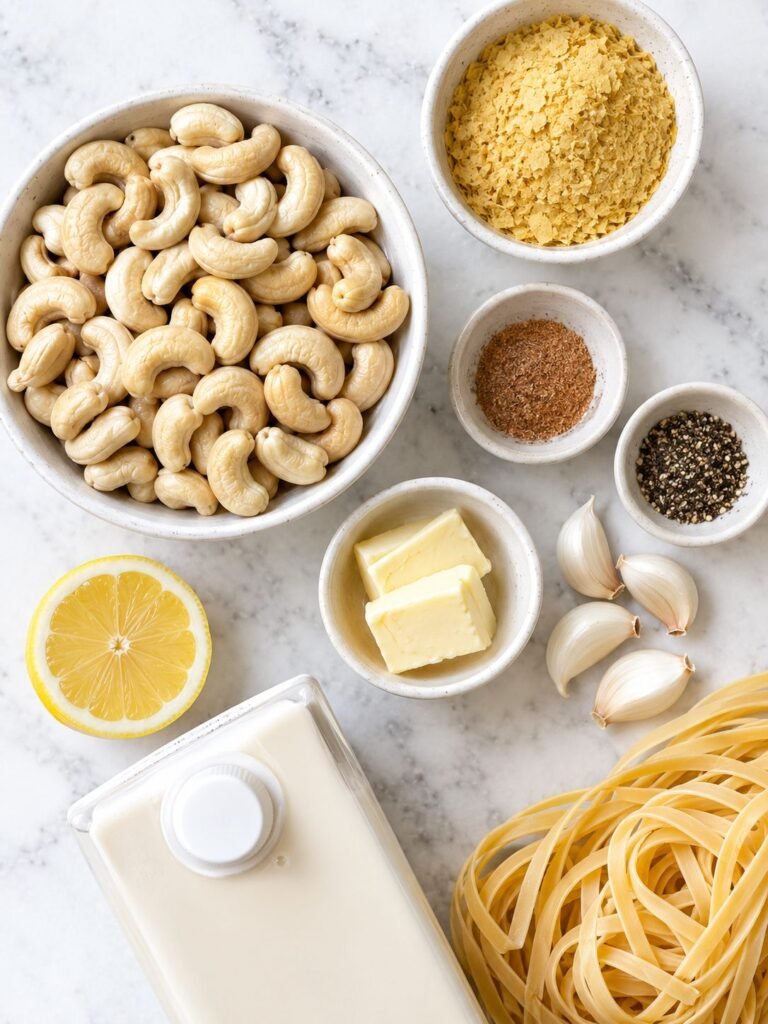
For the sauce:
- 1 cup raw cashews
- 4 cloves garlic (roasted, if you have the time)
- 1½ cups unsweetened plant milk (oat or soy)
- ¼ cup nutritional yeast
- 1 tablespoon lemon juice
- 2 tablespoons vegan butter
- ½ teaspoon salt, plus more to taste
- ¼ teaspoon black pepper
- ⅛ teaspoon nutmeg
For serving:
- 12 oz fettuccine or pasta of choice
- Chopped fresh parsley
- Extra black pepper
- Vegan parmesan, optional
If You Need to Substitute
Nut-free? Skip this recipe in favor of my Oat Milk Alfredo Sauce, which uses the same flavor profile but is built on a roux instead of cashews.
No high-speed blender? Soak the cashews the full 15 minutes (longer won’t hurt) and blend for a bit longer than you think you need, stopping to scrape down the sides so nothing gets left ungrained.
Avoiding coconut? Stick with oat or soy milk here. Coconut milk works texturally but its flavor fights with the garlic and nutmeg.
No fresh garlic? ½ teaspoon garlic powder works in a pinch, though the flavor is noticeably milder.
How to Make It
Step 1: Soak the Cashews
Cover the cashews in boiling water and let them sit for 15 minutes while you prep everything else. This softens them enough to blend completely smooth, even in a regular blender. If you have a high-speed blender, you can skip this step entirely.
Step 2: Cook the Pasta
Bring a large pot of well-salted water to a boil and cook your pasta until just shy of al dente. It’ll finish cooking in the sauce, so slightly underdone is exactly what you want. Reserve about a cup of the starchy pasta water before draining, this is what helps the sauce cling to the noodles later.
Step 3: Blend the Sauce Base
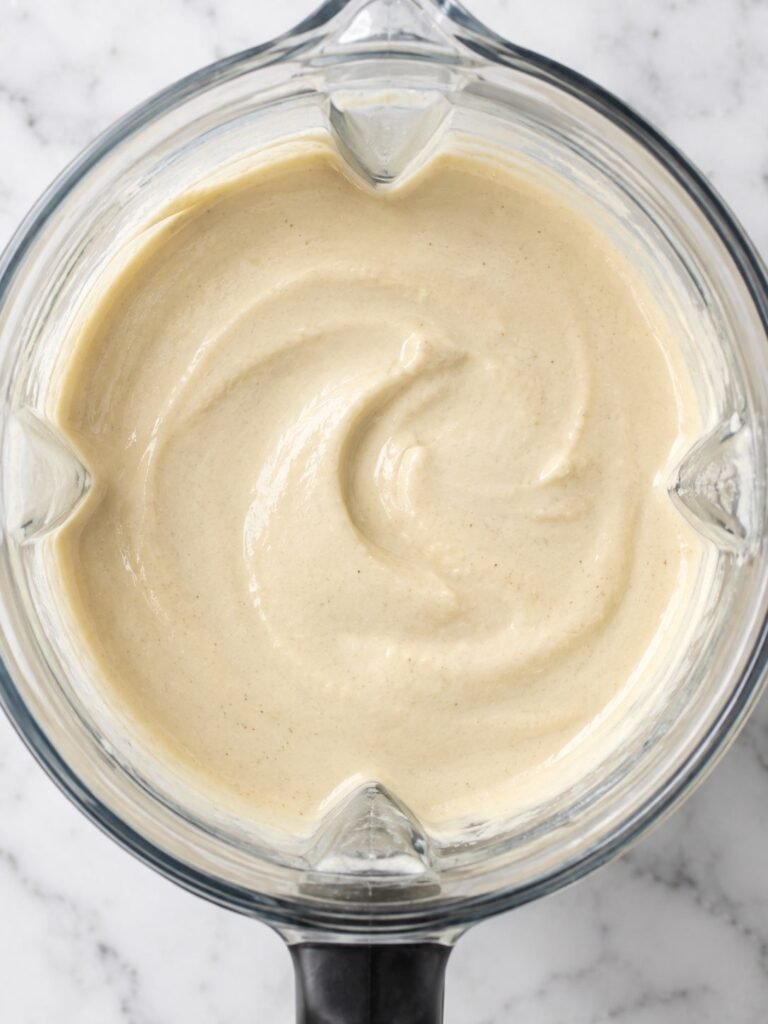
Drain the cashews and add them to a blender with the garlic, plant milk, nutritional yeast, lemon juice, salt, pepper, and nutmeg. Blend on high for a full 1 to 2 minutes, stopping once to scrape down the sides, until completely smooth.
It should look like heavy cream with zero graininess left, this is the step that makes or breaks the texture, so don’t rush it.
Step 4: Warm and Thicken the Sauce
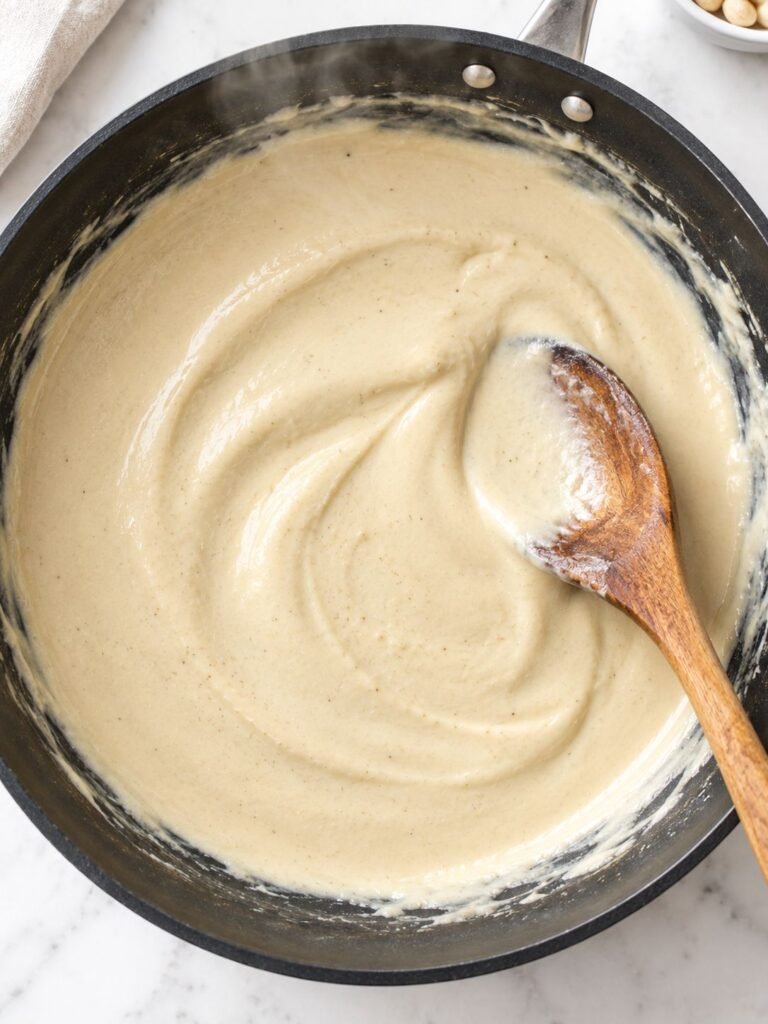
Melt the vegan butter in a large skillet over medium heat. Pour in the blended sauce and let it come to a gentle simmer, stirring often. It will thicken noticeably over 3 to 4 minutes.
If it gets too thick before the pasta is ready, splash in a little of the reserved pasta water to loosen it.
Step 5: Toss and Finish
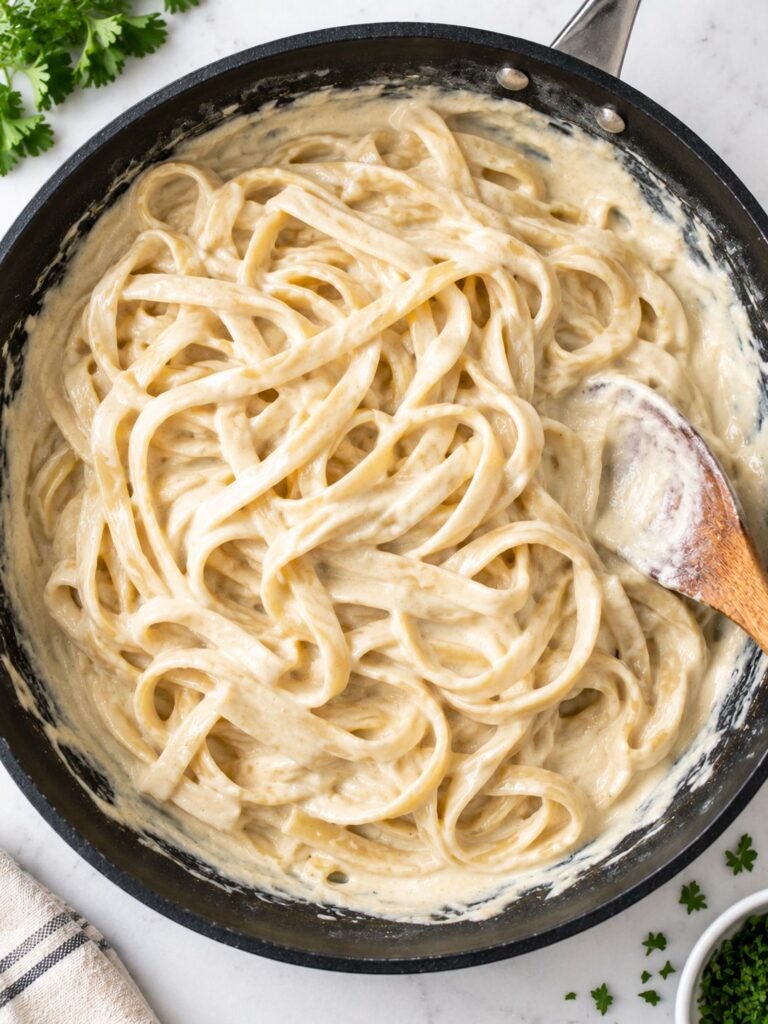
Add the drained pasta directly into the skillet with the sauce. Toss until every noodle is coated, adding more pasta water a splash at a time if the sauce feels too thick. Taste and adjust salt and pepper before serving.
A Note About the Cashews
Raw, unsalted cashews are what you want here, roasted or salted cashews will throw off both the flavor balance and the texture. Buy them raw and let the roasting happen naturally in the roasted garlic instead, if you’re using that option.
Freshness matters more than people expect with cashews. Older cashews can blend slightly bitter, so if your sauce tastes a little off even after adjusting salt, it may be worth starting with a fresh bag.
If you’re soaking instead of using a high-speed blender, boiling water works much faster than a cold overnight soak, and honestly gets you just as smooth a result for this particular recipe.
Why This Method Works
Cashews are unusually high in fat for a nut, which is exactly why they’ve become the backbone of so much dairy-free cooking. Once softened and blended with enough liquid, they emulsify into something with a mouthfeel very close to cream, without any of the separating or thin, watery texture you get from trying to thicken a liquid with starch alone.
That’s the core difference between this recipe and a roux-based Alfredo: here, the body of the sauce comes from the fat content of the cashews themselves, not from cooked flour thickening a thinner liquid. It takes a few extra minutes upfront for soaking and blending, but it’s why this style of sauce holds its richness so well, even after being refrigerated or frozen and reheated.
How to Tell When It’s Perfectly Done
The sauce is ready once it coats the back of a spoon in an even layer. Run your finger through it, if the line holds its shape instead of immediately filling back in, you’re there.
Visually, you’re looking for a smooth, glossy sheen with zero graininess. If it looks slightly grainy even after a full simmer, the cashews likely weren’t blended long enough, there’s no fixing that on the stovetop, so note it for next time and blend a little longer.
Taste is the last check. It should taste rounded and savory, with the garlic clearly present and the nutmeg working quietly in the background rather than standing out on its own.
Tips for the Best Vegan Alfredo
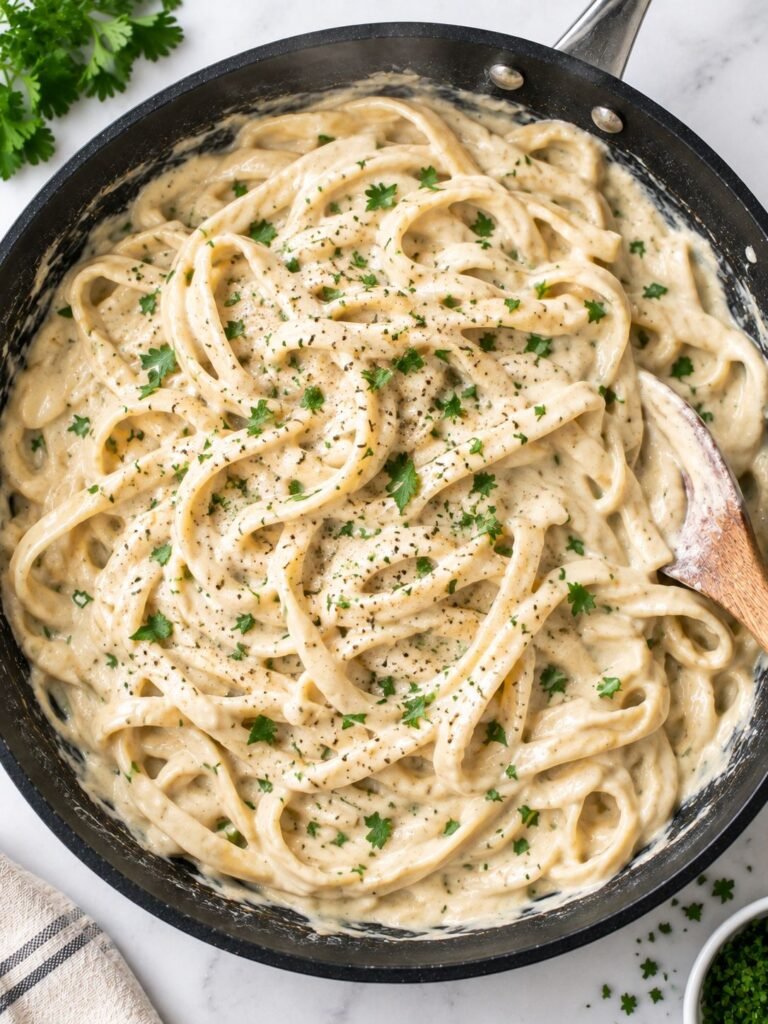
Don’t Rush the Blending Step
This is the single biggest factor separating a silky sauce from a grainy one. Blend longer than feels necessary, and scrape down the sides at least once.
Add the Sauce to the Pasta, Not the Other Way Around
Tossing the pasta into a wide skillet of sauce coats every strand evenly. Dumping sauce over a mounded plate of pasta almost always leaves some noodles bare.
Serve It Slightly Looser Than You Think
The sauce thickens a lot as it cools, so if it looks perfect in the pan, it’ll be a little tighter by the time it hits the table. A splash of extra pasta water at the very end accounts for that.
My Sauce Turned Out Grainy, What Happened?
The cashews weren’t blended long enough. This is the most common cause by far. A full 1 to 2 minutes on high, with a scrape-down in the middle, is what it actually takes.
The cashews weren’t soaked long enough (in a standard blender). If you’re skipping a high-speed blender, don’t skip or shorten the soak. It’s doing real work.
Old or stale cashews. Cashews that have been sitting in the pantry too long can blend with a slightly grainy, bitter edge no amount of extra blending fixes.
Prep-Ahead Checklist
If you want this to come together faster on a weeknight, here’s what you can do in advance:
- Soak the cashews and store them, drained, in the fridge up to 2 days ahead.
- Roast the garlic (if using) up to 3 days ahead and keep it refrigerated.
- Measure the nutritional yeast, salt, pepper, and nutmeg into a small container the night before.
Can I Make This Ahead of Time?
Yes. The blended, cooked sauce keeps well in the fridge for up to 4 days in an airtight container. Reheat it gently on the stovetop with a splash of plant milk or reserved pasta water to loosen it back up, since it thickens noticeably once cold. I’d recommend keeping the sauce and pasta separate until you’re ready to eat, tossing them together fresh gives you the best texture.
How to Store and Freeze
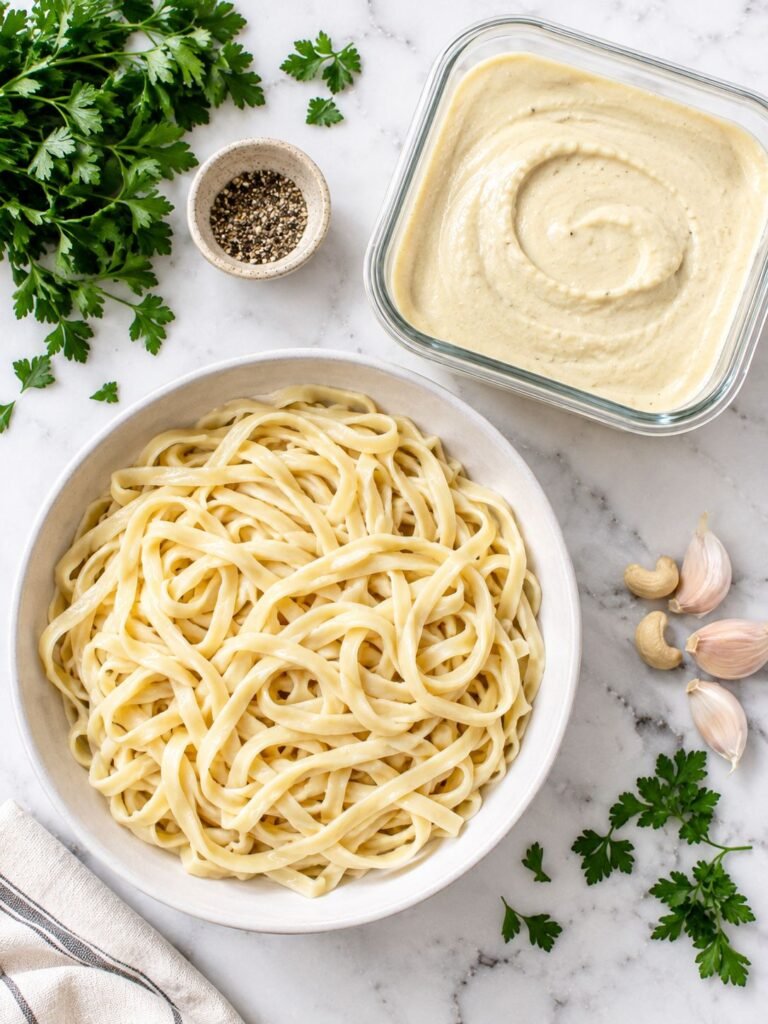
Storing: Keep the sauce in an airtight container in the fridge for up to 4 days. Already-tossed pasta and sauce will keep for about 2 days, though the noodles soften further.
Freezing: Unlike a roux-based sauce, this cashew version freezes reasonably well thanks to the natural fat content. Freeze for up to 2 months, thaw overnight in the fridge, and reheat gently on the stovetop, whisking well as it warms to bring it back together.
What to Pair With This
A simple green salad. Something light and acidic cuts through the richness of the sauce nicely.
Garlic bread. A classic, hard-to-mess-up pairing alongside any creamy pasta.
Roasted broccoli or asparagus. Adds color and a bit of textural contrast to the plate.
Making This for Kids or a Crowd
For kids, this sauce is naturally mild and cheesy-tasting without any real heat, which makes it an easy sell even for picky eaters. Just go light on the black pepper if you’re serving little ones.
For a crowd, the recipe doubles easily, just make sure your blender can handle the increased volume of cashews and liquid in batches if needed, rather than overfilling it in one go.
Serving Suggestions and Variations
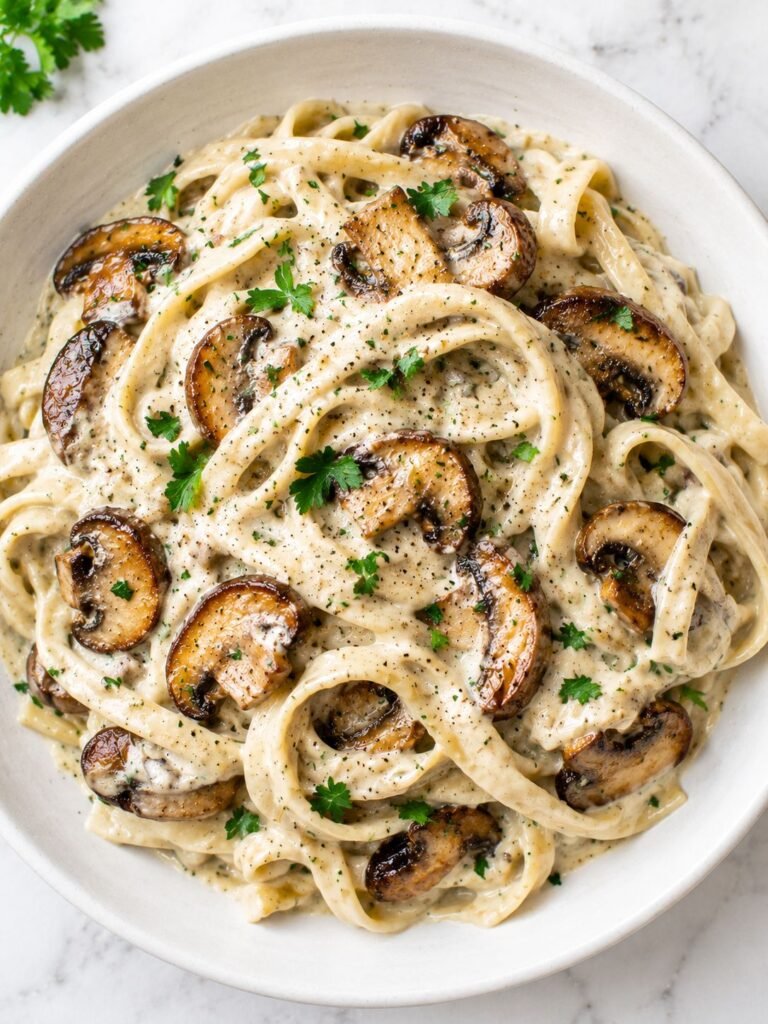
- Stir in sautéed mushrooms or wilted spinach right at the end for extra volume.
- Add crumbled Tofu Bacon on top for a smoky, salty contrast to the rich sauce.
- Turn it into a heartier main by tossing in cubed Tofu That Tastes Like Chicken.
- For a spicier take, finish with a drizzle of my Vegan Cajun Sauce instead of plain chili flakes.
More Recipes You’ll Love
- Oat Milk Alfredo Pasta Sauce (No Cashews)
- Vegan Cashew Parmesan Cheese
- The Best Vegan Nacho Cheese Sauce (Dairy-Free Queso)
- Easy Vegan Philly Cheesesteak
- Bang Bang Tofu
Frequently Asked Questions
Can I make this soy-free? Yes, just use oat milk instead of soy milk. The rest of the ingredients are naturally soy-free.
Is this recipe gluten-free? The sauce itself is naturally gluten-free. Use your favorite gluten-free pasta to keep the whole dish that way.
Can I make the sauce ahead of time? Yes, it stores well in the fridge for up to 4 days and freezes for up to 2 months. Reheat gently with a splash of plant milk before tossing with fresh pasta.
Why is my sauce too thin? Give it another minute or two on the heat. It thickens quickly once it starts to simmer, so a slightly thin sauce usually just needs more time, not more cashews.
Cashew or oat milk version, which should I make? If you want maximum richness and don’t mind a blender, make this one. If you’re nut-free, in a hurry, or don’t own a blender, my Oat Milk Alfredo is the better fit.
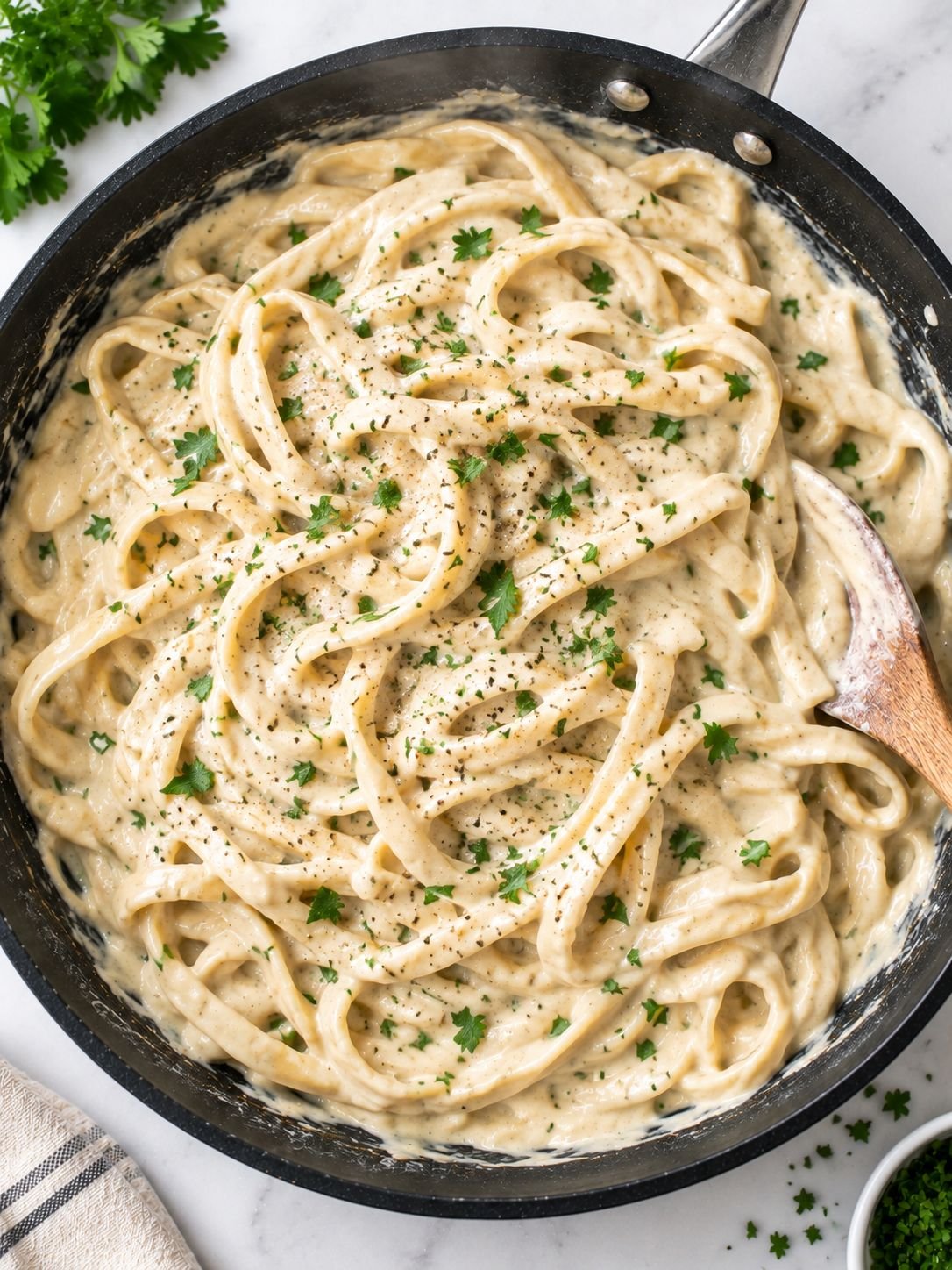
Vegan Alfredo Pasta
Ingredients
Method
- Soak the cashews: Place the cashews in a bowl and cover with boiling water. Let soak for 15 minutes, then drain well.
- Cook the pasta: Bring a large pot of salted water to a boil. Cook the pasta until just shy of al dente according to the package directions. Reserve 1 cup of pasta water, then drain.
- Blend the sauce: Add the soaked cashews, garlic, plant milk, nutritional yeast, lemon juice, salt, black pepper, and nutmeg to a blender. Blend on high for 1 to 2 minutes, scraping down the sides once, until completely smooth and creamy.
- Warm the sauce: Melt the vegan butter in a large skillet over medium heat. Pour in the blended cashew sauce and bring it to a gentle simmer.
- Thicken: Cook the sauce for 3 to 4 minutes, stirring frequently, until it thickens enough to coat the back of a spoon. If it becomes too thick, add a splash of reserved pasta water.
- Add the pasta: Add the drained pasta directly to the skillet. Toss well until every strand is coated in the Alfredo sauce.
- Adjust the consistency: Add reserved pasta water a little at a time until the sauce reaches a smooth, silky consistency that clings to the pasta.
- Serve: Taste and adjust the salt and pepper. Serve immediately with fresh parsley, extra black pepper, and vegan Parmesan if desired.
Notes
- Use raw, unsalted cashews for the smoothest texture and best flavor.
- For the creamiest sauce, blend the cashews until there is absolutely no graininess remaining.
- A high-speed blender gives the smoothest results, but a regular blender will work if the cashews are soaked properly.
- Cook the pasta slightly under al dente because it will continue cooking when tossed with the hot sauce.
- The sauce thickens as it cools, so keep a little reserved pasta water nearby when serving.
- For a nut-free version, use the oat milk Alfredo recipe instead.
- The sauce can be refrigerated for up to 4 days in an airtight container.
- To freeze, cool completely and freeze for up to 2 months. Thaw overnight in the refrigerator and reheat gently with a splash of plant milk or pasta water.
- Use gluten-free pasta if you need the entire recipe to be gluten-free.