Spinach Tofu Pasta Sauce (Vegan, Nut-Free, Gluten-Free)
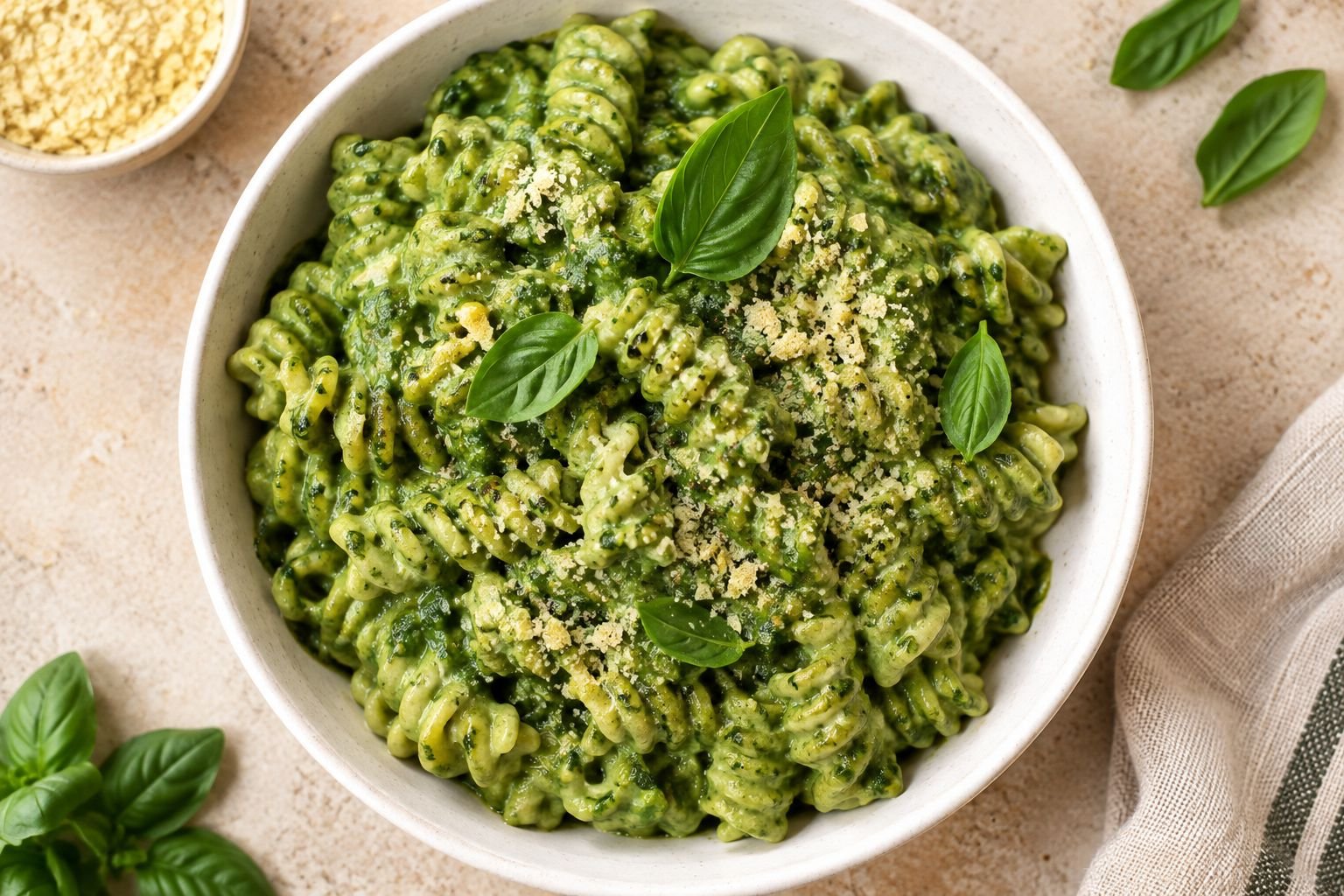
This is the sauce I make when I want something that tastes like a creamy, herby pesto but actually has some real substance behind it. Silken tofu blended with fresh spinach, garlic, and a bit of nutritional yeast turns into a thick, vibrant green sauce that clings to every twist of pasta, no cashews, no cream, and no dairy anywhere in sight.
It comes together almost entirely in a blender while your pasta water comes to a boil, which means dinner is realistically ready in about 20 minutes.
The tofu adds a genuinely creamy texture and a boost of protein that most vegan pasta sauces are missing, while the spinach keeps things bright and fresh instead of heavy.
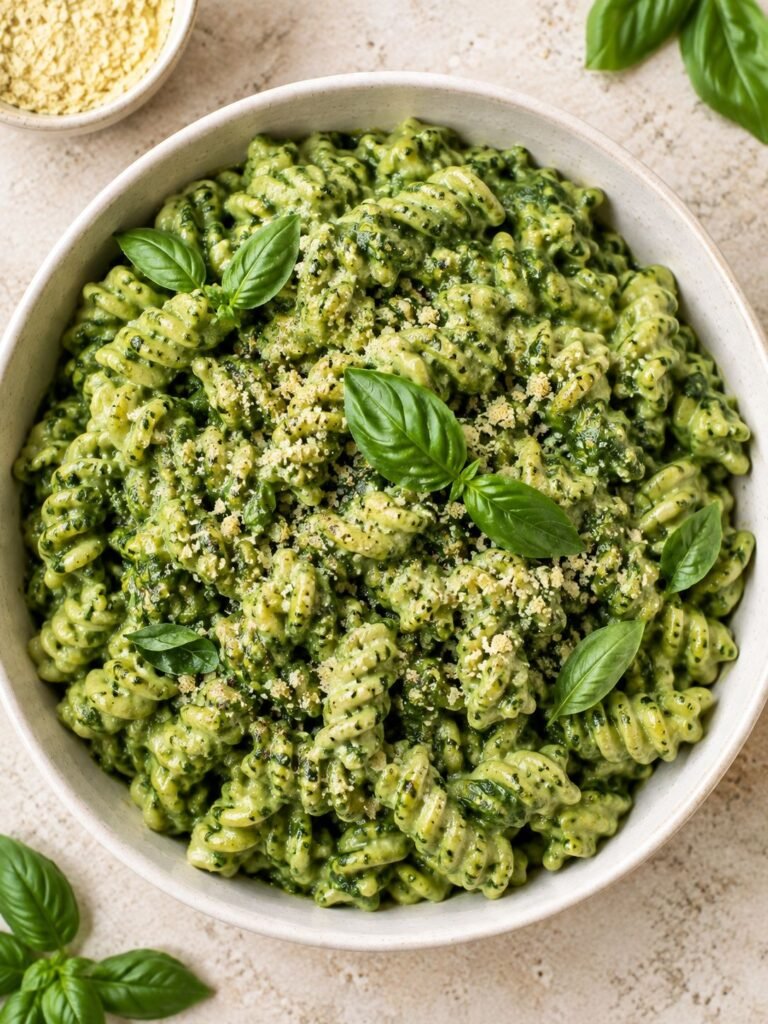
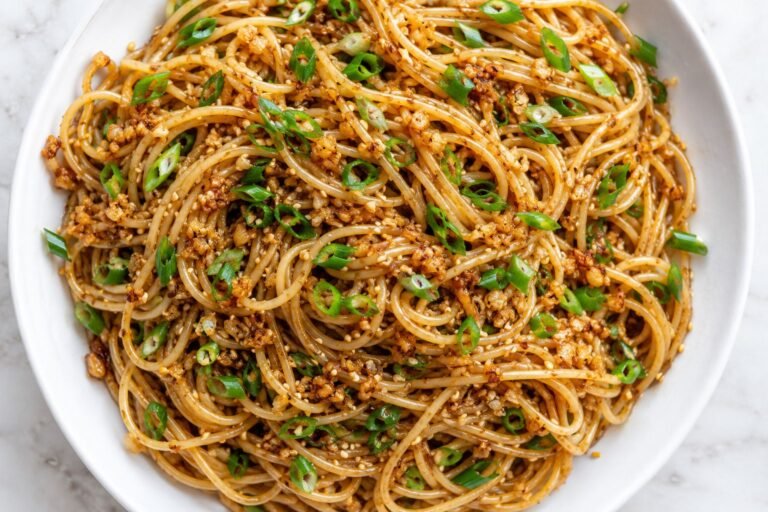
If you’ve made my vegan garlic noodles, this is a good example of how tofu keeps showing up in unexpected places on this blog, here, it disappears completely into the sauce, so even picky eaters usually have no idea it’s the base of what they’re eating.
I’ve served this to plenty of people who normally wrinkle their nose at tofu, and not one of them has ever guessed it was the whole reason the sauce tasted so rich.
Why You’ll Love This Spinach Tofu Pasta Sauce
It’s genuinely creamy without any dairy or nuts. Blended silken tofu gives you a smooth, rich texture that holds up just as well as a cream-based sauce.
It’s ready in about 20 minutes. Most of the work happens in a blender, and the rest is just boiling pasta and tossing everything together.
It’s a sneaky way to eat more greens. A full package of spinach blends down into a sauce that doesn’t taste “green” in a bad way, just fresh and herby.
It’s nut-free and gluten-free adaptable. Unlike a lot of creamy vegan sauces that lean on cashews, this one skips nuts entirely, and a gluten-free pasta swap makes the whole dish gluten-free too.
Choosing Your Tofu
The type of tofu you use here matters more than almost any other ingredient, since it’s doing all the work of creating that creamy texture.
Silken tofu (required for this recipe). This is soft, custardy, and blends completely smooth, which is exactly what you need for a sauce with no lumps or graininess. Look for it in a shelf-stable box near the Asian foods section, or refrigerated near other tofu, depending on your store.
Firm or extra-firm tofu. Skip these for this particular recipe. They’re far too dense to blend into a smooth sauce and will leave you with a grainy, chunky texture no matter how long you blend.
Soft tofu (not silken). This can work in a pinch, but it won’t blend quite as smoothly as true silken tofu, so expect a slightly less velvety final sauce.
Choosing Your Pasta
Rotini or fusilli (recommended). The twists and ridges hold onto this thick sauce especially well, so every bite gets properly coated.
Penne or rigatoni. Also work well, since the tube shape catches sauce both inside and out.
Long noodles, like spaghetti. These work too, just toss extra thoroughly, since a thick sauce can sometimes cling less evenly to long strands compared to a shape with more surface area.
Gluten-free pasta. Any gluten-free rotini or penne works well here. Just watch your cook time closely, since gluten-free pasta can go from al dente to mushy faster than wheat pasta.
Ingredients
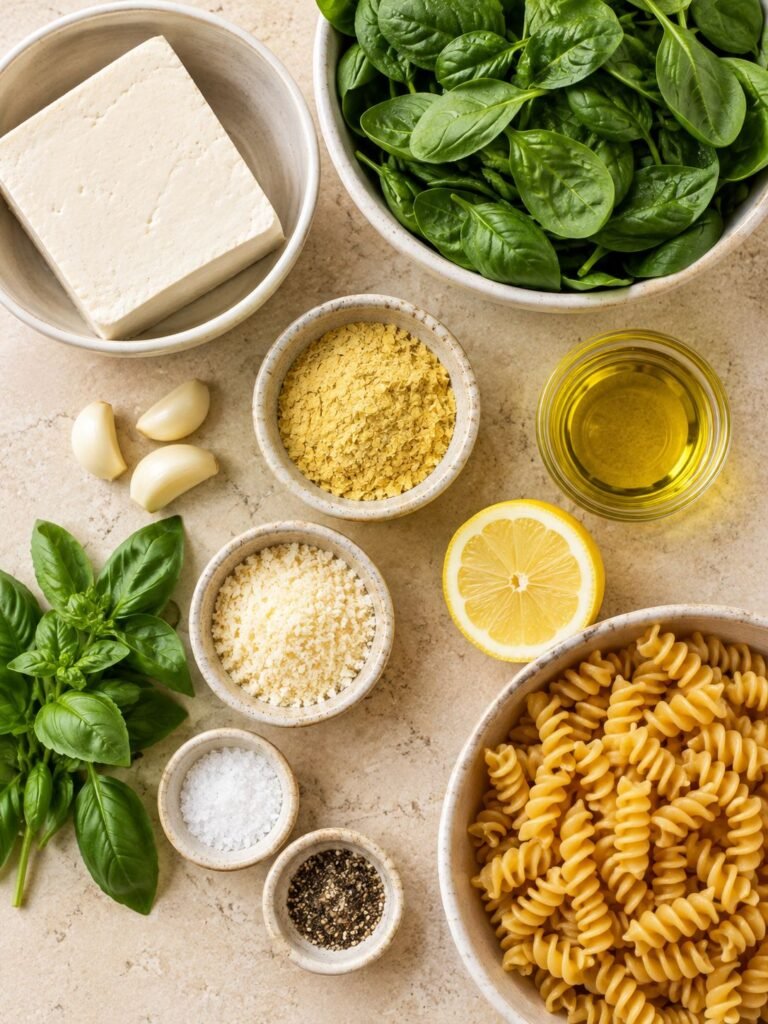
For the Sauce
- 12 ounces silken tofu
- 5 ounces fresh spinach
- 3 garlic cloves
- 3 tablespoons nutritional yeast
- 2 tablespoons olive oil
- 1 tablespoon fresh lemon juice
- 1/2 teaspoon salt, plus more to taste
- 1/4 teaspoon black pepper
- 2 to 4 tablespoons pasta water, reserved, to thin as needed
For the Pasta
- 12 ounces rotini or pasta of choice
- Salt, for the pasta water
For Topping
- Fresh basil leaves
- Vegan parmesan, or a sprinkle of extra nutritional yeast
A Note About Draining the Tofu
Unlike firm tofu, silken tofu does not need pressing, and trying to press it will just cause it to fall apart in your hands.
That said, it’s worth draining off any excess liquid sitting in the box or package before adding it to the blender. A quick tip over the sink for a few seconds is usually enough, you’re not trying to remove internal moisture, just the liquid the tofu has been sitting in.
If You Need to Substitute
No nutritional yeast on hand? It’s doing a lot of the cheesy, savory work here, so I wouldn’t skip it outright, but a small pinch of white miso paste blended in can approximate some of that umami depth if you’re in a pinch.
Out of fresh lemon juice? A tablespoon of white wine vinegar or apple cider vinegar works as a substitute, though the flavor will be slightly sharper and less bright than fresh lemon.
No fresh spinach available? Frozen spinach works well too, just thaw it fully and squeeze out as much water as possible first, since frozen spinach holds a surprising amount of moisture that can thin the sauce out more than intended.
Want a lower-fat version? Cut the olive oil back to a single tablespoon, and add a touch more reserved pasta water to keep the sauce loose and pourable without losing too much of that silky texture.
Equipment You’ll Need
- A blender or food processor
- A large pot, for the pasta
- A colander
- A large skillet or the same pot, for tossing the pasta and sauce together
How to Make Spinach Tofu Pasta Sauce
Step 1: Boil the Pasta
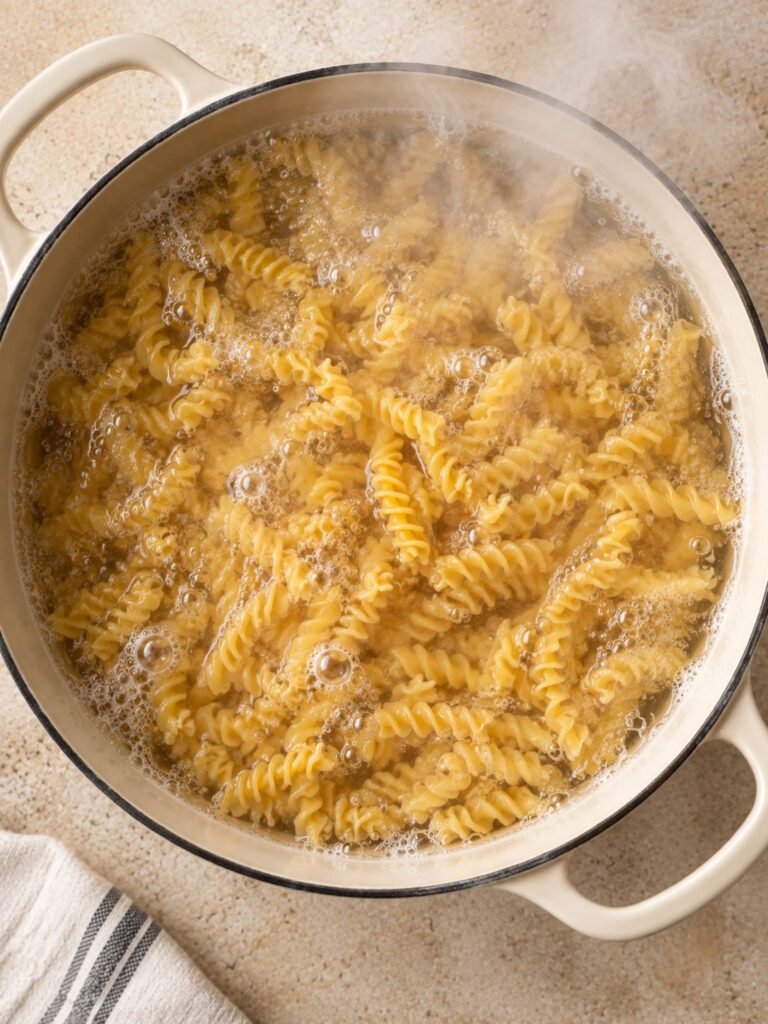
Bring a large pot of well-salted water to a boil and cook your pasta according to the package instructions until al dente.
Before draining, scoop out and reserve about 1/2 cup of the starchy pasta water, then drain the pasta.
Step 2: Blend the Sauce
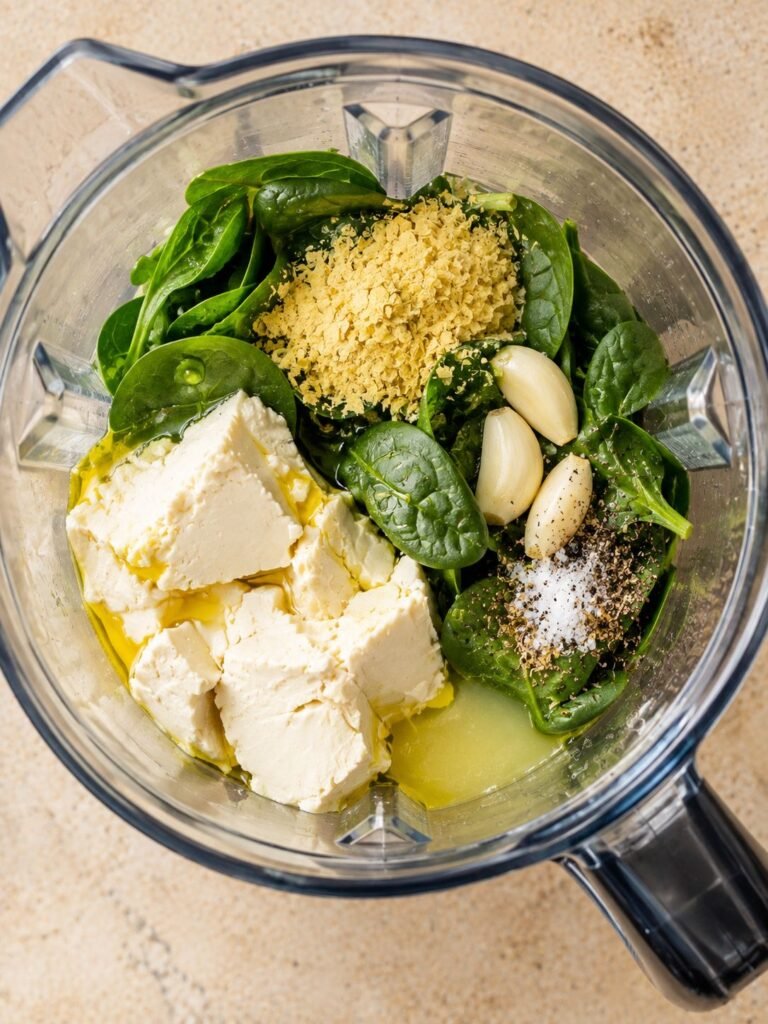
While the pasta cooks, add the silken tofu, spinach, garlic, nutritional yeast, olive oil, lemon juice, salt, and pepper to a blender.
Blend on high until completely smooth, stopping to scrape down the sides once or twice if needed. The mixture should be thick, vibrant green, and free of any visible spinach flecks or tofu lumps.
Step 3: Adjust the Consistency
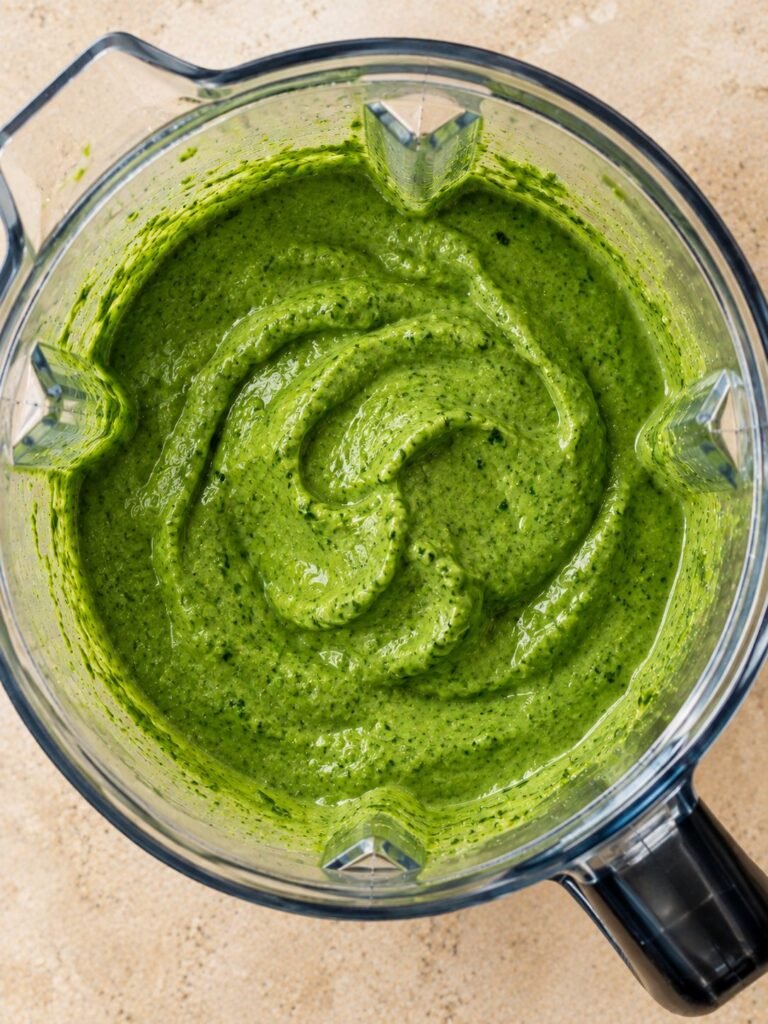
Check the thickness of your sauce. If it feels too thick to coat pasta easily, blend in a tablespoon or two of the reserved pasta water at a time until it loosens to a pourable, sauce-like consistency.
Taste and adjust the seasoning here too, adding a bit more salt, lemon juice, or nutritional yeast if it needs more depth.
Step 4: Warm the Sauce (Optional)
Pour the blended sauce into a skillet or the same pot you cooked the pasta in, and warm it gently over low heat for 2 to 3 minutes, stirring often.
This step isn’t strictly necessary, the sauce is technically ready to eat straight from the blender, but a quick warm-through makes it feel more like a cooked sauce and helps it cling to the pasta a bit better.
Step 5: Combine and Serve
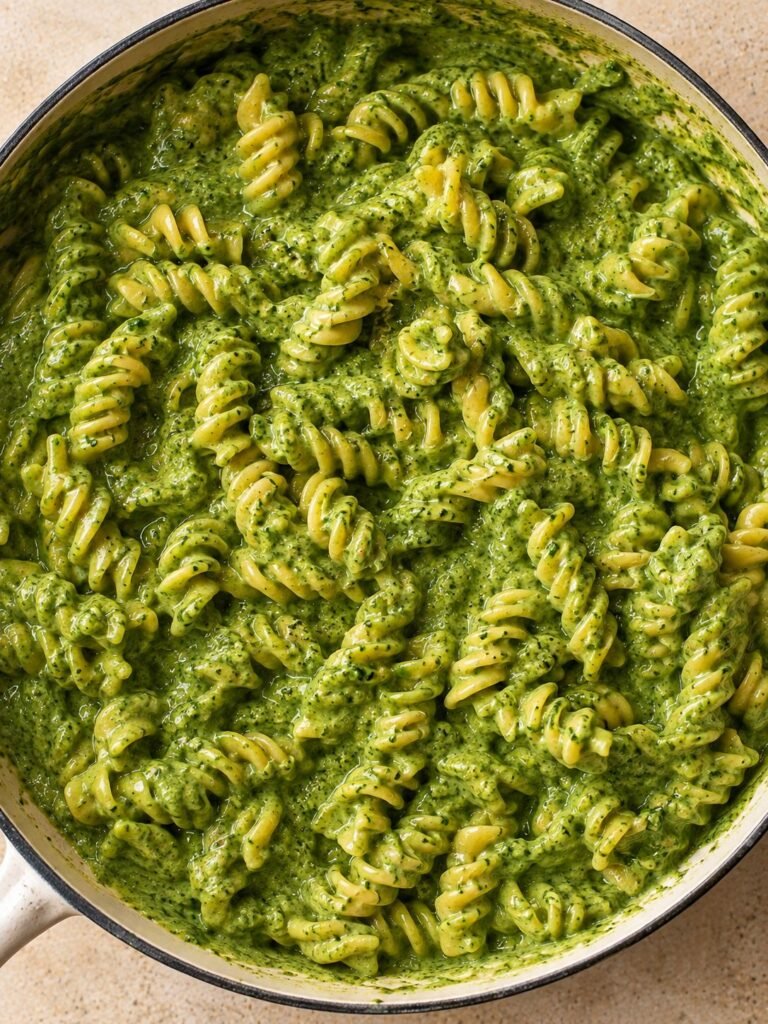
Add the drained pasta directly to the sauce and toss thoroughly until every piece is coated. If the sauce seems too thick at this point, add a splash more reserved pasta water.
Serve immediately, topped with fresh basil and a sprinkle of vegan parmesan or extra nutritional yeast.
Tips for the Best Spinach Tofu Pasta Sauce
- Use true silken tofu, not firm. This is non-negotiable for a smooth, creamy result.
- Don’t skip the reserved pasta water. It’s the easiest way to adjust the sauce’s consistency without watering down the flavor.
- Blend thoroughly. A few extra seconds in the blender is the difference between a silky sauce and one with visible spinach flecks or tofu graininess.
- Taste before serving, not just while blending. Cold sauce can taste slightly different once it’s warmed and tossed with hot pasta.
- Add basil at the very end. Fresh basil wilts and darkens quickly once it hits heat, so add it as a topping rather than mixing it in early.
Mistakes I’ve Made So You Don’t Have To
Using firm tofu instead of silken. The sauce came out grainy and never smoothed out no matter how long I blended it. Silken tofu is genuinely essential here, not just a suggestion.
Not reserving any pasta water. My sauce turned out far too thick to coat the pasta evenly, and I had to thin it with plain water instead, which diluted the flavor more than starchy pasta water would have.
Under-blending the sauce. I stopped a little too early and ended up with small green flecks of unblended spinach throughout. A full minute of blending, scraping down the sides once, fixed this completely.
Adding the basil too early. I stirred it in with the warm sauce and it wilted into dark, unappetizing bits almost immediately. Adding it fresh as a topping right before serving keeps it bright and fragrant.
Overcrowding the blender. I once tried to double the recipe in a single batch, and the blender struggled to fully process everything, leaving pockets of unblended spinach near the bottom. Blending in two smaller batches instead gave me a much smoother result.
Troubleshooting
My sauce is grainy instead of smooth. This almost always means the wrong type of tofu was used. Double-check that you’re working with true silken tofu, not firm or extra-firm.
My sauce tastes bland. This usually needs more salt, lemon juice, or nutritional yeast. Taste and adjust gradually, since tofu on its own has very little flavor and relies entirely on the other ingredients for taste.
My sauce is too thin. Let it simmer for a couple of minutes in the skillet, which helps it thicken slightly, or blend in a bit more tofu if you have extra on hand.
My pasta and sauce separated after sitting. This is normal, tofu-based sauces can separate slightly once cooled. A quick reheat with a splash of water or pasta water and a good stir brings it right back together.
My sauce tastes slightly bitter. This is sometimes a sign the spinach wasn’t fresh, older spinach can develop a faint bitterness. It can also happen if the blender ran hot for an extended period, which can affect flavor slightly. Using fresher spinach and blending in shorter bursts if needed usually solves this.
Ways to Use This Sauce Beyond Pasta
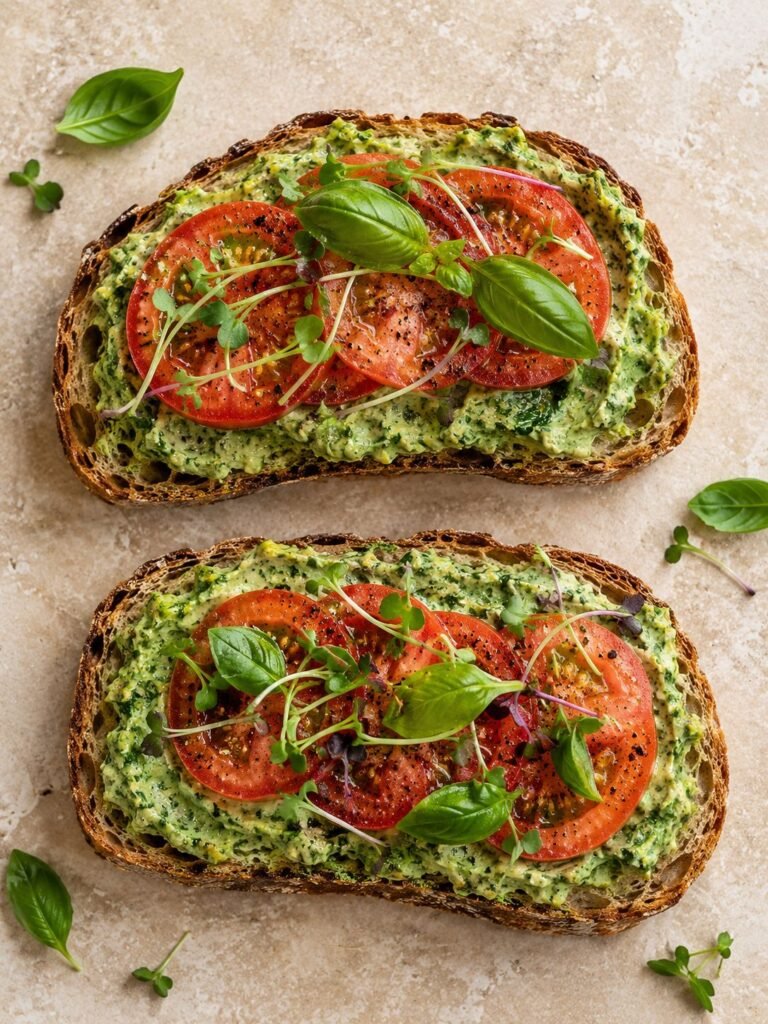
This sauce is a lot more versatile than its name suggests, and I regularly make a batch specifically to use in other ways throughout the week.
As a dip. Serve it slightly chilled with sliced vegetables or pita chips, it firms up a bit in the fridge and works well as a thick, herby dip.
As a sandwich or wrap spread. A thin layer in place of mayo or hummus adds a good amount of flavor and protein to a simple sandwich or wrap.
Tossed with roasted vegetables. Warm a bit of the sauce and toss it with roasted potatoes, cauliflower, or broccoli for a quick, flavorful side dish.
As a pizza base. Spread a thin layer on a pizza crust in place of traditional sauce for a green, herby twist before adding your toppings.
What to Serve With Spinach Tofu Pasta Sauce
- A simple side salad with a light vinaigrette
- Garlic bread or crusty bread for scooping up extra sauce
- Roasted cherry tomatoes on the side
- A sprinkle of red pepper flakes for anyone who wants heat
Can I Make This Ahead?
Yes, the sauce itself can be made up to 3 days in advance and stored separately in the fridge.
I wouldn’t recommend tossing it with the pasta too far ahead of time, since pasta can absorb the sauce and dry out a bit as it sits. Reheat the sauce gently with a splash of water before tossing with freshly cooked pasta for the best texture.
How to Store and Reheat Leftovers
Store leftover pasta and sauce together in an airtight container in the refrigerator for up to 3 days.
Reheat in a skillet over low heat with a splash of water or plant milk to loosen the sauce back up, stirring often. A microwave works too, just stir halfway through and add liquid as needed, since the sauce thickens quite a bit once chilled.
Can I Freeze This?
I’d recommend freezing the sauce on its own rather than freezing it already tossed with pasta.
Store the blended sauce in a freezer-safe container for up to 2 months. Thaw in the fridge overnight, then warm gently in a skillet, whisking well, since tofu-based sauces can look slightly separated after freezing until they’re reheated and stirred.
Easy Variations
Extra Garlicky Version. Add an extra clove or two of garlic directly into the blender for a bolder flavor.
Sun-Dried Tomato Addition. Blend in a couple tablespoons of chopped sun-dried tomatoes for a deeper, slightly sweet undertone.
Spicy Version. Add a pinch of red pepper flakes directly into the sauce while blending.
Extra Veggie Version. Stir in sautéed mushrooms or zucchini along with the finished pasta for a more substantial meal.
Scaling This Recipe
This recipe scales up cleanly for a bigger batch.
To double: blend the sauce in two batches rather than trying to fit everything into one blender at once, since overfilling a blender can lead to uneven blending and a sauce that isn’t fully smooth throughout.
To halve: simply cut every ingredient in half, this works well for a smaller portion or a single serving, and the sauce still blends easily even in smaller quantities.
Dietary Adaptations
Gluten-free: use your favorite gluten-free pasta. Watch the cook time closely, since gluten-free pasta tends to overcook faster than wheat pasta.
Nut-free: this recipe is already naturally nut-free as written, which sets it apart from a lot of creamy vegan sauces that rely on cashews.
Lower fat: reduce the olive oil to 1 tablespoon and add a bit more reserved pasta water to compensate for the lost liquid and richness.
Soy-free: unfortunately, tofu is the entire base of this sauce, so a true soy-free swap is difficult here. A well-blended cannellini bean with a splash of plant milk can approximate some of the creaminess, though the flavor and texture will be noticeably different.
Frequently Asked Questions
Can I use frozen spinach instead of fresh? Yes, just thaw it fully and squeeze out as much excess water as possible before blending, since frozen spinach holds a lot of moisture that can thin out the sauce.
Why does my sauce look darker than it did when I made it? This is normal, both spinach and tofu-based sauces can darken slightly as they sit due to oxidation. It’s still completely safe to eat, just less vibrant looking.
Can I use this sauce for something other than pasta? Yes, it works well as a dip, a spread on sandwiches, or even tossed with roasted vegetables.
Is this sauce very garlicky? As written, it has a moderate garlic flavor. Feel free to scale it up or down depending on your preference.
Can I make this without a high-powered blender? Yes, a standard blender or even a food processor works fine here, just blend a bit longer to make sure the spinach and tofu are completely smooth.
More Recipes
- Vegan Garlic Noodles
- Vegan Cashew Parmesan Cheese
- How to Make Tofu Taste Like Chicken
- Tofu Tacos (Crispy Taco-Spiced Tofu Crumbles)
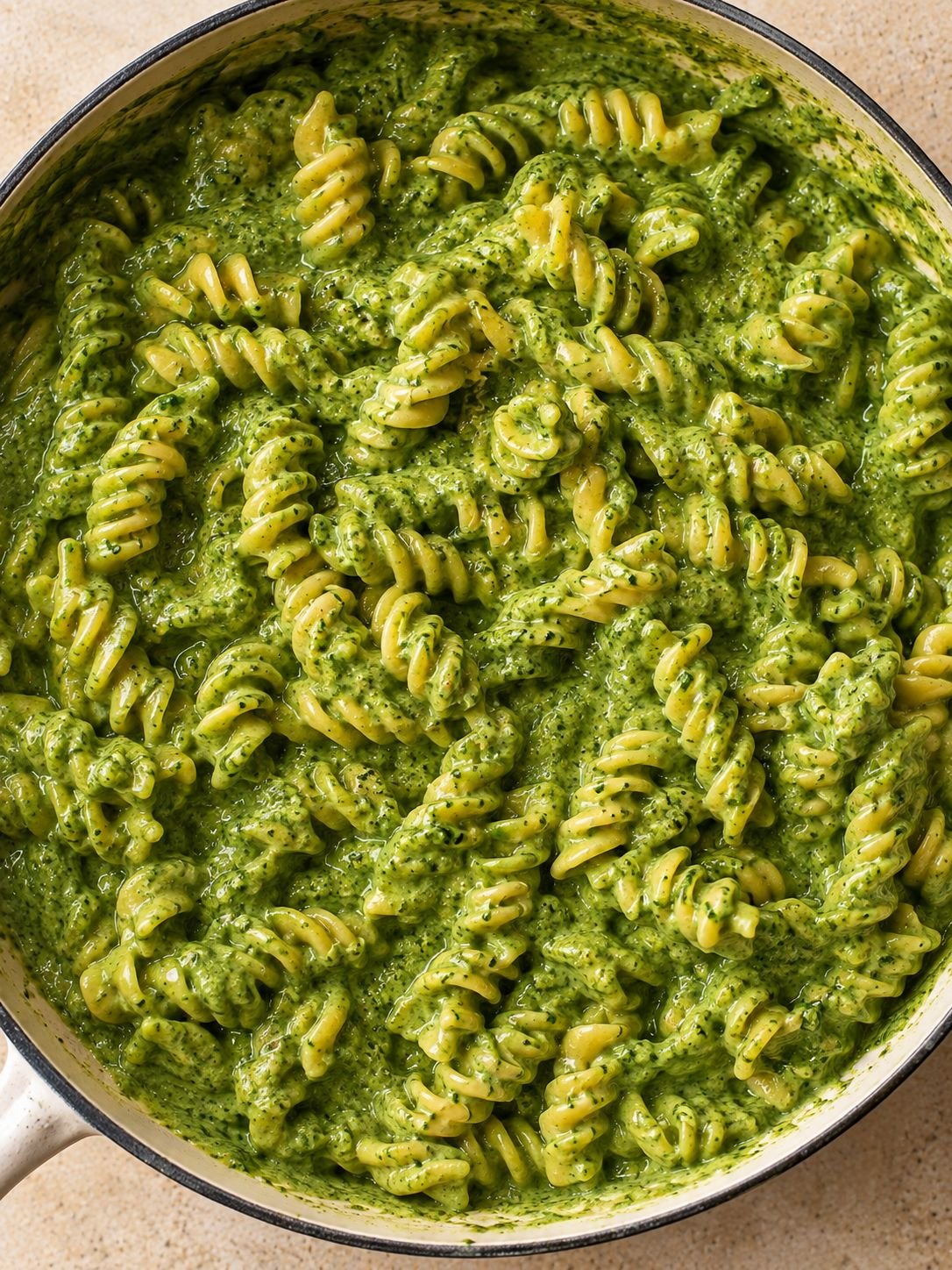
Spinach Tofu Pasta Sauce (Vegan, Nut-Free, Gluten-Free)
Ingredients
Method
- Boil the pasta in well-salted water until al dente. Reserve 1/2 cup pasta water, then drain.
- Blend the silken tofu, spinach, garlic, nutritional yeast, olive oil, lemon juice, salt, and pepper until completely smooth.
- Thin the sauce with reserved pasta water as needed to reach a pourable consistency.
- Warm the sauce gently in a skillet over low heat for 2 to 3 minutes, if desired.
- Add the drained pasta to the sauce and toss until fully coated.
- Serve topped with fresh basil and vegan parmesan or extra nutritional yeast.
Notes
- Use true silken tofu, not firm, for a smooth, lump-free sauce.
- Reserve pasta water before draining to adjust the sauce’s consistency.
- Blend thoroughly to avoid any visible spinach flecks or graininess.
- Add fresh basil at the end rather than blending it in, to keep it bright and fresh.
- This sauce can be frozen on its own for up to 2 months, best kept separate from cooked pasta.
Final Thoughts
This sauce is proof that creamy vegan pasta doesn’t need cashews or a long ingredient list to actually taste good. Tofu does all the heavy lifting here, and once it’s blended with spinach and garlic, nobody at the table is going to guess what’s actually holding this sauce together.
If you make this, I’d love to know if you kept it classic or tried blending in some sun-dried tomatoes for extra depth.