Vegan Garlic Noodles
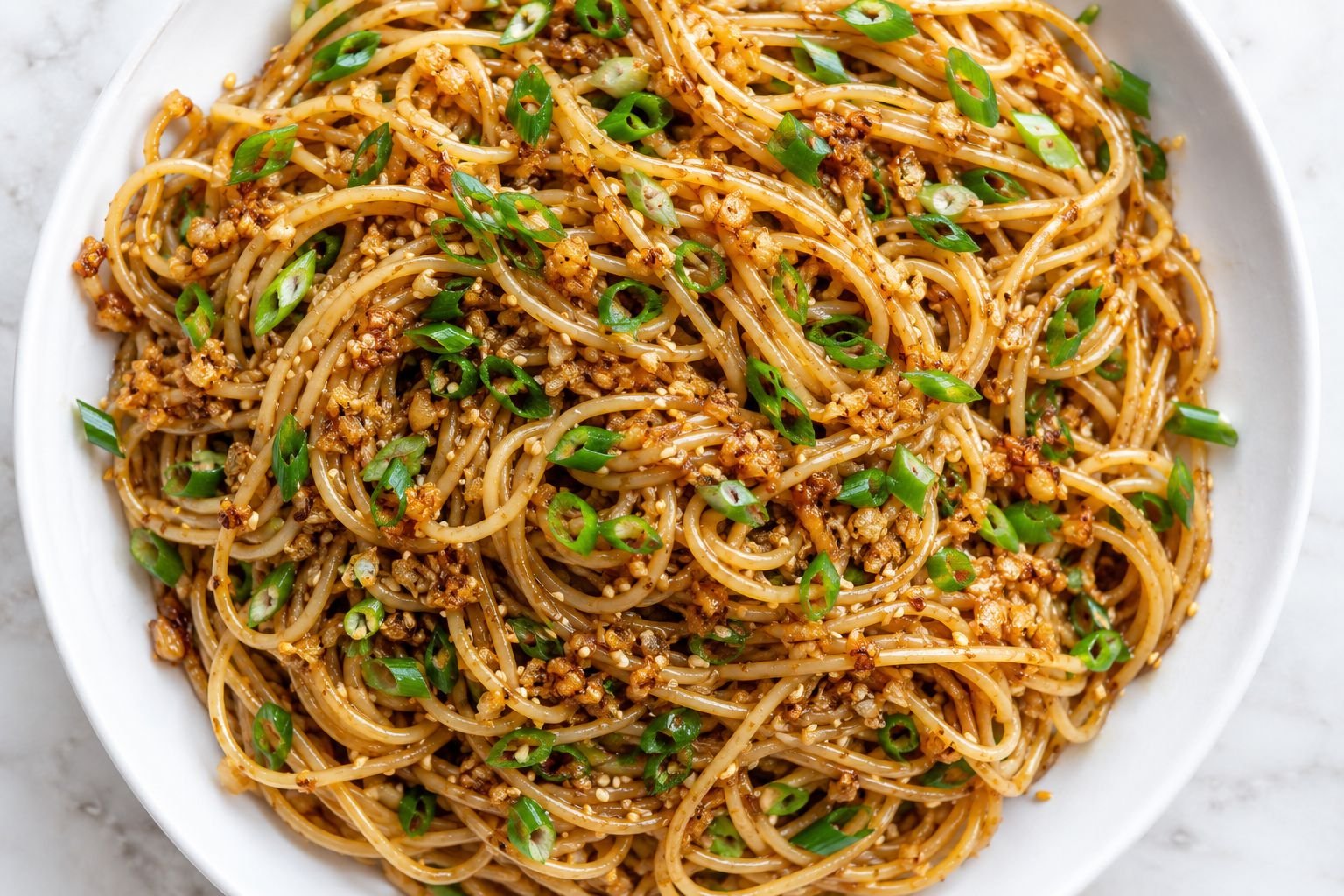
Sweet, salty, and genuinely loaded with garlic, this noodle dish comes together in one pan in under 20 minutes, no dairy, no oyster sauce substitute hunting, just a handful of pantry staples doing a lot of flavor work.
It’s the kind of dinner that tastes like it should’ve taken more effort than it actually does, and it’s built around one technique that makes all the difference, toasting a full head of garlic low and slow until it turns deeply golden rather than just softened.
I started making a version of this on nights I wanted takeout but didn’t want to order it, and it’s become the thing I reach for when the fridge feels empty but the pantry doesn’t.
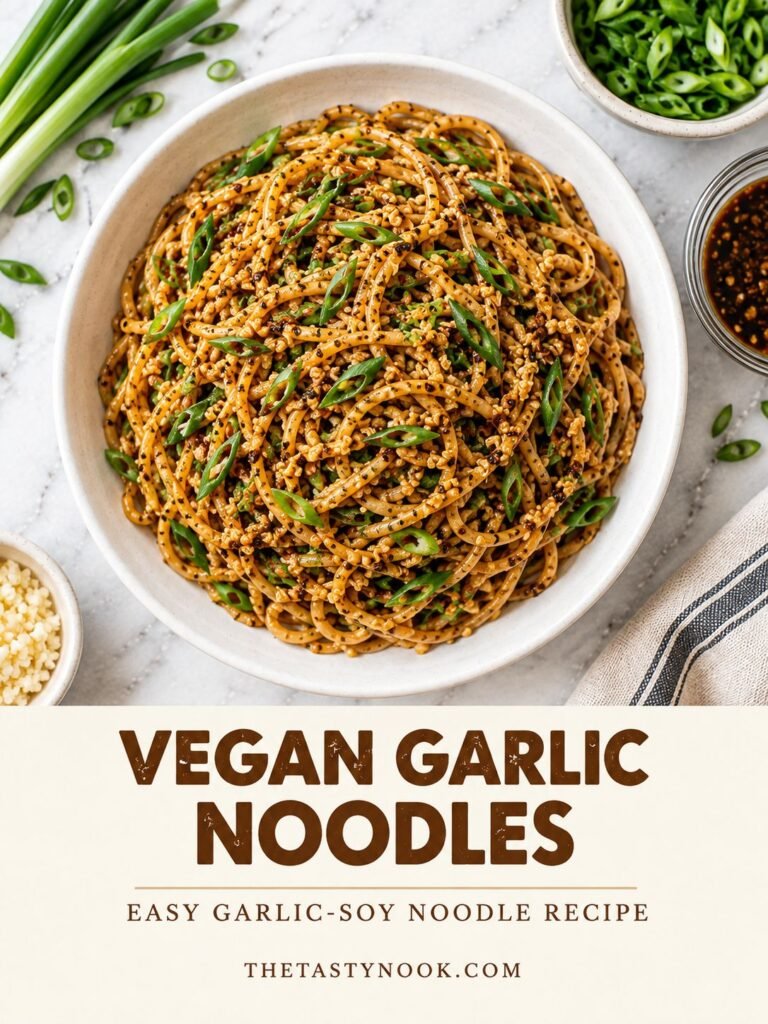
A full head of garlic sounds like a lot until you taste the finished dish and realize it’s exactly right, mellowed by the slow cook into something sweet and rounded rather than sharp.
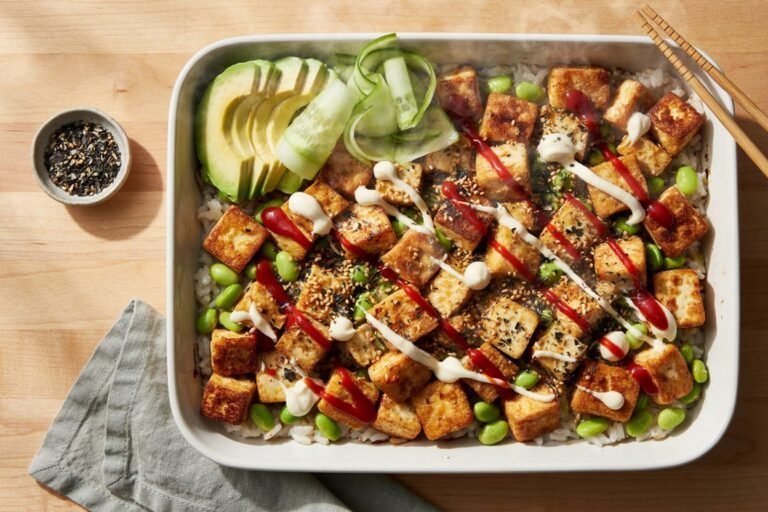
If you’re looking for another fast, pantry-forward dinner, my bang bang tofu comes together in a similar amount of time, and if you want to add protein to this noodle dish specifically, my crispy cajun tofu bites actually work surprisingly well tossed in at the end, even though the flavor profiles are different.
Why You’ll Love This
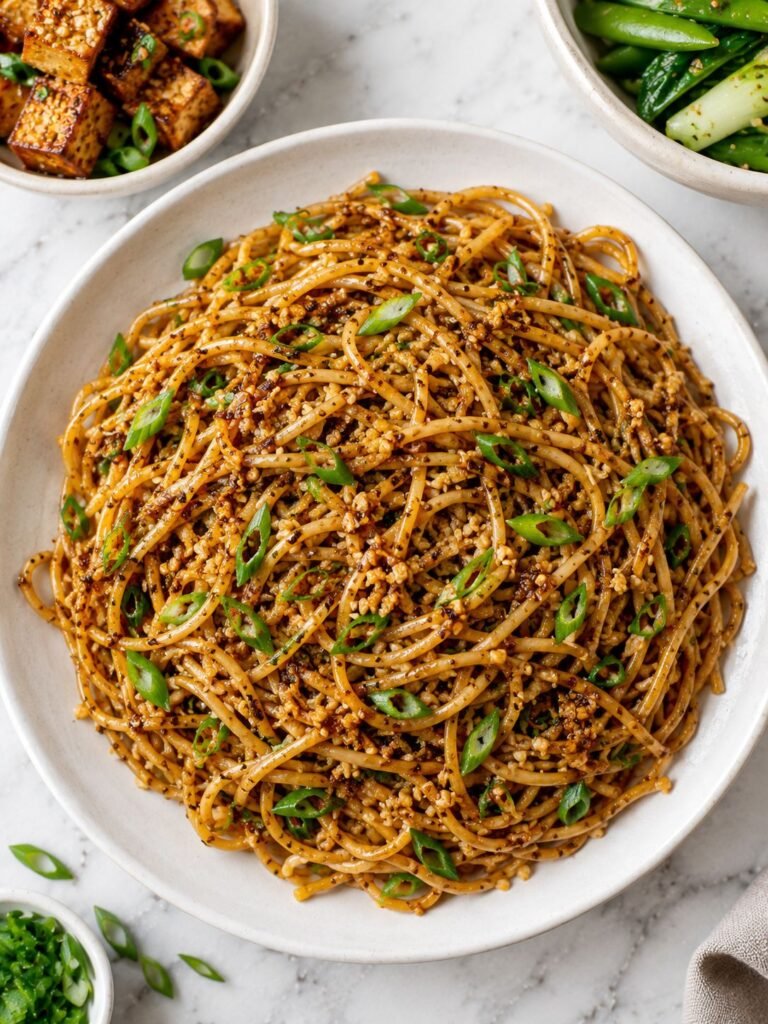
It’s genuinely fast for how impressive it tastes. Twenty minutes, one pan, and a result that reads as far more restaurant-quality than the effort involved.
The garlic flavor is deep, not sharp. Slow-toasting the garlic in butter mellows it into something sweet and rounded, nothing like the harsh bite of raw or quickly sautéed garlic.
It’s built entirely from pantry staples. No specialty produce, no last-minute grocery run, just soy sauce, sugar, and a full head of garlic doing the heavy lifting.
It scales up or down easily. Double the batch for a crowd, or make a single serving for yourself, the ratios hold up either way.
The Short Version, If You’re Deciding Whether to Make This
Noodles boil while a full head of garlic cooks low and slow in vegan butter until deeply golden and fragrant, not burnt, just properly toasted.
A quick sauce of soy sauce, brown sugar, and a little sesame oil gets stirred together, then everything comes together in the pan with a splash of starchy pasta water to help the sauce cling.
Ten minutes of actual hands-on effort, most of it just stirring garlic.
Ingredients
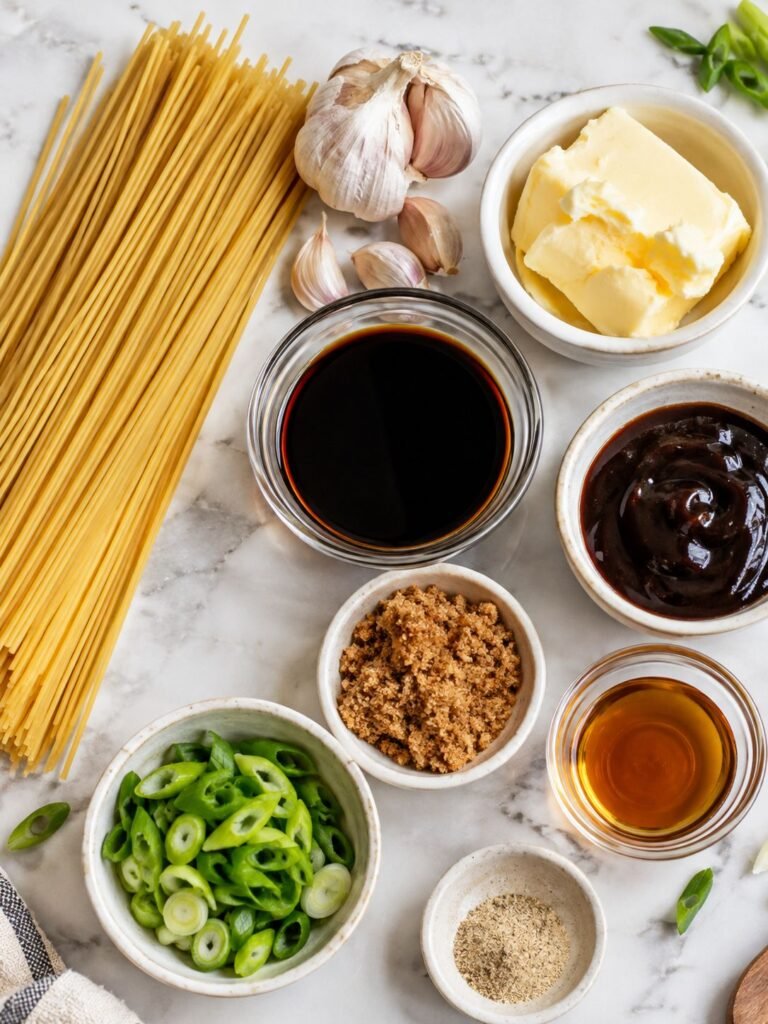
- 8 ounces spaghetti or thin noodles (ramen, angel hair, or lo mein noodles all work)
- 4 tablespoons vegan butter
- 1 full head of garlic, minced (yes, really, this is not a typo)
- 3 tablespoons soy sauce or tamari
- 1 tablespoon vegan oyster sauce (mushroom-based, widely available at Asian grocers or online)
- 1 tablespoon brown sugar
- 1 teaspoon toasted sesame oil
- 1/4 teaspoon white pepper (black pepper works if that’s what you have)
- 2 green onions, sliced, whites and greens separated
- Reserved pasta water
If You Need to Substitute
No vegan oyster sauce? A mix of an extra tablespoon of soy sauce plus a teaspoon of extra brown sugar gets you close, though you’ll lose a bit of the deeper umami it brings.
Garlic feels like too much? Cut it back to half a head the first time you make this. You can always go fuller next time once you know your own tolerance.
No fresh noodles or spaghetti on hand? Ramen noodles, minus the seasoning packet, work well here too, and they cook even faster than spaghetti.
How to Make It
Step 1: Boil the Noodles
Cook according to package instructions until just al dente, don’t overcook here, since the noodles will spend a little more time in the hot pan later and can go soft if they’re already fully done.
Reserve about a cup of the starchy pasta water before draining, using a heatproof measuring cup dipped straight into the pot, you’ll need this water later to help the sauce actually cling to the noodles.
Step 2: Mix the Sauce While the Noodles Cook
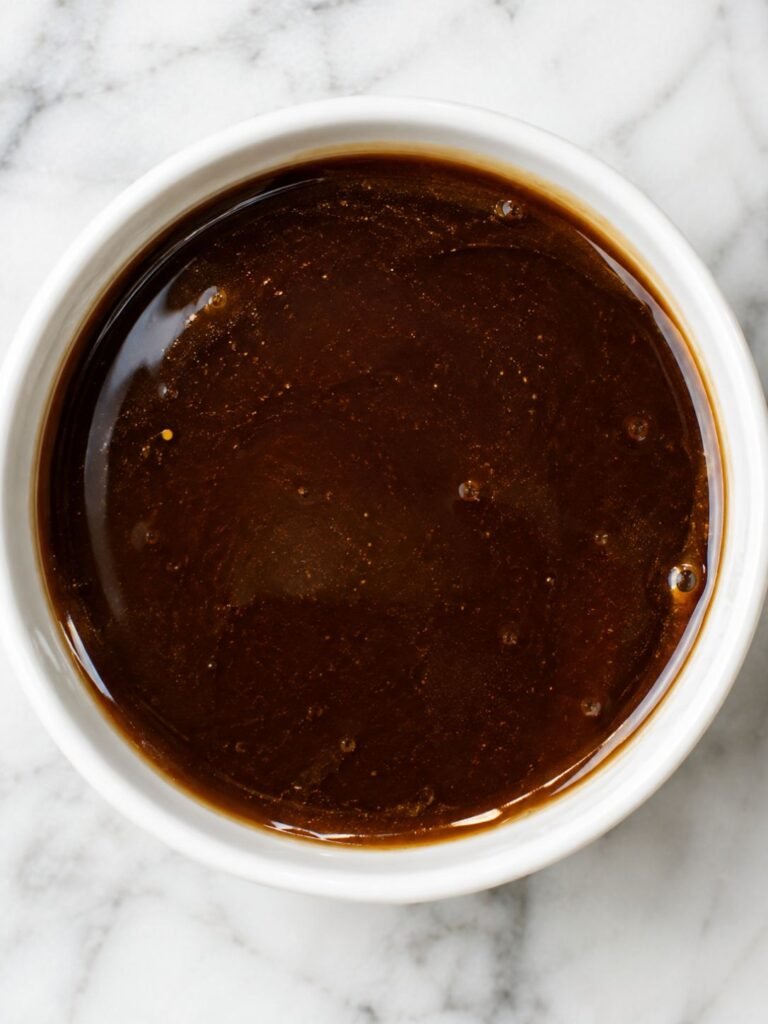
In a small bowl, whisk together the soy sauce, vegan oyster sauce, brown sugar, and sesame oil until the sugar is mostly dissolved and the mixture looks glossy rather than grainy.
Having this ready to go before you start the garlic means you won’t be scrambling to measure things while it’s actively cooking, which is exactly the moment you can’t afford distractions.
Step 3: Melt the Butter and Start the Garlic Low
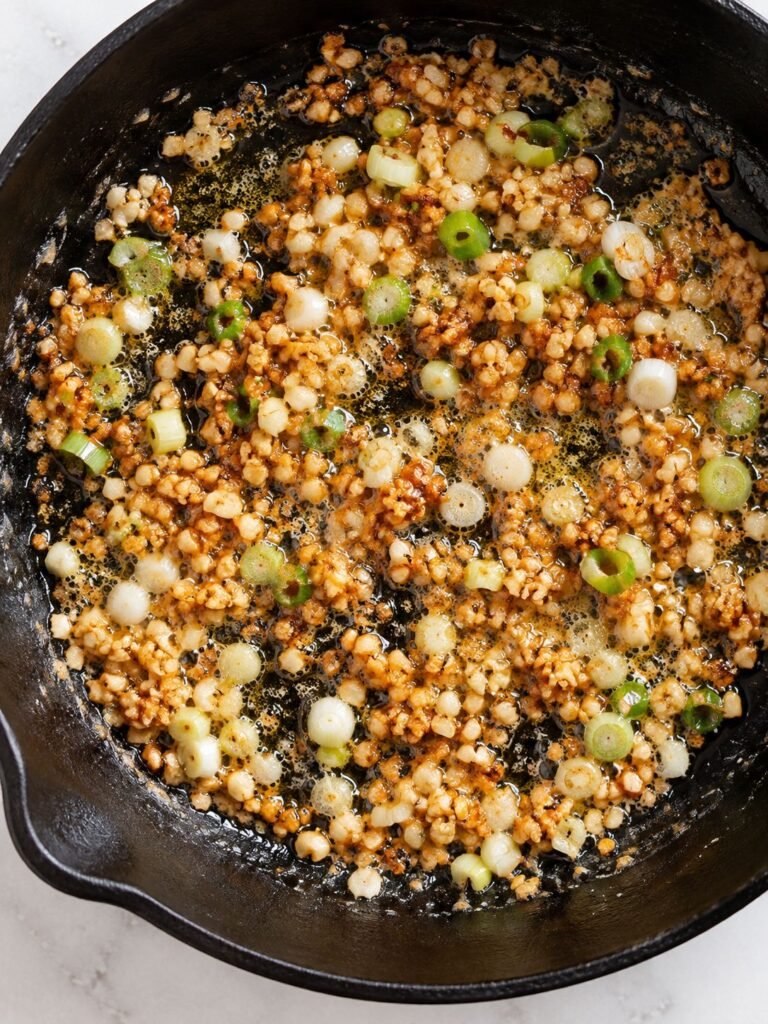
In a large pan or wok, melt the vegan butter over medium-low heat, not medium. Add the minced garlic and the white parts of the green onion. This is the step that actually makes or breaks the dish.
Cook low and slow, stirring frequently with a spatula so nothing sits still long enough to scorch, for 4 to 5 minutes, until the garlic turns a deep golden color, roughly the shade of light honey, and the smell shifts from sharp and raw to sweet and toasty.
If it starts browning too fast or you catch a whiff of anything acrid, pull the pan off the heat for a moment and lower the burner. Burnt garlic turns bitter, and there’s no saving it once it’s gone too far, you’ll need to start that step over.
Step 4: Add the Sauce
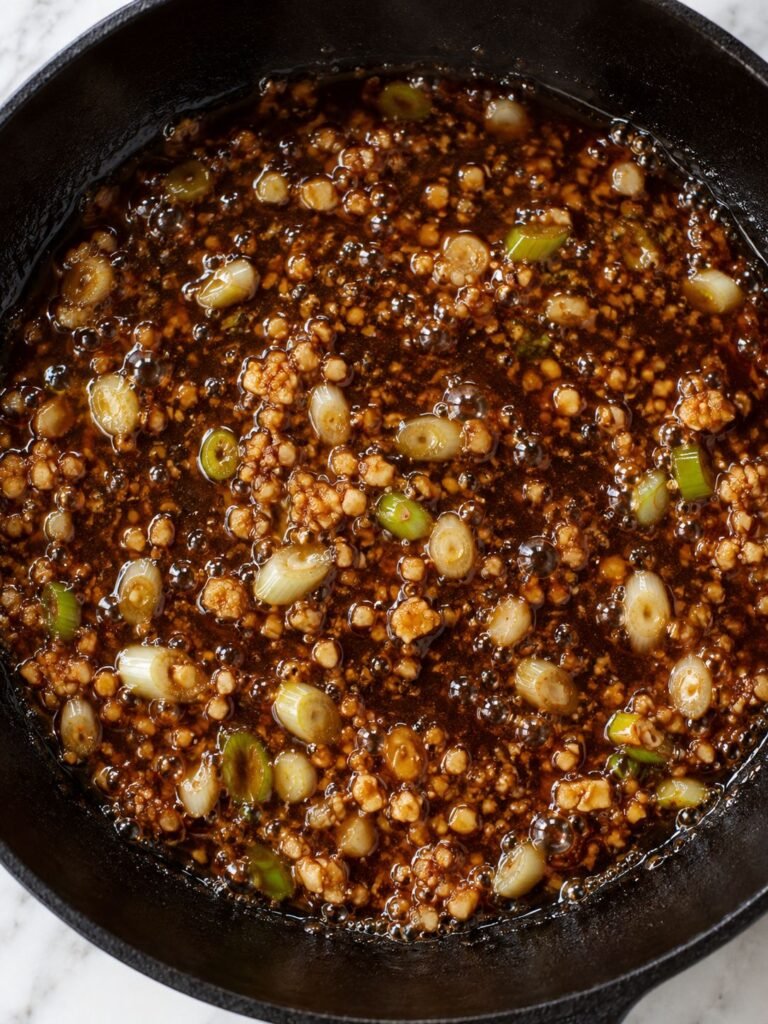
Pour the sauce mixture into the pan with the toasted garlic and stir to combine, letting it bubble gently for about 30 seconds. You’ll notice the mixture thickens slightly and smells noticeably richer the moment it hits the hot butter and garlic.
Step 5: Toss in the Noodles
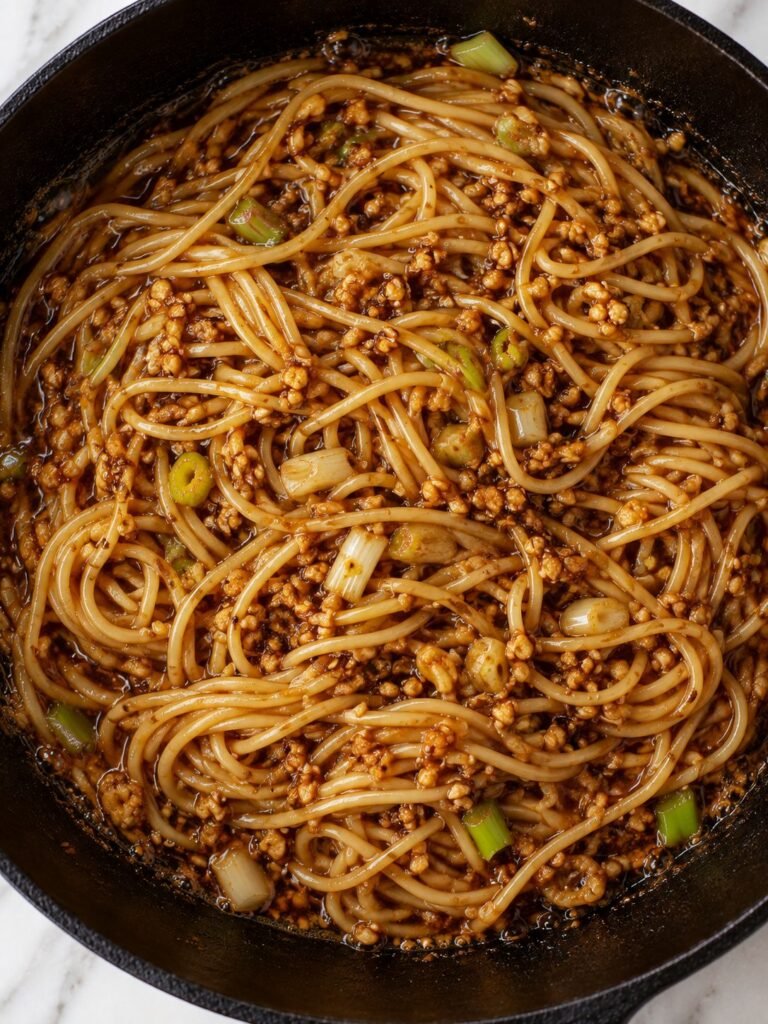
Add the drained noodles directly to the pan along with a splash of the reserved pasta water, about a quarter cup to start.
Toss continuously with tongs, lifting and turning rather than stirring flat, until every strand is coated and glossy.
Add a bit more pasta water, a tablespoon at a time, if the sauce looks like it’s sitting at the bottom of the pan rather than actually clinging to the noodles.
Step 6: Finish and Serve
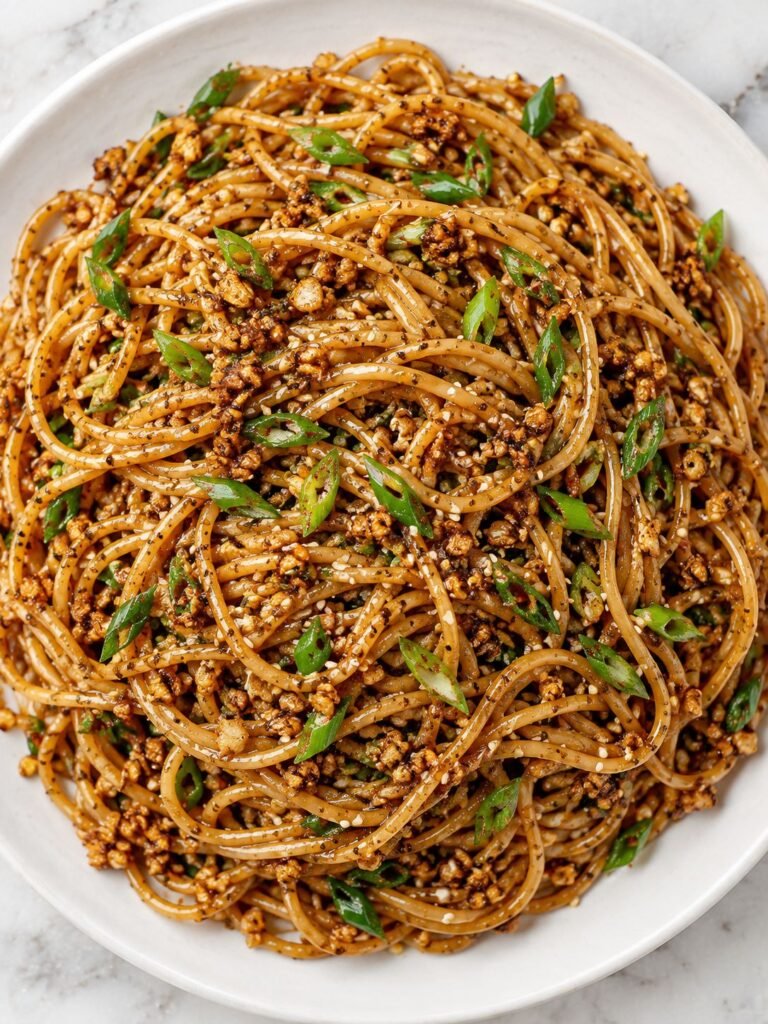
Taste directly from the pan before plating, this is your last real chance to adjust. A little more soy sauce for saltiness, a touch more sugar if the garlic still tastes sharp rather than mellow.
Plate immediately while everything’s hot and glossy, and top with the reserved green onion tops right before serving so they stay bright and crisp rather than wilting into the heat.
A Few Things Worth Knowing Before You Start
The garlic-to-heat ratio is really the whole recipe. I’ve found that medium-low, not medium, is the right heat here, garlic has a narrow window between properly toasted and burnt, and rushing this step with higher heat is the single most common way to ruin the dish.
Mincing the garlic by hand rather than using a garlic press also matters more than I expected, a press tends to release more liquid and can make the garlic steam rather than toast evenly in the butter.
And don’t skip reserving the pasta water, it’s doing real work here, the starch in it is what helps the thin sauce actually cling to the noodles instead of pooling at the bottom of the pan.
If Something’s Not Quite Right
The garlic tastes bitter. This means it cooked too hot or too long. Lower heat and more frequent stirring next time, and pull it the moment it turns golden rather than waiting for a deeper color.
The sauce won’t coat the noodles evenly. Add more reserved pasta water, a splash at a time, and keep tossing over low heat. A sauce that looks too thin in the pan usually thickens up once it actually hits the hot noodles.
It tastes flat or one-note. Check your soy sauce to sugar balance, and don’t skip the sesame oil, it’s a small amount but it adds a real aromatic note the dish is missing without it.
The noodles clumped together before the sauce went in. This usually means they sat too long after draining without any oil or sauce to keep them separated. Toss drained noodles with a tiny drizzle of oil if there’s going to be any real gap between draining and getting them into the pan.
How I Meal Prep This
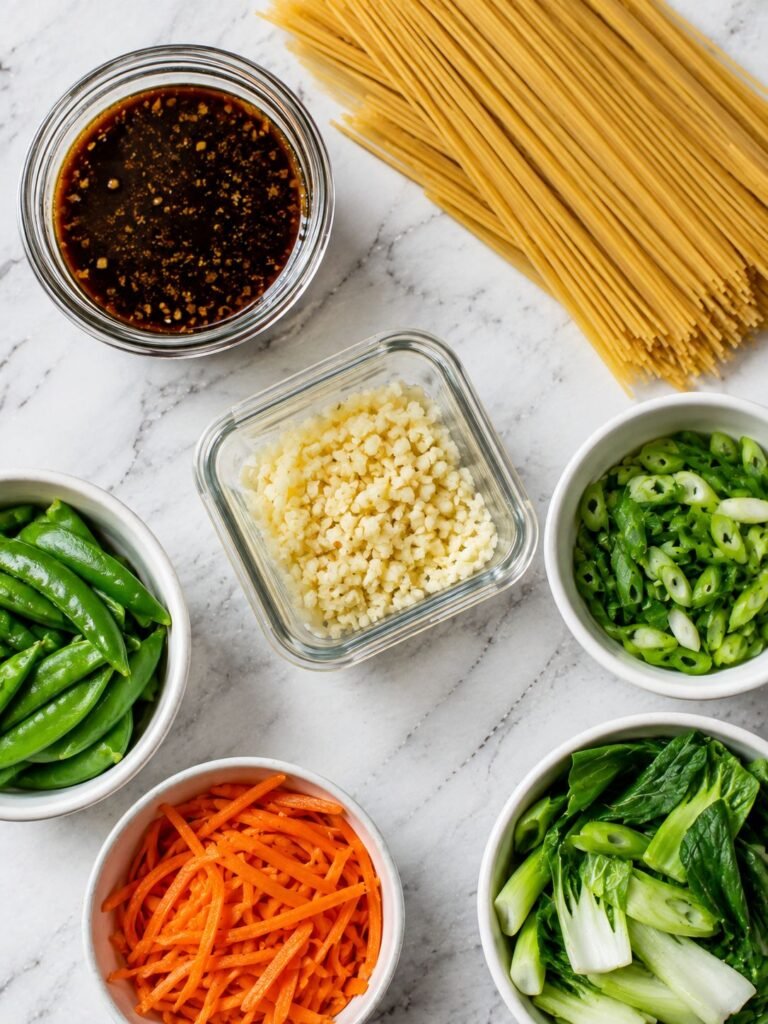
I mince the full head of garlic ahead of time and store it in a small airtight container in the fridge, good for about 3 days, so the most time-consuming part of the recipe is already done before I even start cooking.
I also premix the sauce, soy sauce, oyster sauce, sugar, and sesame oil, in a jar and keep it in the fridge, it holds well for up to a week and means dinner is really just cooking garlic and tossing noodles once I’m ready.
I don’t recommend fully cooking and storing the finished dish for more than a day or two, the noodles continue to absorb sauce as they sit, which can leave leftovers tasting saltier and slightly drier than the fresh version.
If I am storing leftovers, I keep a small splash of extra pasta water or plain water on hand specifically for reheating, since the noodles need that moisture back more than you’d expect.
Make It Your Own
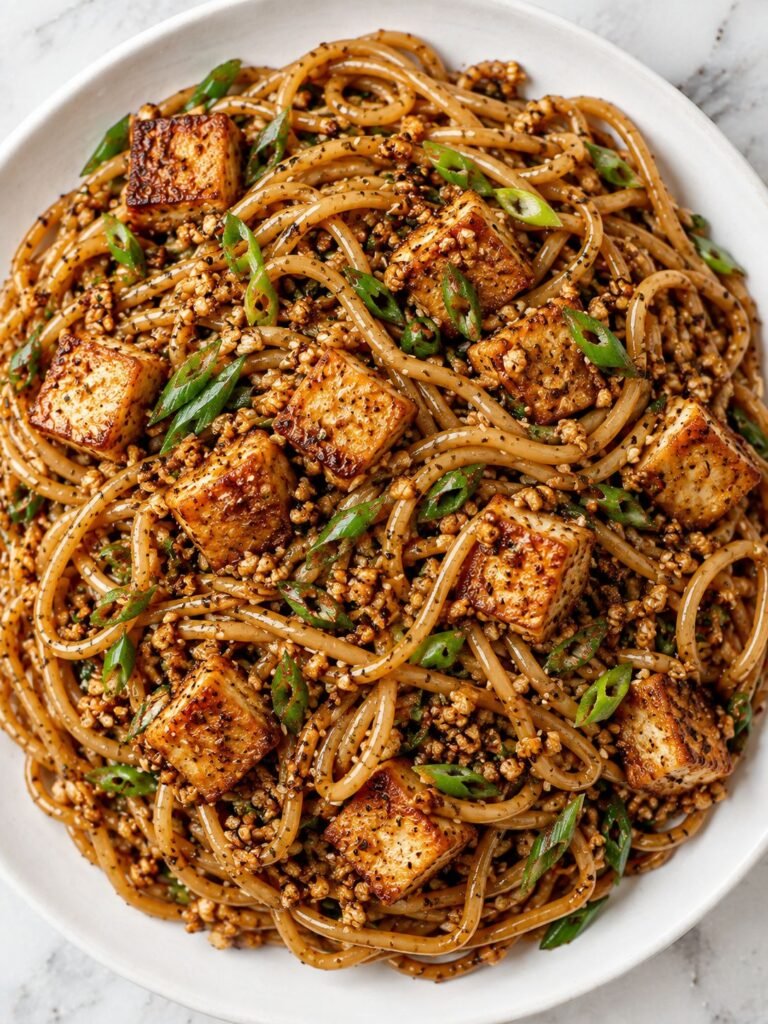
Add protein. Crispy tofu, whether pan-fried or air-fried, tossed in right at the end, turns this into a more complete meal. My crispy cajun tofu bites work well here if you want something with a bit of a kick against the sweet-salty noodles.
Add vegetables. Thinly sliced bok choy, snap peas, or shredded carrots, sautéed briefly in the same pan before the garlic goes in, add color and texture without much extra effort. I like to blanch anything sturdier, like broccoli, right in the noodle water during the last minute of boiling, one less pan to deal with.
Make it spicy. A drizzle of chili oil or a pinch of red pepper flakes added with the sauce brings real heat if that’s what you’re after. Chili crisp, added right at the table rather than cooked in, lets everyone adjust their own bowl to taste.
Swap the noodle shape. Udon adds a chewier, bouncier bite than spaghetti and holds the sauce a little differently, worth trying if you want a texture change without altering the flavor at all.
Lean into umami. A small spoonful of white or yellow miso whisked into the sauce mixture deepens the savory notes even further, a trick worth trying once you’ve made the base recipe a few times and know how you like it.
Storage
This keeps in an airtight container in the fridge for up to 3 days.
Reheat in a skillet with a small splash of water or plant-based milk to loosen the sauce back up, a microwave works in a pinch but tends to dry the noodles out more than a quick stovetop reheat does.
More Recipes
Frequently Asked Questions
Is this recipe actually that garlicky, or is a full head an exaggeration? It’s genuinely that garlicky, and that’s the point of the dish. If you’re unsure, start with half a head your first time and adjust from there once you know how you feel about it.
Can I make this gluten-free? Yes, swap in gluten-free noodles and make sure your soy sauce and oyster sauce substitute are both labeled gluten-free, some brands aren’t by default.
What can I use instead of vegan butter? A neutral oil works in a pinch, though you’ll lose some of the richness vegan butter specifically brings to the sauce.
Why did my garlic turn bitter? Almost always heat that was too high, or garlic left in the pan too long past the golden stage. Lower and slower is the fix.
Can I meal prep this? It’s best fresh, but leftovers reheat reasonably well with a splash of water to loosen the sauce. The garlic flavor actually mellows and deepens a bit overnight, which some people prefer.
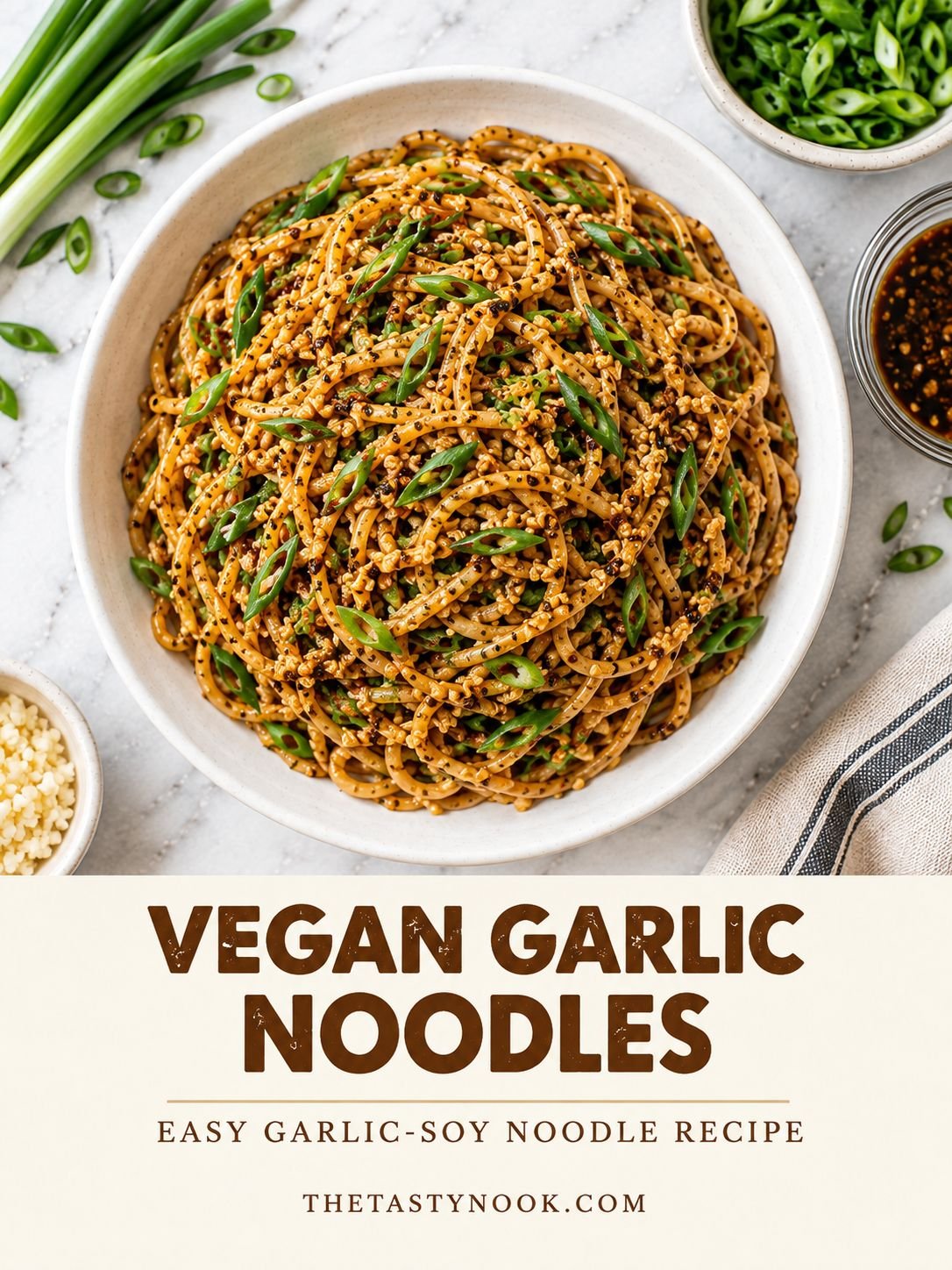
Vegan Garlic Noodles
Ingredients
Method
- Cook the noodles according to the package directions until just al dente. Reserve about 1 cup of the starchy pasta water, then drain the noodles.
- While the noodles cook, whisk together the soy sauce, vegan oyster sauce, brown sugar, sesame oil, and white pepper in a small bowl.
- Melt the vegan butter in a large skillet or wok over medium-low heat. Add the minced garlic and the white parts of the green onions.
- Cook for 4 to 5 minutes, stirring frequently, until the garlic is deeply golden and fragrant. Do not let it burn.
- Pour the prepared sauce into the skillet and stir. Let it gently bubble for about 30 seconds.
- Add the drained noodles and about 1/4 cup of the reserved pasta water. Toss continuously with tongs until the sauce coats the noodles evenly.
- Add more pasta water, 1 tablespoon at a time, if needed until the noodles are glossy and well coated.
- Taste and adjust the soy sauce or brown sugar if needed. Remove from the heat and top with the sliced green onion tops.
- Serve immediately while hot and glossy.
Notes
- Keep the garlic over medium-low heat so it slowly turns golden instead of becoming bitter.
- Do not walk away while the garlic is cooking because it can go from golden to burnt quickly.
- Reserve pasta water before draining. The starch helps the sauce cling to the noodles.
- Ramen noodles, angel hair, lo mein noodles, and udon can be used instead of spaghetti.
- For extra protein, add crispy tofu. Bok choy, snap peas, carrots, or broccoli also work well.
- For a gluten-free version, use gluten-free noodles, tamari, and gluten-free vegan oyster sauce.
- Leftovers can be refrigerated in an airtight container for up to 3 days. Reheat with a small splash of water to loosen the sauce.