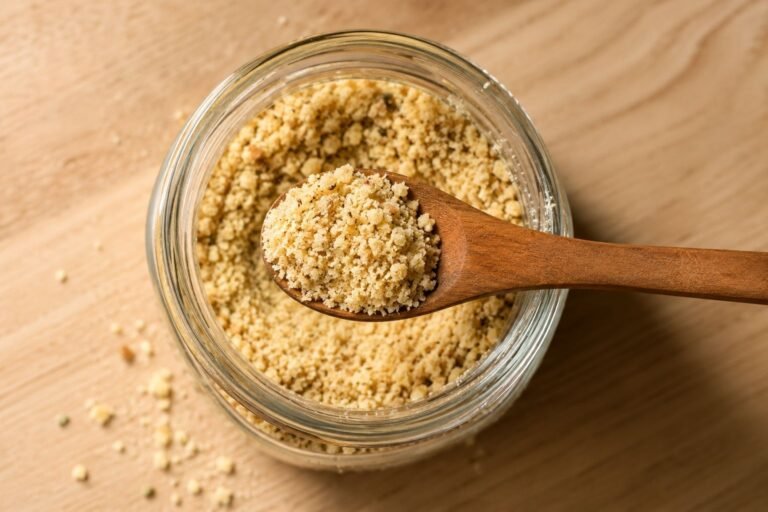
Oat Milk Alfredo Pasta Sauce (Vegan, No Cashews)
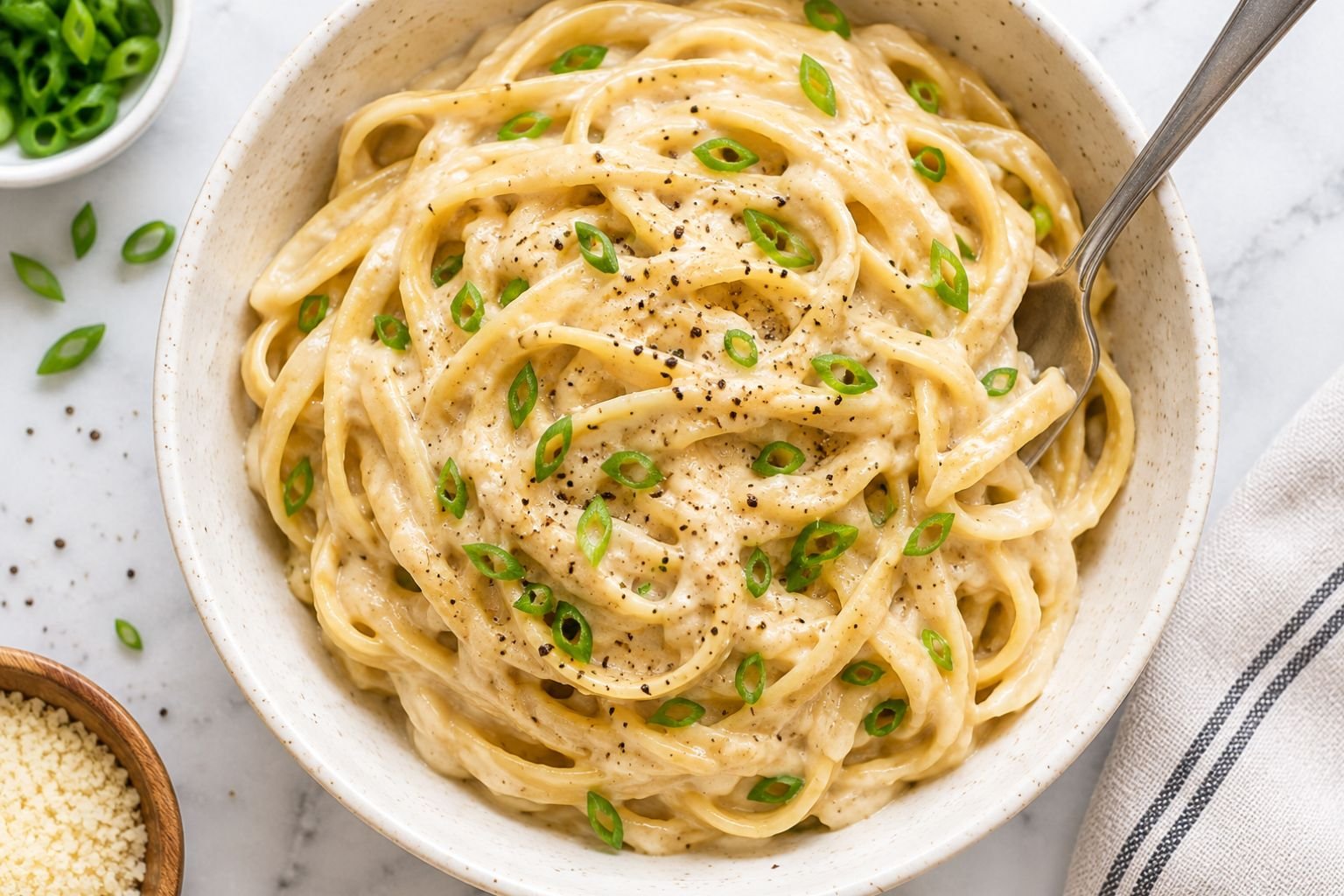
I love a good cashew-based vegan alfredo, but soaking cashews always meant this sauce was a “plan ahead” recipe rather than a “I want pasta in 20 minutes” recipe. One night I didn’t have time to soak anything, so I tried building the sauce around oat milk and a simple flour-based roux instead, and it came together faster than the pasta itself finished boiling.
No blender, no soaking, no straining, just a pot and a whisk.
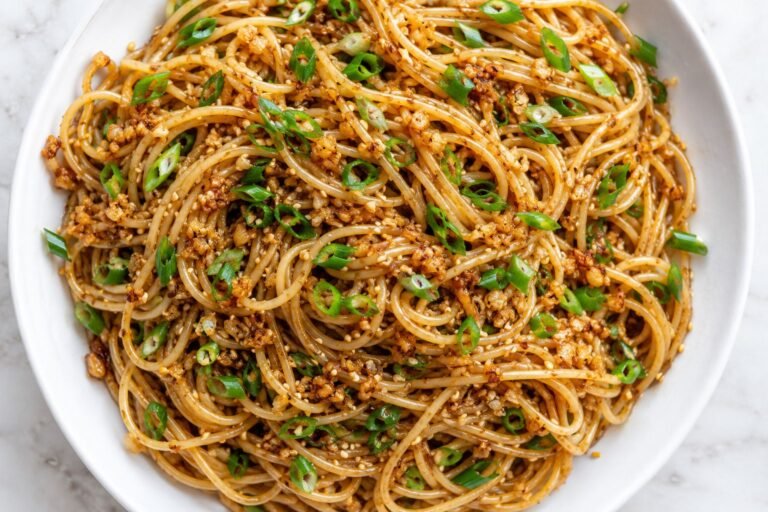
It’s rich, glossy, and genuinely tastes like alfredo, not like a vegetable puree wearing an alfredo costume. Garlic, nutritional yeast, and a good amount of black pepper do most of the flavor work, and the oat milk’s natural creaminess means you don’t need much else to get that classic silky texture.
If you’ve made my Vegan Nacho Cheese Sauce or my Vegan Cashew Parmesan Cheese, you know I like a dairy-free sauce that doesn’t ask much of you. This one might be the fastest of the bunch.
Why You’ll Love This
No soaking, no blending. Just a pot, a whisk, and about 15 minutes, this comes together faster than most cashew-based versions.
Genuinely rich and glossy. The roux base thickens the sauce into something that actually clings to pasta, rather than sitting thin and watery on top.
Naturally nut-free. Since there’s no cashew base, this is an easy option for anyone with a nut allergy who still wants a creamy alfredo.
One pot. Fewer dishes, less cleanup, more time actually eating dinner.
Endlessly customizable. Add mushrooms, spinach, or a plant-based protein without throwing off the sauce’s texture or balance.
What Makes This Dairy-Free and Nut-Free?
Traditional alfredo relies on butter, heavy cream, and parmesan for its richness. Most vegan versions replace all three with soaked, blended cashews, which works well but adds prep time and isn’t an option for anyone avoiding tree nuts.
Here, a simple roux, vegan butter and flour cooked together, thickens the oat milk into a sauce with real body, the same basic technique behind a classic bechamel.
Nutritional yeast brings the savory, cheesy flavor note that parmesan would normally provide, and garlic and black pepper round out the rest.
Oat milk in particular works beautifully here because it’s naturally a little creamier and slightly sweet compared to other plant milks, which balances out the savory elements nicely.
Equipment You’ll Need
A medium saucepan. For building the roux and simmering the sauce.
A whisk. Essential for working the flour into the butter smoothly and keeping the sauce lump-free as the oat milk is added.
A large pot for the pasta. So you can cook the pasta and finish the sauce at roughly the same time.
Recipe Ingredients
For the sauce:
- 3 tablespoons vegan butter
- 3 tablespoons all-purpose flour
- 2 cups unsweetened plain oat milk
- 3 cloves garlic, minced
- 1/3 cup nutritional yeast
- 1/2 teaspoon salt, plus more to taste
- 1/2 teaspoon black pepper, plus more to taste
- 1/2 teaspoon garlic powder
For serving:
- 12 oz fettuccine or pasta of choice
- Sliced green onions
- Extra black pepper
- Vegan parmesan, optional
If You Need to Substitute
No vegan butter? A neutral oil like avocado or light olive oil works, though the sauce will be slightly less rich.
Gluten-free? A 1:1 gluten-free flour blend works well in place of all-purpose flour for the roux.
No oat milk? Unsweetened soy milk is the closest substitute in terms of creaminess and how well it thickens.
How to Make It
Step 1: Start the Pasta Water
Bring a large pot of well-salted water to a boil. Timing the pasta so it finishes around the same time as the sauce means everything comes together hot and fresh rather than the sauce sitting and thickening too much while you wait on the pasta.
Step 2: Make the Roux
Melt the vegan butter in a medium saucepan over medium heat. Once fully melted, whisk in the flour and cook, whisking constantly, for about 1 minute. The mixture will look pale and slightly foamy, this quick cook removes the raw flour taste, so don’t skip it even though it’s a small step.
Step 3: Add the Garlic
Add the minced garlic to the roux and cook for 30 seconds, stirring constantly, just until fragrant. Garlic burns quickly in a hot roux, so keep the heat at medium and don’t walk away during this step.
Step 4: Whisk in the Oat Milk
Pour in the oat milk gradually, whisking constantly as you go, adding it too fast all at once can cause lumps that are harder to smooth out later. Once all the oat milk is incorporated, the mixture should look thin at first, that’s expected, it thickens as it heats.
Step 5: Simmer and Thicken
Bring the sauce to a gentle simmer, whisking occasionally, and cook for 4 to 6 minutes, until it has thickened enough to coat the back of a spoon. Reduce the heat if it starts to bubble too vigorously, a hard boil can cause the sauce to break slightly.
Step 6: Season and Finish
Whisk in the nutritional yeast, salt, pepper, and garlic powder. Taste and adjust, the nutritional yeast brings a lot of the savory depth here, so don’t be shy about adding a little more if it tastes flat.
Step 7: Toss and Serve
Drain the cooked pasta, reserving a splash of pasta water, and add the pasta directly to the sauce, tossing to coat. If the sauce feels too thick, loosen it with a splash of the reserved pasta water. Serve immediately topped with sliced green onions, extra black pepper, and vegan parmesan if using.
A Note About the Oat Milk
Use a plain, unsweetened oat milk for this recipe, vanilla or sweetened versions will throw off the savory balance of the sauce.
Not all oat milks are created equal when it comes to thickness. A barista-style oat milk tends to have a bit more body and fat content, which makes for an even silkier finished sauce, though a regular unsweetened oat milk works perfectly well too.
Avoid oat milk with a lot of added gums or stabilizers if you can help it, they can occasionally make a roux-based sauce feel slightly gluey rather than smooth.
Tips
Whisk Constantly While Adding the Oat Milk
This is the single biggest factor in avoiding a lumpy sauce. Pour slowly and keep whisking the whole time, rather than dumping it all in at once and whisking after the fact.
Don’t Rush the Roux
Cooking the flour and butter together for the full minute matters more than it seems like it should. Skipping this step can leave the sauce tasting slightly raw or pasty instead of rich and smooth.
Save Some Pasta Water
The starchy pasta water is the easiest way to adjust the sauce’s consistency at the very end without watering down the flavor the way plain water would.
Why This Method Works
A roux, equal parts fat and flour cooked together before liquid is added, is one of the oldest thickening techniques in cooking, and it’s the same basic principle behind a classic bechamel or gravy. Cooking the flour in fat first coats each individual flour granule in fat, which is what allows it to disperse smoothly into the oat milk instead of clumping the way flour does when added directly to a cold or hot liquid on its own.
This matters more with plant milks than people expect. Oat milk doesn’t have the same fat content as heavy cream, so without the roux doing the thickening work, you’d end up with a thin, watery sauce no matter how much nutritional yeast or seasoning you added. The roux is really what turns “seasoned oat milk” into an actual sauce with body and cling.
A Note About Nutritional Yeast
Nutritional yeast is the ingredient doing most of the savory, cheesy flavor work in this sauce, so it’s worth understanding a little about it if you haven’t cooked with it much before.
It’s a deactivated yeast, sold as small yellow flakes, with a naturally nutty, savory, almost cheese-like flavor that’s become a staple in vegan cooking for exactly that reason. Look for it in the baking aisle, the health food section, or near other seasonings at most grocery stores, it’s shelf-stable and keeps for a long time in a sealed container.
If you’ve never used it before, start with the amount listed and taste before adding more, it has a distinctive flavor that some people want to lean into heavily and others prefer to keep more subtle, this recipe works well either way.
How to Tell When It’s Perfectly Done
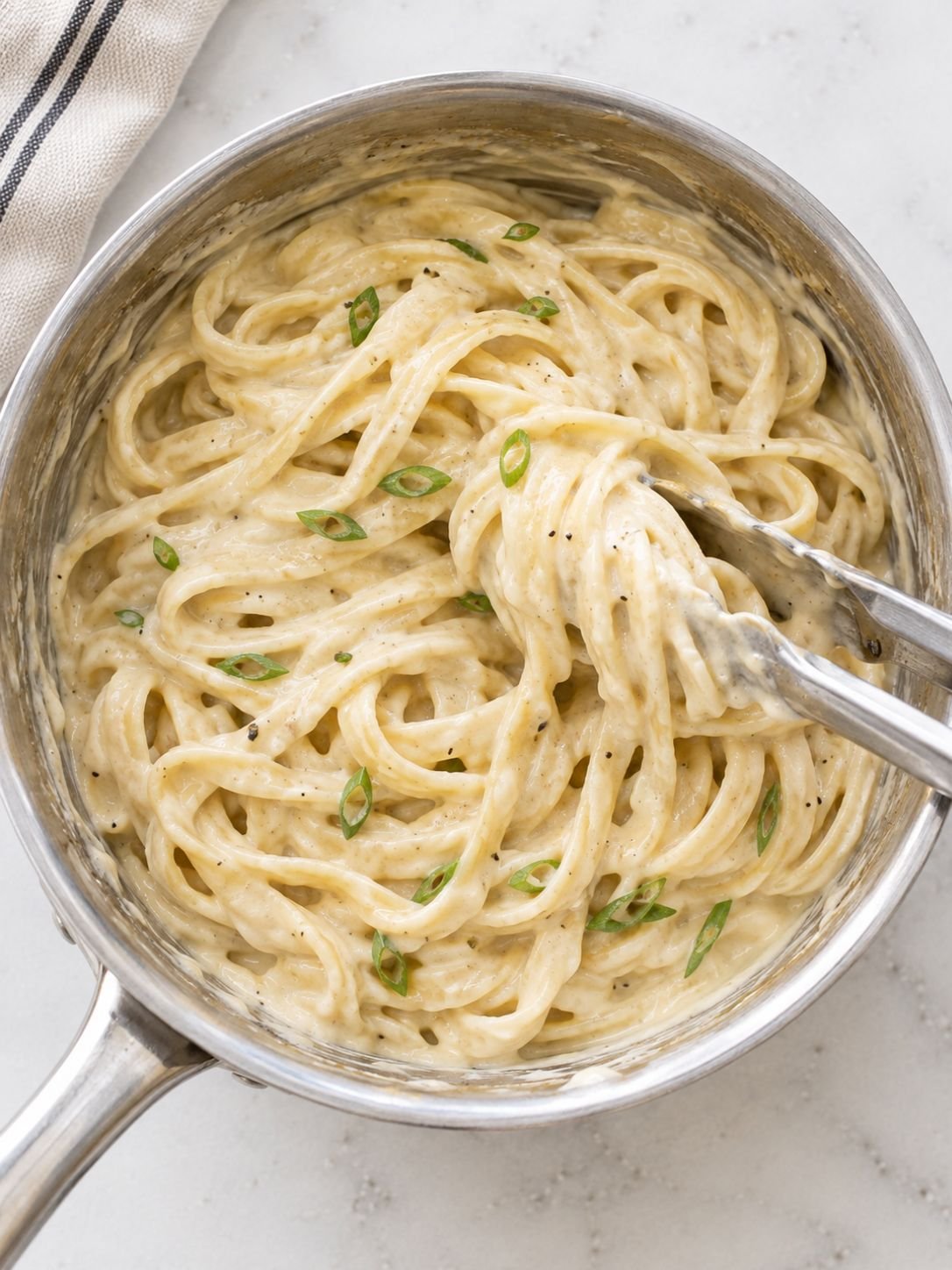
The sauce is ready once it coats the back of a spoon in an even layer, run your finger through it, and if the line holds its shape rather than immediately filling back in, you’re there.
Visually, you’re looking for a smooth, glossy sheen with no separation or graininess. If the sauce looks slightly broken or oily on the surface, it likely simmered too hard, pull it off the heat and whisk in a small splash of cold oat milk to bring it back together.
Taste is the final check. The sauce should taste rounded and savory, with the garlic and nutritional yeast clearly present rather than one note overpowering everything else, if it tastes flat, it usually just needs a bit more salt rather than more of any single ingredient.
My Sauce Turned Out Lumpy or Grainy, What Happened?
Oat milk was added too quickly. Pour it in slowly, whisking the whole time, rather than adding it all at once.
The roux wasn’t cooked long enough, or was cooked at too high a heat. A quick, gentle cook at medium heat is what you want, high heat can cause the flour to clump instead of dissolving smoothly into the butter.
The sauce boiled too hard. A gentle simmer is all you need to thicken the sauce. A hard boil can cause it to separate slightly and look grainy.
Prep-Ahead Checklist
If you want this to come together even faster on a weeknight, here’s what you can do in advance:
- Mince the garlic up to 2 days ahead and store in a small covered container in the fridge.
- Measure out the flour, nutritional yeast, and seasonings into one small bowl the night before, so you can add them all at once when it’s time to cook.
- Make the full sauce up to 3 days ahead and store separately from the pasta, reheating gently with a splash of oat milk before tossing.
Can I Make This Ahead of Time?
Yes, the sauce on its own can be made up to 3 days ahead and stored in the fridge, reheat gently over low heat, whisking often, adding a splash of oat milk or pasta water if it’s thickened up too much. I’d recommend keeping the sauce and pasta separate until you’re ready to eat, tossing them together right before serving gives you the best texture.
How to Store and Freeze
Storing: Keep the sauce in an airtight container in the fridge for up to 4 days. Already-tossed pasta and sauce together will keep for about 2 days, though the texture softens a bit.
Freezing: Roux-based sauces can sometimes separate after freezing, so this one is best made fresh or kept in the fridge rather than frozen, if you do freeze it, whisk vigorously while reheating to help bring it back together.
What to Pair With This
A simple green salad. Something light and acidic balances the richness of the sauce nicely.
Garlic bread. A classic pairing that’s hard to go wrong with alongside any creamy pasta.
Roasted broccoli or asparagus. Adds color and a little textural contrast to the plate.
Making This for Kids or a Crowd
For kids, this sauce is naturally mild and cheesy-tasting without any real heat, making it an easy sell even for picky eaters, just go light on the black pepper if you’re serving little ones.
For a crowd, this recipe doubles easily in the same pot, just make sure the pot is large enough that whisking stays easy as the volume increases.
Serving Suggestions and Variations
Add mushrooms. Sauté sliced mushrooms in the pan before starting the roux, then stir them back in at the end for an earthy addition.
Add spinach. Stir a couple handfuls of baby spinach into the finished sauce, it wilts almost instantly in the hot sauce.
Add a protein. Pan-seared tofu, chickpeas, or plant-based chicken all work well stirred in at the end.
Spicy version. A pinch of red pepper flakes added along with the garlic gives the sauce a gentle heat throughout.
More Recipes
- Vegan Nacho Cheese Sauce (Dairy Free Queso)
- Vegan Cashew Parmesan Cheese
- Vegan Broccoli Cheddar Soup
- Easy Vegan Philly Cheesesteak
Frequently Asked Questions
Is this recipe nut-free? Yes, unlike most vegan alfredo recipes, this one doesn’t use cashews or any other nuts at all.
Can I make this gluten-free? Yes, swap the all-purpose flour for a 1:1 gluten-free flour blend in the roux.
Why does my sauce taste bland? Nutritional yeast and salt are doing most of the flavor work here, taste and add a little more of each before adding anything else.
Can I use a different plant milk? Unsweetened soy milk is the closest substitute, other plant milks like almond or rice milk tend to be thinner and may not thicken the sauce as well.
Oat Milk Alfredo Pasta Sauce (Vegan, No Cashews)
Ingredients
Method
- Boil pasta according to package directions in well-salted water.
- Melt vegan butter, whisk in flour, and cook 1 minute to form a roux.
- Add garlic and cook 30 seconds until fragrant.
- Gradually whisk in oat milk until smooth.
- Simmer 4 to 6 minutes, whisking occasionally, until thickened.
- Whisk in nutritional yeast, salt, pepper, and garlic powder. Taste and adjust.
- Toss with drained pasta, loosening with reserved pasta water if needed. Serve with green onions and extra pepper.
Notes
- Whisk constantly while adding the oat milk to avoid lumps.
- Don’t skip cooking the roux for the full minute, it removes the raw flour taste.
- Best served fresh; roux-based sauces don’t freeze as well as cashew-based ones.