Small-Batch Vegan Strawberry Cake Using Over 4 Cups of Strawberries
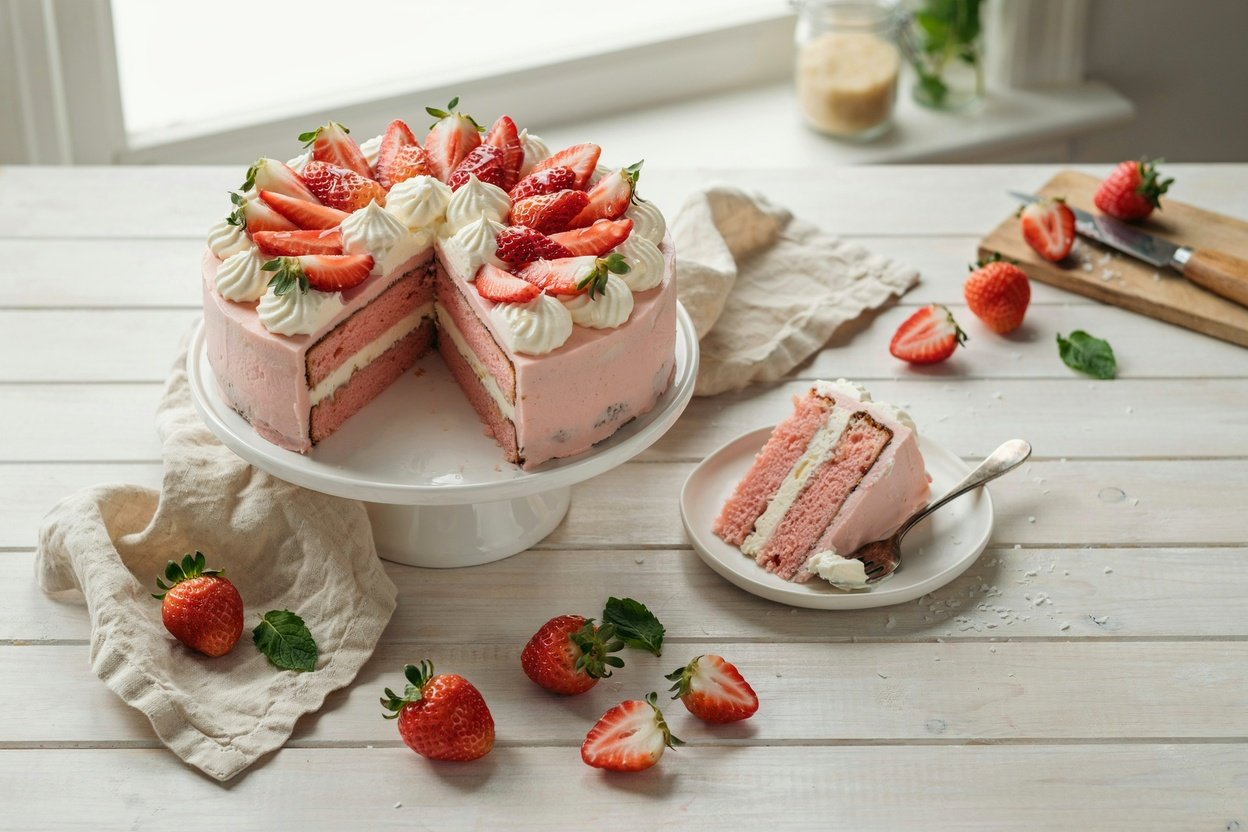
Most strawberry cakes barely taste like strawberries at all, relying on a packet of gelatin-based flavoring or a few tablespoons of jam swirled through plain vanilla batter.
I wanted something different, a cake that actually tastes like the fruit itself, not just a vague pink sweetness.
The answer turned out to be using an almost absurd amount of real strawberries, over 4 cups between a cooked-down reduction folded into the batter and fresh diced berries layered throughout, scaled down into a proper small-batch size so you’re not stuck with a giant cake for days.
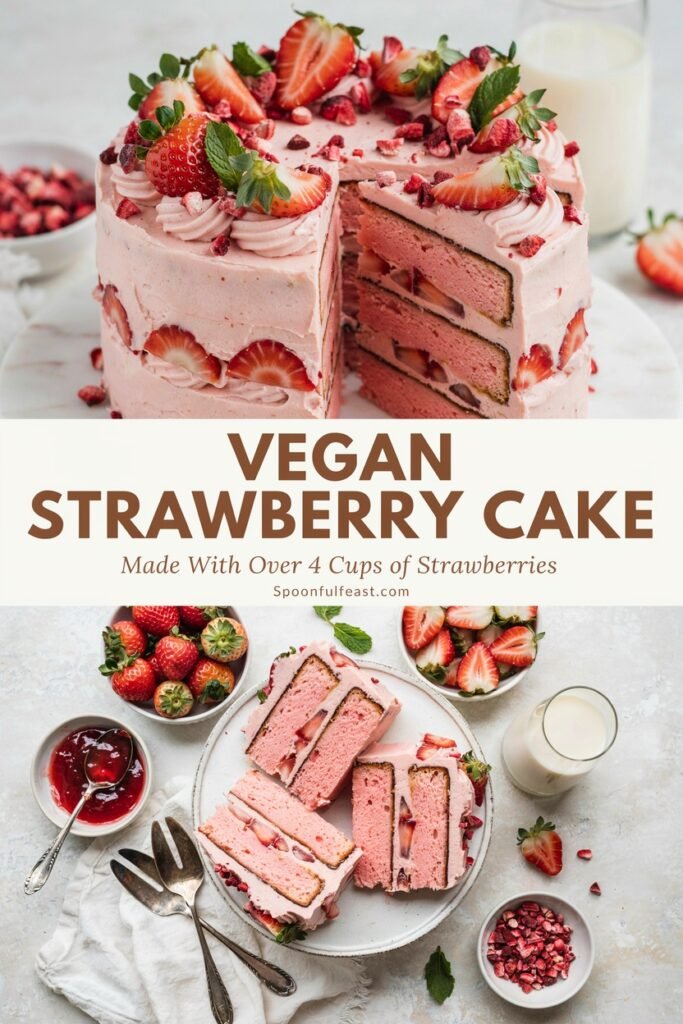
Cooking down that much fruit into a thick, jammy reduction concentrates the strawberry flavor without adding a ton of extra liquid to the batter, which is the part that trips up a lot of “extra fruity” cake recipes.
Add too much raw puree straight into a batter and you end up with something dense and gummy instead of light and tender. Reducing it first solves that problem entirely.
This recipe makes a proper 6-inch cake, enough for a small gathering or a few days of dessert for two, without requiring you to do math to scale down a standard 9-inch recipe.
Why This One Works
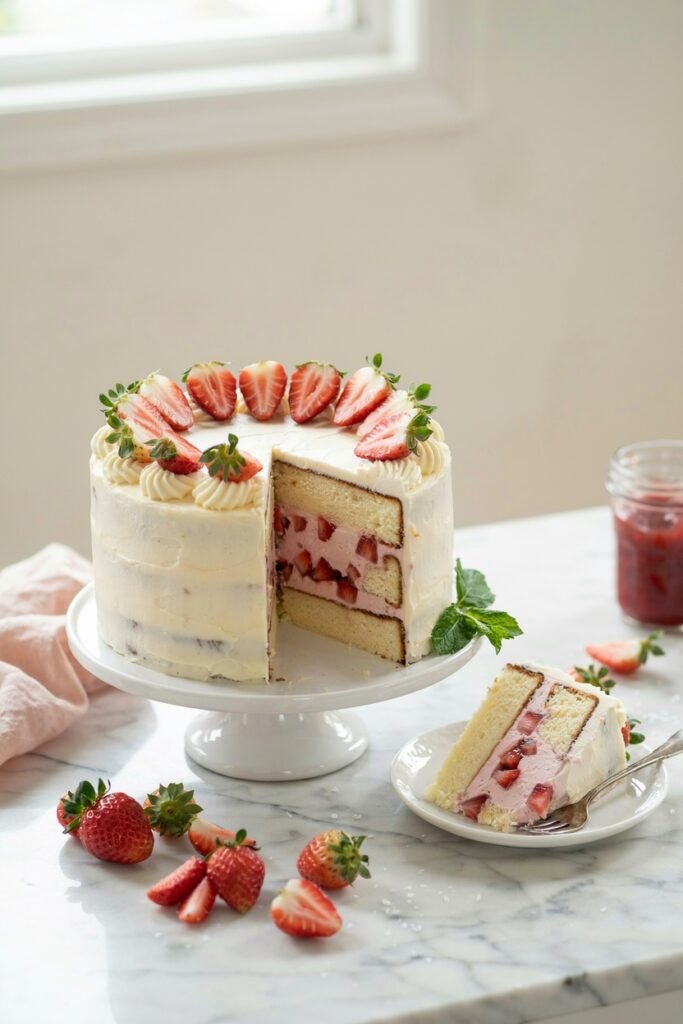
The strawberry reduction concentrates real flavor. Simmering down a large amount of strawberries into a thick, jam-like reduction packs actual fruit flavor into the batter without adding excess liquid that would otherwise make the cake dense or gummy.
It’s genuinely small-batch, not just a halved standard recipe. The pan size, bake time, and ingredient ratios are all built specifically for a 6-inch cake, not just eyeballed by cutting a bigger recipe in half, which tends to throw off baking time and texture.
It’s vegan without tasting like a compromise. A flax egg and a well-balanced combination of plant-based milk and oil give this cake a genuinely tender, moist crumb, not the slightly gummy or dry texture a lot of early vegan baking attempts are known for.
What Makes the Texture Different
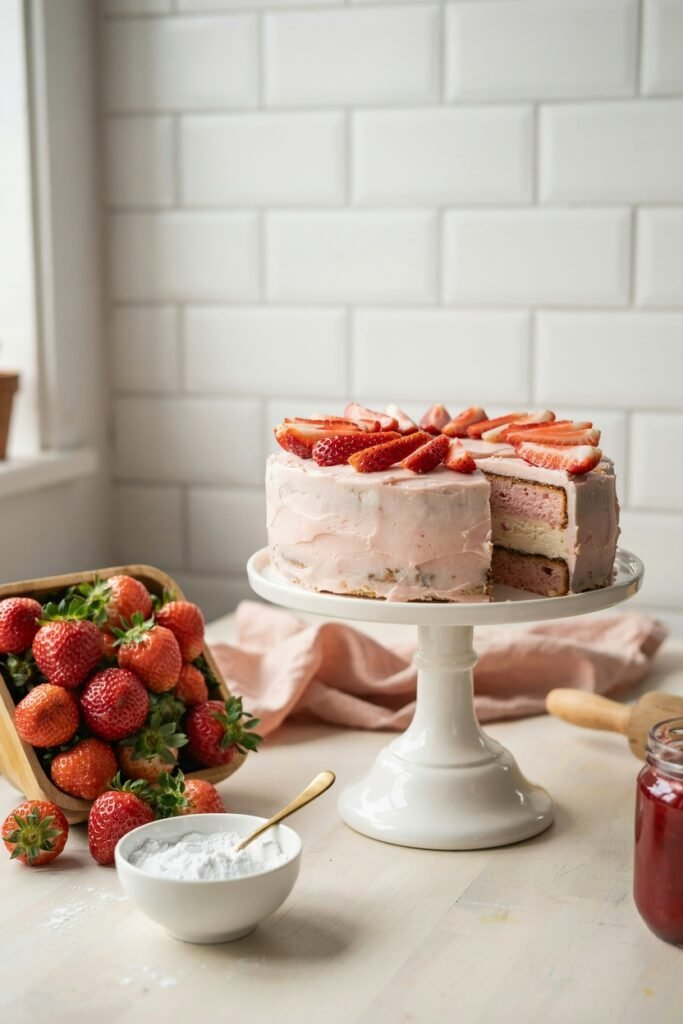
The reduction step is really the heart of this recipe. Raw strawberries are mostly water, and folding several cups of raw, chopped berries directly into a small-batch cake batter would add far too much liquid relative to the dry ingredients, resulting in a dense, wet crumb that never fully sets properly in the center.
Cooking the bulk of the strawberries down into a thick reduction first evaporates off most of that excess water while concentrating the actual fruit flavor and natural sugars, so you get concentrated strawberry flavor without the liquid problem.
The fresh diced strawberries folded in afterward serve a different purpose entirely, texture and little pockets of fresh fruit throughout the cake, rather than flavor concentration.
Tossing them lightly in flour before folding them in also matters more than it seems, since it helps prevent them from sinking straight to the bottom of the pan during baking.
Ingredients
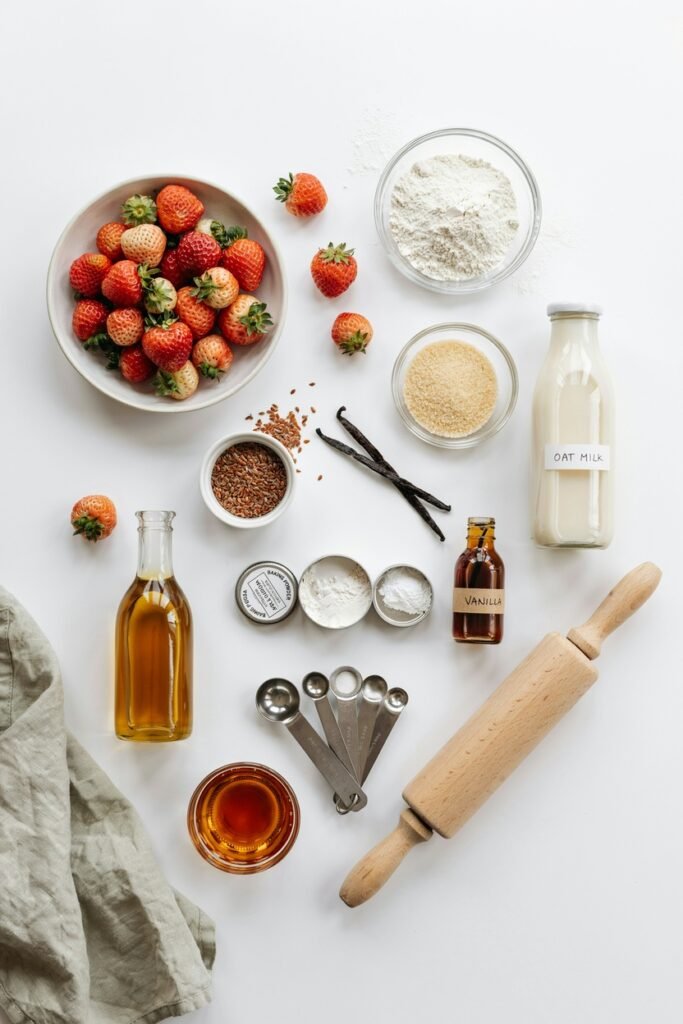
- Fresh strawberries, divided between the reduction and fresh diced additions. Using this much fruit is what sets this cake apart from a typical strawberry cake.
- Granulated sugar, both for the reduction and the batter itself.
- All-purpose flour. The base of the batter.
- Baking powder and baking soda. For lift, working together for the right rise in a smaller batter volume.
- Salt. Balances the sweetness.
- Unsweetened plant-based milk. Soy or oat milk both work well here for their richness.
- Neutral oil. Keeps the crumb moist without needing vegan butter, though butter can be substituted if you prefer.
- A flax egg (ground flaxseed mixed with water). The binding agent in place of egg.
- Vanilla extract. Rounds out the strawberry flavor.
- Apple cider vinegar. Reacts with the baking soda for extra lift, a classic vegan baking trick.
Substitutions I’ve Actually Tested
No fresh strawberries available? Frozen strawberries work for the reduction specifically, thawed first and drained slightly, though I’d stick with fresh for the diced pieces folded in at the end, since frozen berries release too much water once baked and can create soggy pockets.
Want to use vegan butter instead of oil? Melted vegan butter works, though the crumb will be very slightly less moist than with a neutral oil.
No flax available? A store-bought vegan egg replacer works as a substitute, following the package instructions for one egg’s worth.
Gluten-free? A 1:1 gluten-free flour blend works reasonably well, though the crumb will be a touch more delicate given the added moisture from the fruit.
Kitchen Tools You’ll Need
- 6-inch round cake pan
- Medium saucepan, for the reduction
- Mixing bowls
- Whisk
- Rubber spatula
- Fine mesh strainer (optional, for a smoother reduction)
- Wire cooling rack
- Toothpick, for checking doneness
How to Make Small-Batch Vegan Strawberry Cake
Step 1: Make the Strawberry Reduction
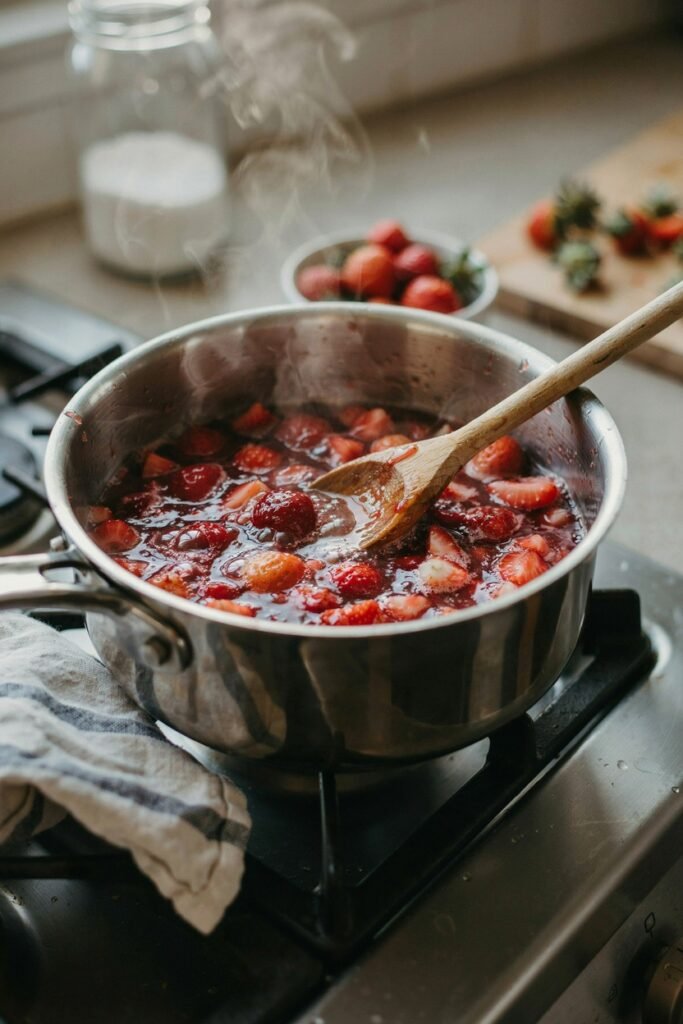
Roughly chop about 3 cups of the strawberries and add them to a medium saucepan with 2 tablespoons of sugar.
Cook over medium heat, stirring occasionally and mashing the berries a bit as they soften, for about 15 to 20 minutes, until the mixture has reduced down to a thick, jam-like consistency, roughly ¾ cup once finished.
You’ll know it’s ready when a spoon dragged through the pan leaves a brief trail before the mixture flows back together, rather than immediately looking like thin, watery liquid.
Let it cool to room temperature before using, since adding a hot reduction to the batter can affect how the leaveners react.
Step 2: Prepare the Flax Egg
Whisk together 1 tablespoon of ground flaxseed with 2.5 tablespoons of water in a small bowl, and let it sit for about 5 minutes until it thickens to a gel-like consistency similar to a beaten egg.
Step 3: Mix the Dry Ingredients
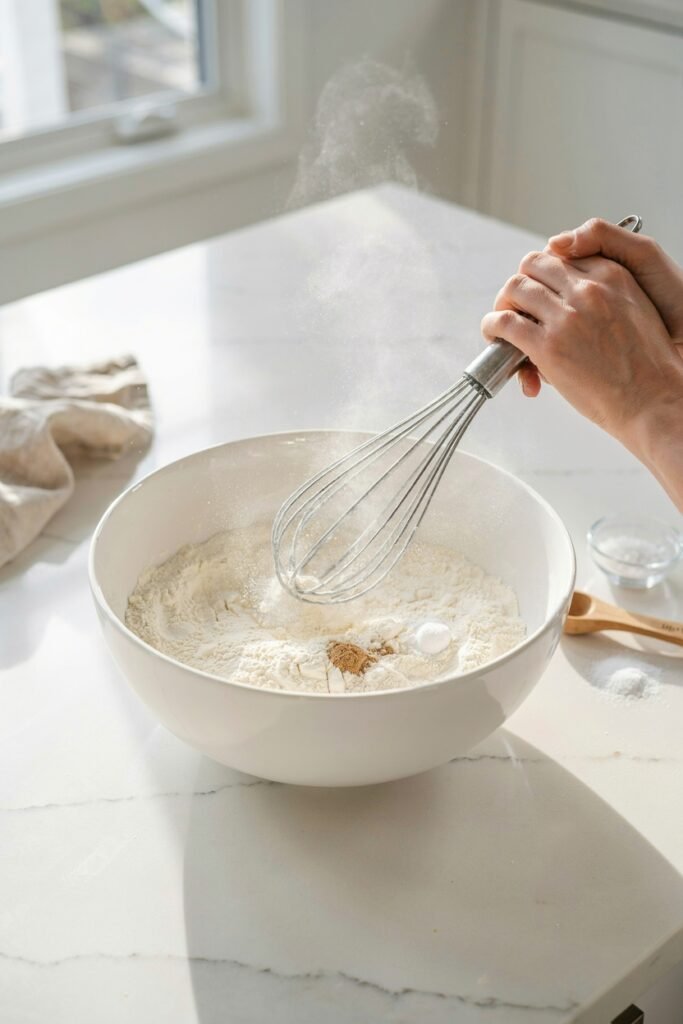
In a medium bowl, whisk together the flour, baking powder, baking soda, and salt until evenly combined, breaking up any small clumps of baking powder as you go.
Step 4: Mix the Wet Ingredients
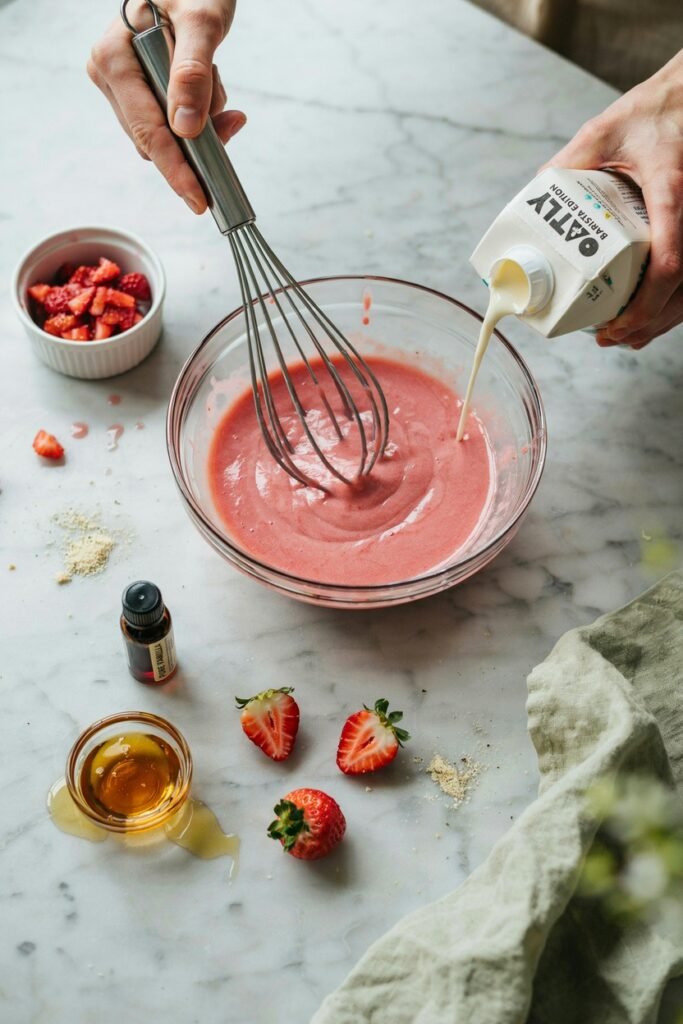
In a separate bowl, whisk together the plant-based milk, oil, remaining sugar, vanilla extract, apple cider vinegar, and the prepared flax egg until smooth.
Whisk in the cooled strawberry reduction until fully incorporated and the mixture turns a consistent pink throughout, with no separate streaks of reduction remaining.
Step 5: Combine Wet and Dry
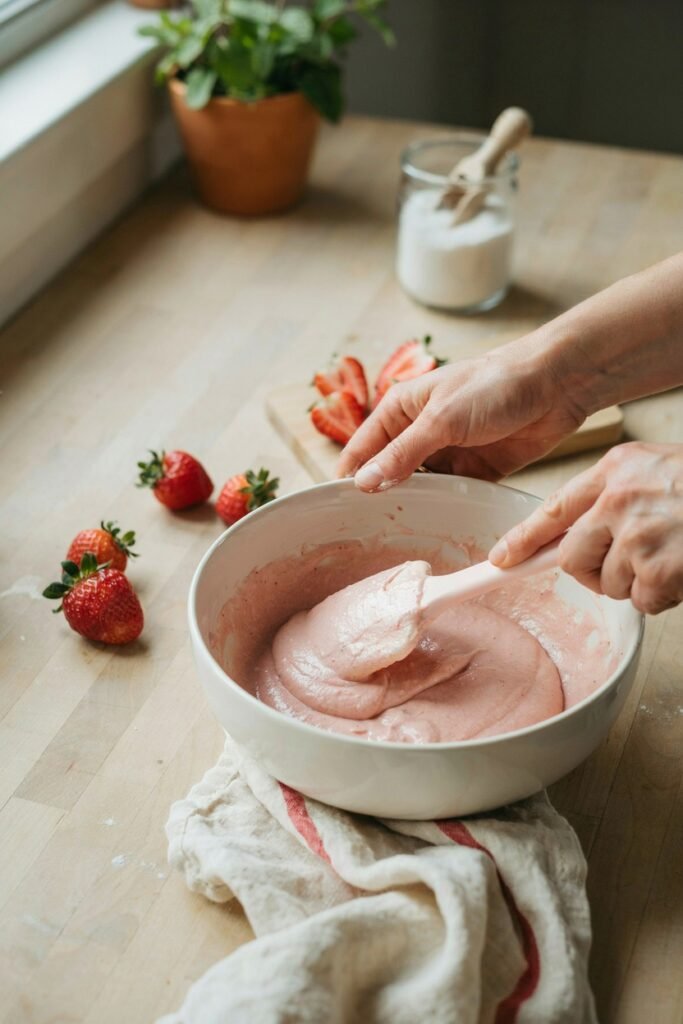
Pour the wet ingredients into the dry ingredients and fold gently with a spatula until just combined, with no dry streaks of flour remaining.
Stop as soon as it’s combined, since overmixing at this stage develops the flour’s gluten too much and leads to a denser, tougher cake rather than a light, tender one.
Step 6: Fold in Fresh Strawberries
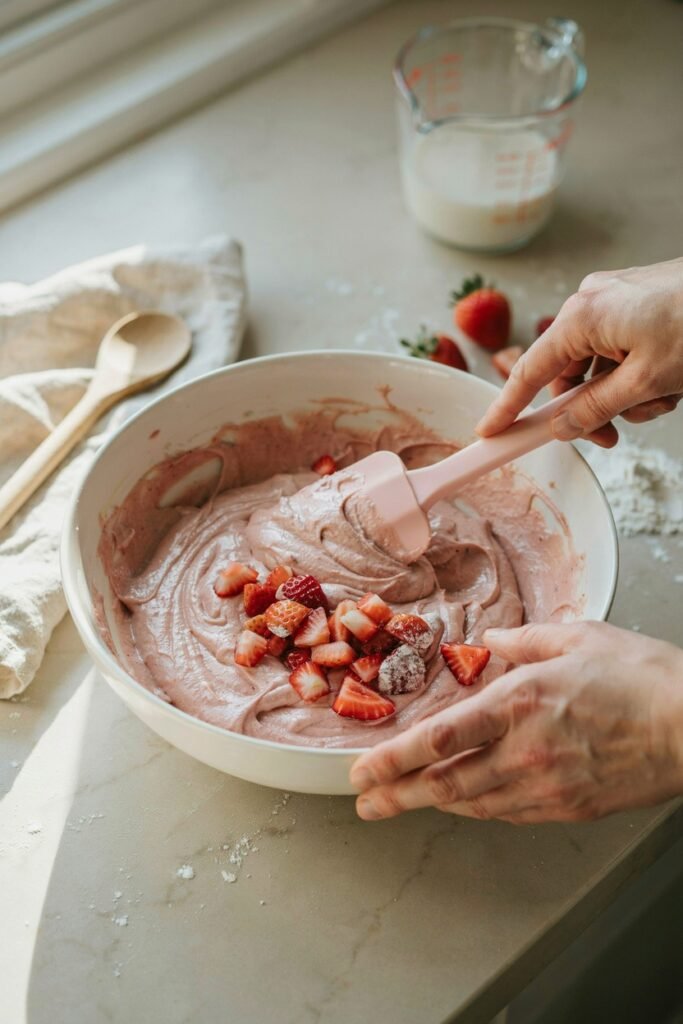
Dice the remaining 1 to 1.5 cups of fresh strawberries into small pieces and toss them lightly in a teaspoon of flour before folding them gently into the batter.
DFThis light coating helps keep them suspended throughout the cake rather than all sinking to the bottom during baking.
Step 7: Bake
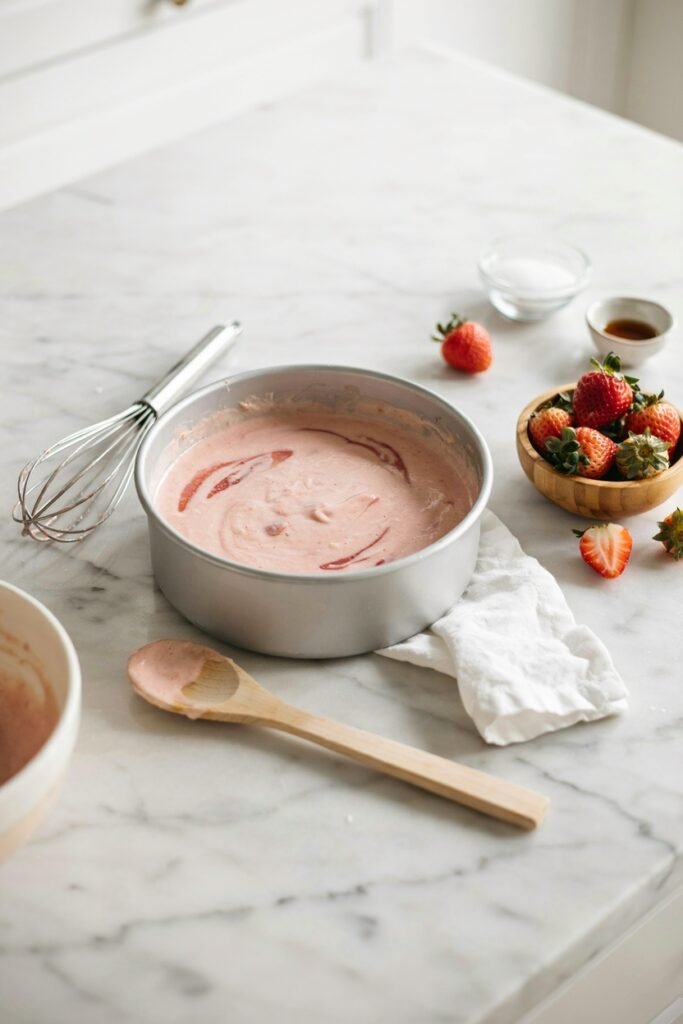
Pour the batter into your prepared, greased and lined 6-inch cake pan, smoothing the top evenly. Bake at 350°F for 40 to 45 minutes, until a toothpick inserted into the center comes out clean or with just a few moist crumbs, and the top springs back gently when pressed.
Given the added moisture from all the fruit, this cake needs a bit longer than a standard 6-inch cake recipe, so don’t pull it based on time alone without also checking with a toothpick.
Step 8: Cool Completely
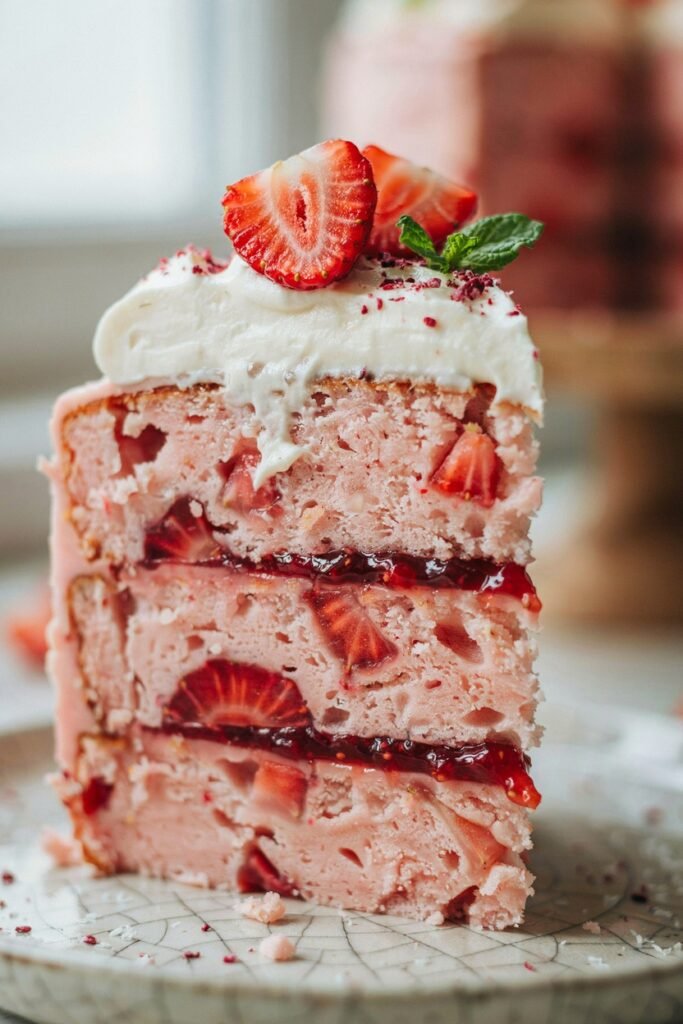
Let the cake cool in the pan for about 15 minutes, then run a thin knife around the edge and turn it out onto a wire rack to cool completely before frosting or slicing. Cutting into it warm will cause it to crumble given how moist the crumb is.
How I Meal Prep This
This cake actually holds up nicely for planning ahead, even though it’s not a traditional meal prep item.
I make the strawberry reduction up to 3 days in advance and keep it in the fridge, which means baking day itself is mostly just mixing and waiting on the oven.
If I’m serving this for a gathering, I’ll bake the full cake a day ahead too, wrapped tightly once fully cooled, and add any frosting or fresh berry garnish just before serving so it looks and tastes freshly made.
Tips From Making This More Times Than I’ll Admit
- Let the reduction cool before adding it to the batter. A hot reduction can prematurely activate the baking soda before it ever reaches the oven.
- Toss your fresh berries in flour before folding them in. Skipping this step means most of them end up in a soggy layer at the bottom of the cake.
- Don’t judge doneness by time alone. This batter is wetter than a standard cake given the fruit content, so always confirm with a toothpick.
- Let it cool completely before slicing. The crumb is delicate while warm and firms up as it cools.
- Use room temperature wet ingredients. Cold plant milk straight from the fridge can make the batter come together less smoothly.
Mistakes I’ve Made So You Don’t Have To
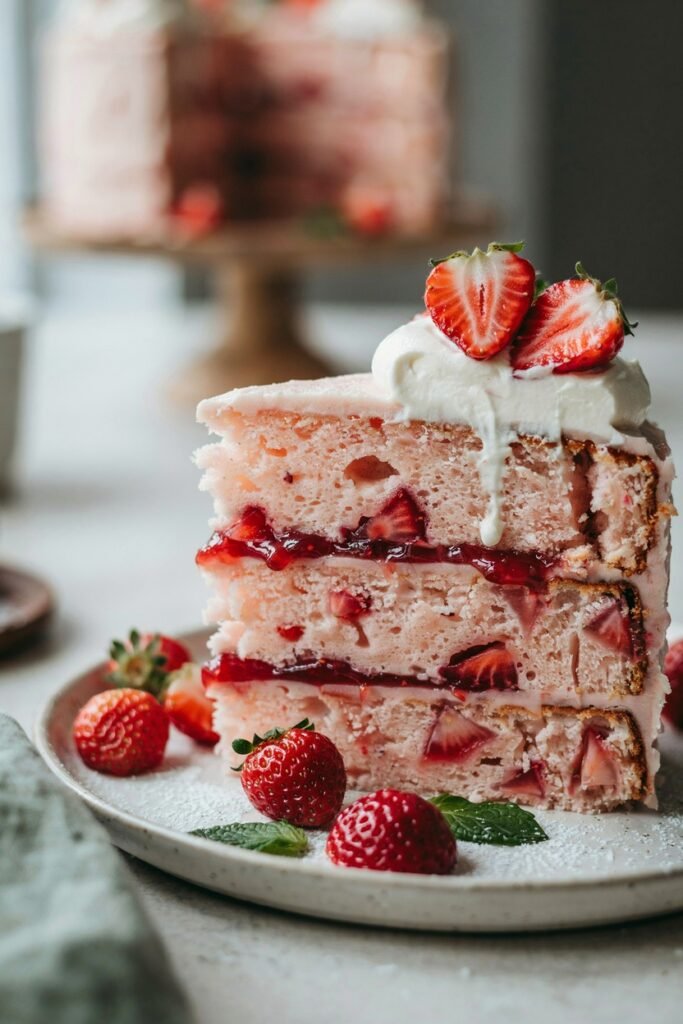
Adding the strawberry reduction while it was still warm. The batter didn’t rise as evenly, since the baking soda had already started reacting before the cake even got into the oven.
Skipping the flour toss on my fresh berries. Ended up with a distinctly soggy bottom layer instead of berries distributed evenly throughout.
Pulling the cake at the time listed for a standard recipe instead of checking with a toothpick. The center was still noticeably underbaked given how much extra moisture the fruit added.
Slicing into it while still warm because I couldn’t wait. It fell apart instead of cutting into clean slices.
Troubleshooting
My cake sank in the middle. This usually means it was slightly underbaked, which is more likely here than in a standard cake given the added moisture from the fruit. Always confirm doneness with a toothpick rather than relying on the timer alone, and consider adding a few extra minutes if it still looks wet in the center.
My cake turned out dense and gummy instead of light. Check whether the strawberry reduction was cooked down enough before adding it to the batter. An under-reduced mixture still carries too much liquid and will weigh down the crumb.
The strawberries all sank to the bottom. This means they weren’t tossed in flour before folding in, or the batter was too thin. The flour coating genuinely makes a noticeable difference here.
My cake didn’t rise much. This can happen if the reduction was added while still warm, prematurely activating the baking soda, or if your baking powder and soda aren’t fresh. Double check expiration dates if this keeps happening.
The cake tastes more like sugar than strawberries. This usually means the reduction wasn’t cooked down long enough to concentrate the fruit flavor properly. It should taste distinctly like intensified strawberry, almost jam-like, before it goes into the batter.
Recipe Variations
Strawberry Shortcake Style. Skip frosting entirely and serve slices with coconut whipped cream and extra fresh strawberries on the side.
Strawberry Lemon Cake. Add a tablespoon of lemon zest to the batter for a brighter, slightly tart contrast to the sweetness.
Layered Version. Double the recipe and bake in two 6-inch pans for a layered cake, using a simple vegan buttercream between layers.
Strawberry Balsamic Cake. Add a teaspoon of balsamic vinegar to the strawberry reduction while it cooks for a deeper, slightly tangy complexity.
What to Serve With It
- A dollop of coconut whipped cream
- A simple vegan vanilla glaze drizzled on top
- Extra fresh strawberries on the side
- A scoop of dairy-free vanilla ice cream for a full dessert
Storage
Room temperature. Store in an airtight container for up to 2 days, since the fresh berries inside mean this cake doesn’t hold quite as long as a plain vanilla cake.
Refrigerator. Store for up to 5 days if not frosted, or up to 4 days if frosted, since dairy-free frosting can soften at room temperature over time.
Freezer. Wrap the unfrosted cake tightly and freeze for up to 2 months. Thaw overnight in the fridge before frosting or serving.
Make Ahead Notes
The strawberry reduction can be made up to 3 days ahead and stored in the fridge. The full cake can also be baked a day in advance, wrapped tightly once cooled, with any frosting or garnish added just before serving.
Frequently Asked Questions
Can I make this a full-size cake instead of small-batch? Yes, though you’ll need to recalculate the ratios for a larger pan rather than just doubling everything evenly, since baking time and reduction quantity don’t scale in a perfectly linear way.
Why do I need to reduce the strawberries instead of just using puree? Raw puree carries too much water for a small-batch cake this size, and would result in a dense, gummy crumb. Reducing it first concentrates the flavor while removing excess liquid.
Can I use frozen strawberries for the whole recipe? For the reduction, yes. For the fresh diced pieces folded in at the end, fresh is strongly preferred, since frozen berries release too much water once baked and can create soggy pockets in the finished cake.
Why did my cake turn out gummy in the center? This usually means the reduction wasn’t cooked down enough, or the cake was slightly underbaked given how much moisture the fruit adds. Always check with a toothpick rather than time alone.
Can I frost this while it’s still slightly warm? No, wait until it’s fully cooled, since frosting a warm cake will cause it to melt and slide right off.
Final Thoughts
This turned into the recipe that finally convinced me a strawberry cake could taste like actual strawberries instead of vague pink sweetness.
The reduction step takes a bit of patience, but it’s genuinely the detail that makes this cake taste as intensely fruity as it does.
If you’re looking for another fruit-forward dessert that doesn’t skimp on real flavor, my keto lemon bread leans on the same principle of using real citrus rather than relying on extract alone.
If you make this, let me know how you finished yours, plain, glazed, or with a full frosting.