Crispy Miso Glazed Eggplant (Quick & Easy)
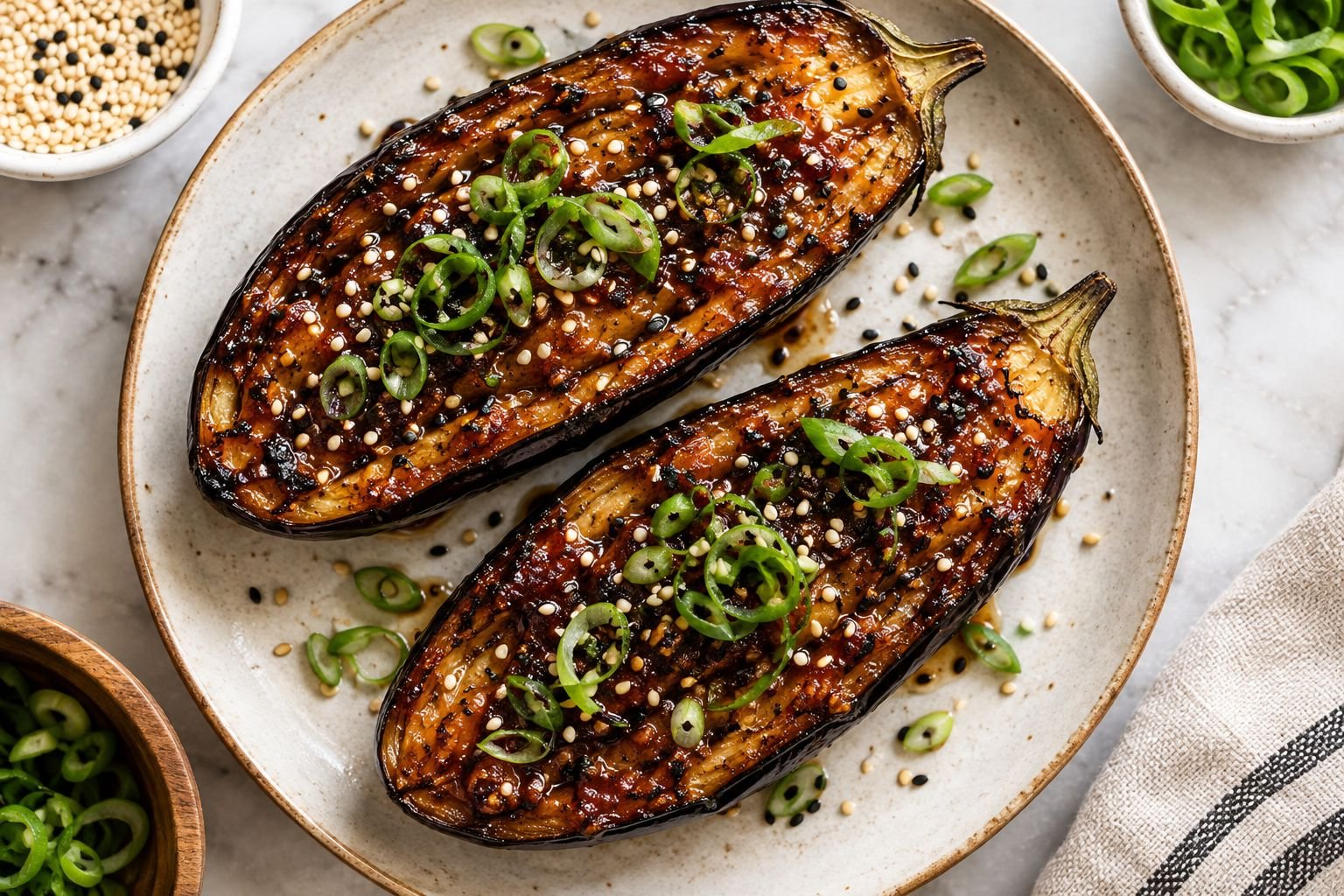
Eggplant used to be the vegetable I avoided most in the produce aisle. Too many watery, bland stir-fries had convinced me it just wasn’t worth the effort, soft in all the wrong places, bland in the middle, and never quite worth the prep. Then I tried scoring the cut side and broiling it under a sticky miso glaze, and the whole thing clicked.
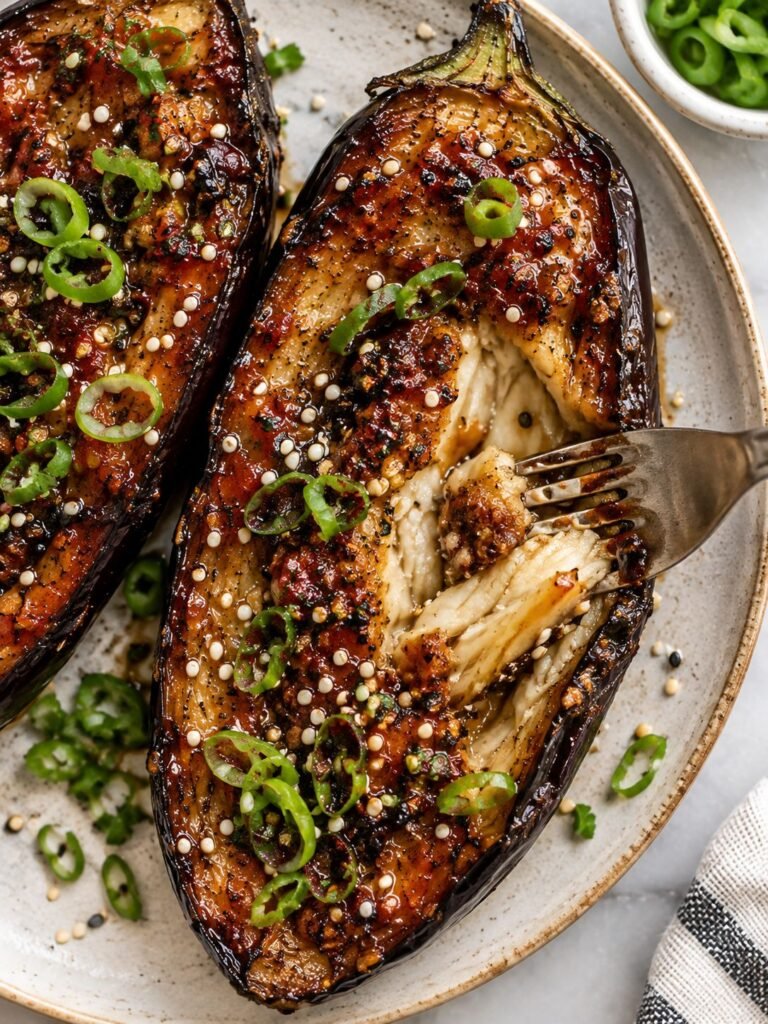
The scoring lets the glaze soak in deep instead of just sitting on top, and a hot broiler turns the surface glossy and slightly charred while the inside goes soft and custardy in a way that actually tastes intentional instead of mushy.
It’s the kind of recipe that makes people who “don’t like eggplant” ask for seconds, I’ve watched it happen more than once at my own table.
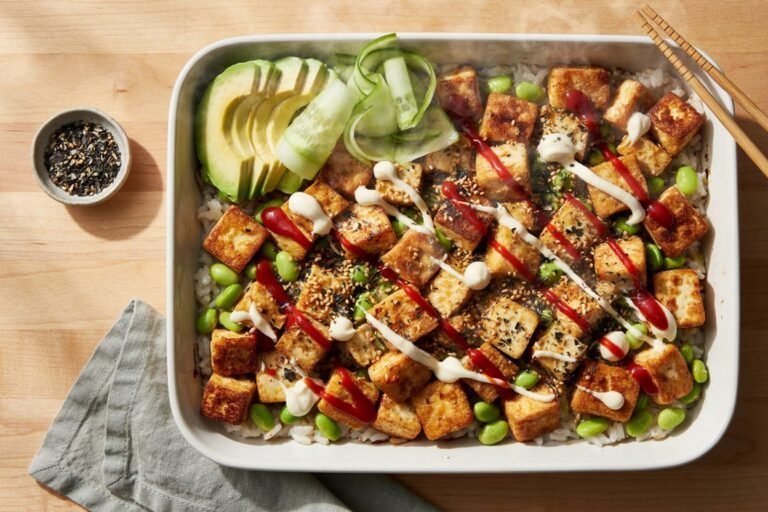
This one comes together fast, there’s no deep frying, no complicated technique, just a simple glaze and a hot oven doing most of the work. If you liked the sweet-savory balance in my bang bang tofu, this glaze hits a similar note, just leaning more into umami than heat.
It’s become one of those recipes I reach for when I want something that looks and tastes like more effort than it actually took.
Why You’ll Love This
That glaze is unbelievably good. Sweet, salty, deeply savory, miso does a lot of heavy lifting here with very few ingredients, and it caramelizes into something genuinely sticky and glossy under the broiler.
Ready in under 30 minutes. No marinating time needed, the scoring lets the flavor soak in fast, so this is a legitimate weeknight dinner, not just a weekend project.
Restaurant-style presentation with almost no effort. These look like something off a menu, dark, glossy, charred at the edges, but the actual technique is simple enough for a weeknight and doesn’t require any special skill.
Naturally vegan and easy to make gluten-free. A simple swap to tamari is all it takes, no other substitutions needed.
A genuinely great way to convert eggplant skeptics. The texture here is completely different from a watery stir-fry, custardy and rich rather than spongy, and the glaze gives people something familiar and craveable to latch onto.
What Makes This Recipe Work
Two things are doing most of the work here, and neither one is complicated. First, the crosshatch scoring dramatically increases the surface area of the cut side, which means more of the glaze actually makes contact with the flesh instead of just sitting on top and sliding off.
Second, roasting and broiling in two separate stages lets you fully cook the eggplant through before you ever introduce the glaze’s sugar content to direct heat.
Miso and maple syrup both caramelize fast, so trying to cook the eggplant and caramelize the glaze at the same time either leaves you with undercooked eggplant or burnt sugar, sometimes both. Splitting it into roast-then-broil solves that problem completely.
Equipment Needed
- A rimmed baking sheet
- Parchment paper, to keep the glaze from sticking and make cleanup easier
- A small mixing bowl for the glaze
- A pastry brush, though the back of a spoon works in a pinch
- A sharp paring knife for scoring
Recipe Ingredients
For the eggplant:
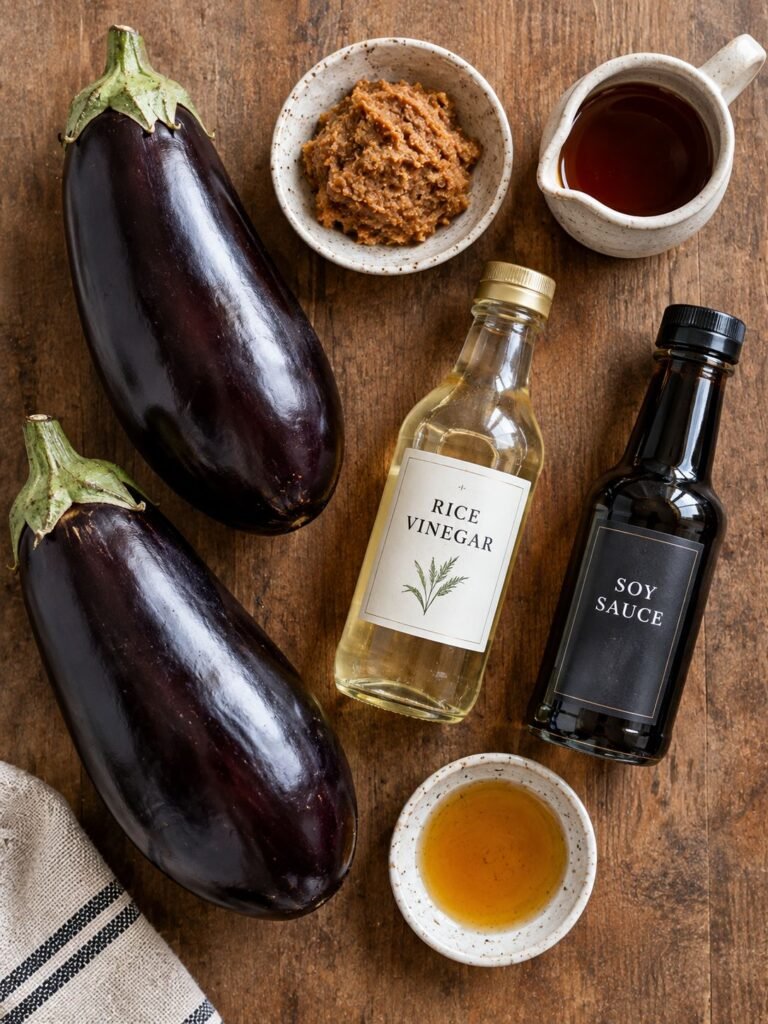
- 2 medium eggplants, halved lengthwise
- 1 tablespoon neutral oil
For the miso glaze:
- 3 tablespoons white or yellow miso paste
- 2 tablespoons maple syrup
- 1 tablespoon rice vinegar
- 1 tablespoon soy sauce or tamari
- 1 teaspoon sesame oil
- 1 to 2 tablespoons water, to thin as needed
For serving:
- Sesame seeds
- Sliced green onions
- Cooked rice, optional
If You Need to Substitute
No white miso? Red or brown miso works too, it’ll just give you a slightly stronger, more savory, more fermented flavor than the sweeter, milder white variety. If you’re using red or brown miso, start with slightly less than the recipe calls for and taste as you go.
No maple syrup? Brown sugar or agave both work as a 1:1 swap, whisked in until fully dissolved. Brown sugar will need a few extra seconds of whisking to break down completely.
Want it spicier? A small spoonful of chili crisp or a pinch of red pepper flakes stirred into the glaze adds a nice kick against the sweetness without overwhelming the miso.
No rice vinegar? A small splash of apple cider vinegar or fresh lime juice gets you a similar brightness, though the flavor will be slightly different.
A Note About Miso
Not all miso pastes are created equal, and the one you use will genuinely change this dish. White miso, sometimes labeled shiro miso, is fermented for the shortest amount of time and has the mildest, sweetest flavor, it’s the one I default to here because it lets the maple syrup and savory notes balance evenly.
Yellow miso sits in the middle. Red and brown misos are fermented longer and taste noticeably saltier and more intense, they’re not wrong for this recipe, just different, leaning the finished dish more savory than sweet.
If you’ve only got one tub of miso in your fridge, whatever it is will still work, just taste your glaze before brushing it on and adjust the maple syrup if it needs a little more sweetness to balance out a stronger miso.
How to Make It
Step 1: Score the Eggplant
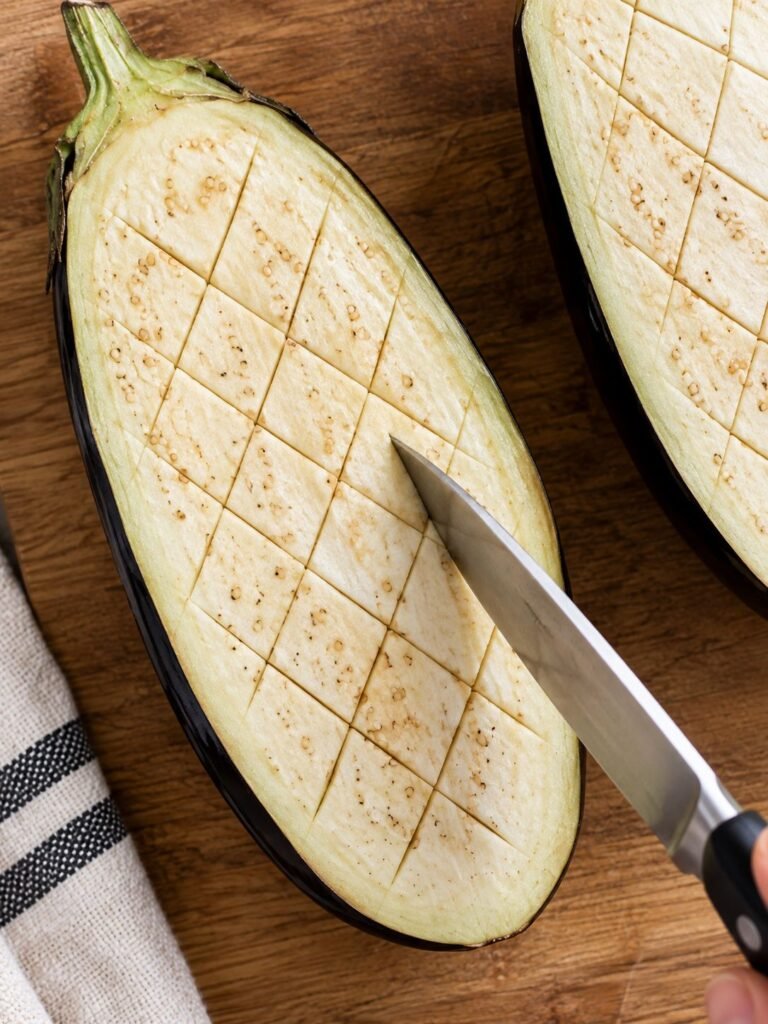
Halve the eggplants lengthwise, then use a sharp knife to score the cut side in a diagonal crosshatch pattern, cutting about halfway into the flesh without piercing the skin.
This is what lets the glaze soak in deeply instead of just coating the surface, so don’t skip it even though it feels like an extra step. Take your time here, a clean, even crosshatch matters more than a fast one.
Step 2: Roast the Eggplant First
Preheat the oven to 425°F. Brush the cut side of each eggplant half with the neutral oil and place them cut-side up on a parchment-lined baking sheet. Roast for 20 to 25 minutes, until the flesh is soft and a knife slides in easily with almost no resistance.
Step 3: Make the Miso Glaze
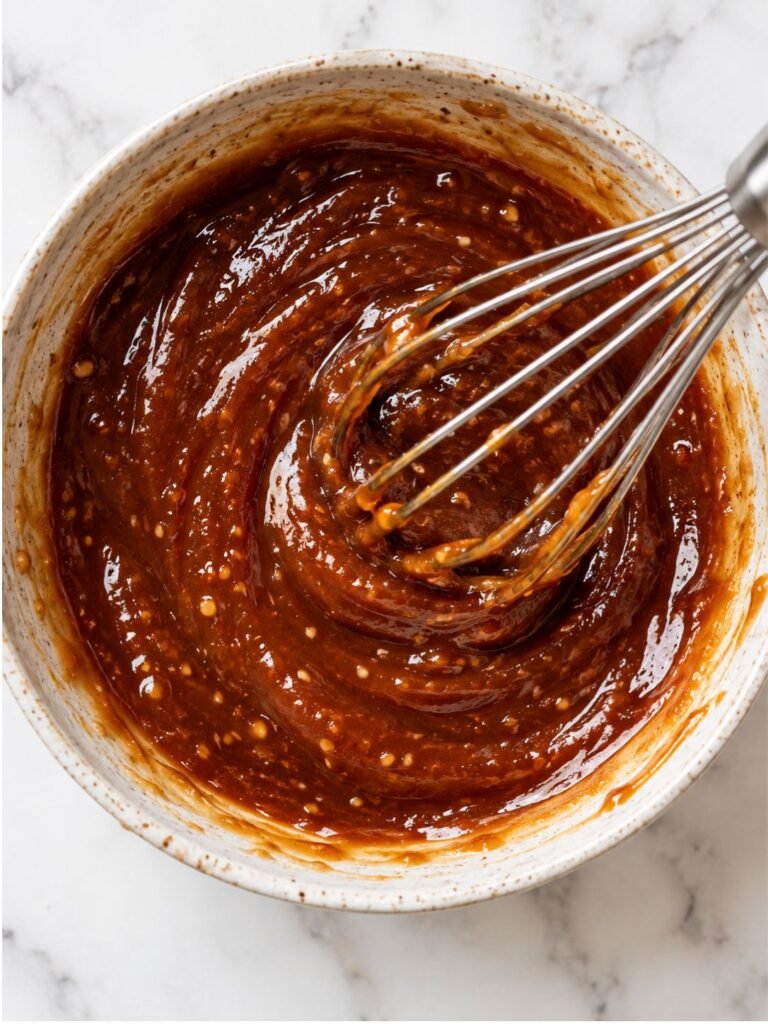
While the eggplant roasts, whisk together the miso paste, maple syrup, rice vinegar, soy sauce, and sesame oil in a small bowl until smooth.
Add water a teaspoon at a time if the glaze feels too thick to brush on easily, you want it pourable but still clinging to a spoon, similar to the texture of a thick barbecue sauce.
Step 4: Glaze and Broil
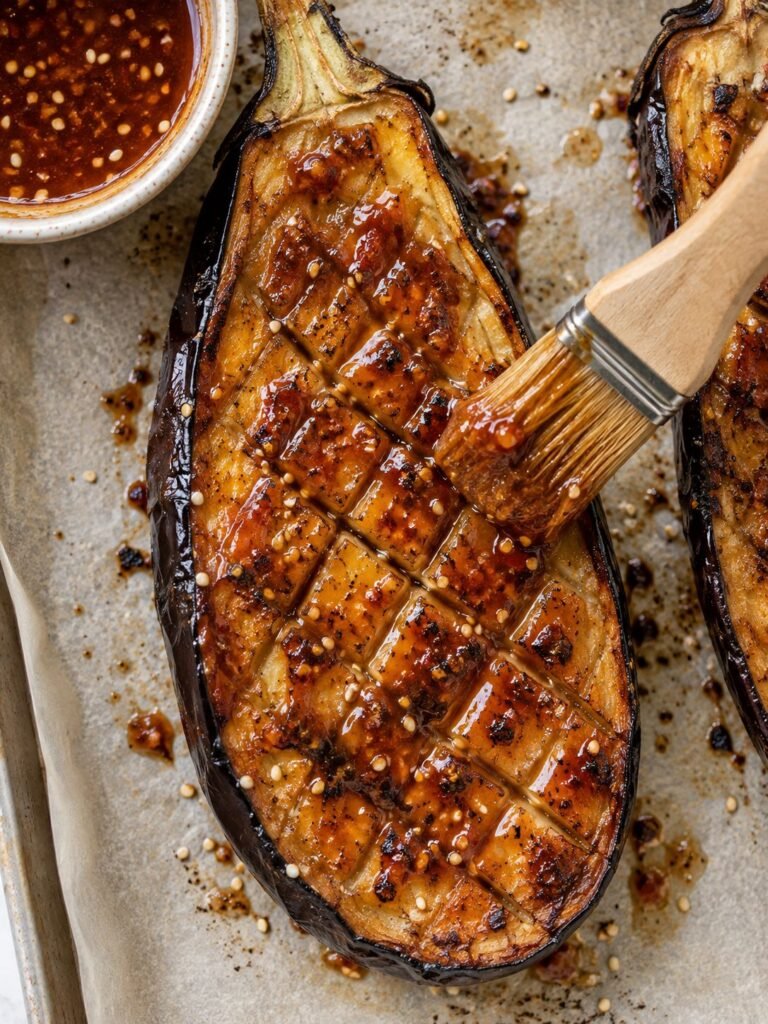
Remove the eggplant from the oven and switch it to broil. Brush a generous layer of the miso glaze over the cut side of each half, getting it down into the scored crosshatch marks.
Broil for 3 to 5 minutes, watching closely, until the glaze is bubbling and starting to char slightly at the edges.
Step 5: Garnish and Serve
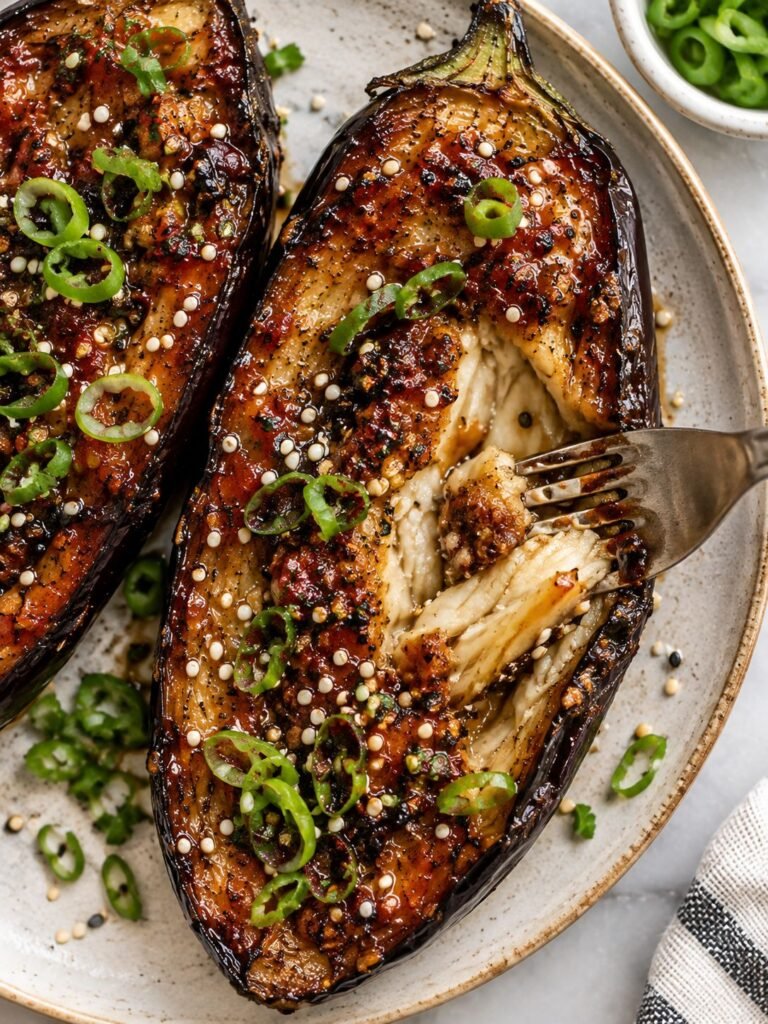
Transfer the eggplant to a serving plate and top with a scattering of sesame seeds and sliced green onions. Serve immediately while the glaze is still warm and glossy, over rice if you’d like a full meal.
Why This Method Works
Roasting first means the eggplant is fully cooked through before it ever sees the broiler, so all that intense top heat only has one job left, caramelizing the glaze.
That’s the whole reason this recipe doesn’t ask you to babysit the oven for 25 straight minutes, the roasting stage is hands-off, and the broiling stage, the part that actually needs your attention, only takes a few minutes.
Scoring beforehand means the glaze has somewhere to go besides sliding right off a smooth, rounded surface, so you get flavor all the way through the flesh instead of just on the very top layer.
How to Tell When It’s Done
The eggplant is ready to come out of the roasting stage when a knife or skewer slides into the thickest part of the flesh with almost no resistance, if you feel any firmness in the center, give it another 5 minutes.
Once glazed and under the broiler, you’re looking for the glaze to go from matte to glossy and start bubbling actively, with darker, slightly blistered spots forming at the highest points of the crosshatch scoring.
Those darker spots are exactly what you want, that’s the caramelization that gives this dish its depth, just don’t let them go past deep brown into black.
Troubleshooting
My glaze slid right off instead of soaking in. Your scoring probably wasn’t deep enough, or the eggplant wasn’t fully roasted and soft yet when you applied it. A soft, cooked surface holds glaze much better than a firm one.
The eggplant is still firm after roasting. Larger eggplants can need a few extra minutes. Give it another 5 to 10 minutes at 425°F and check again with a knife before moving on to the glaze.
My glaze burned under the broiler. Broilers vary a lot between ovens, if yours runs hot, move your oven rack down one level and check at the 2-minute mark instead of waiting the full 3 to 5 minutes.
Prep-Ahead Checklist
- Miso glaze whisked together and stored in the fridge
- Eggplants halved and ready to score
- Baking sheet lined with parchment
- Sesame seeds and green onions sliced for garnish
Make Ahead
You can make the glaze up to a week in advance and keep it in a sealed container in the fridge, which shortens this to a genuinely fast weeknight dinner, just score and roast the eggplant, then brush on the glaze you’ve already made.
I don’t recommend roasting the eggplant itself too far ahead, it’s best glazed and broiled shortly after coming out of the oven while it’s still fully hot.
Store and Freeze
Store leftovers in an airtight container in the fridge for up to 3 days. Reheat in the oven or under the broiler for a few minutes to bring back some of that glossy, slightly charred finish, a microwave will leave the glaze more dull and the texture softer.
This doesn’t freeze particularly well. Eggplant’s texture changes quite a bit after freezing and thawing, becoming noticeably more watery and less custardy, so I’d recommend making this fresh rather than planning to freeze extras.
Pairings
This eggplant pairs well with simple steamed or garlic rice, a light cucumber salad, or a bowl of miso soup for a more complete Japanese-inspired meal. It also works nicely alongside my vegan sushi bake if you want to build out a bigger spread.
Serving for Kids or a Crowd
For kids or anyone sensitive to strong flavors, hold back a little of the maple syrup and skip the chili add-in entirely, the base glaze is mild enough on its own that most kids do fine with it once it’s out of the broiler and cooled slightly.
For a crowd, this scales easily, just make sure your baking sheet gives each half enough space to roast evenly rather than crowding them together, and glaze in batches under the broiler if you can’t fit everything at once.
More Recipes
Serving Suggestions and Variations
Over rice. A bowl of steamed rice under the glazed eggplant halves turns this into a complete, satisfying dinner with almost no extra effort.
As part of a bigger spread. Serve alongside other small plates, edamame, a cucumber salad, some steamed dumplings, for a more elaborate meal.
With extra chili. A drizzle of chili crisp or a scattering of thinly sliced fresh chili over the top adds heat if you want it spicier than the base glaze.
Cubed instead of halved. Cut the eggplant into large cubes before roasting for a slightly different presentation, just reduce the roasting time by about 5 minutes since smaller pieces cook faster.
Mistakes I’ve Made So You Don’t Have To
Skipping the scoring step to save time. The glaze just sat on the surface instead of soaking in, and the finished dish tasted noticeably less flavorful all the way through, especially toward the center.
Broiling from the very start instead of roasting first. The glaze burned before the eggplant had a chance to actually cook through, leaving me with a charred top and a raw, bitter center.
Walking away during the broiling step. I lost an entire batch to burnt sugar in the glaze in under a minute, broilers work fast and this really isn’t a step to multitask through.
Using red miso in the same quantity as white without tasting first. The finished glaze came out far saltier and more intense than I intended, and I had to scramble to balance it with extra maple syrup after the fact.
Frequently Asked Questions
Do I need to peel the eggplant first? No, the skin holds the halves together and softens nicely during roasting, no peeling needed.
Can I make this on the stovetop instead of the oven? Roasting and broiling gives the best texture, but you can pan-sear the cut side in a hot skillet with a little oil, then brush on the glaze and finish under the broiler for a couple of minutes.
Is this recipe gluten-free? Use tamari instead of soy sauce and double-check your miso paste, some brands contain barley, and it’s good to go.
Can I use a different vegetable? This glaze works well on zucchini or portobello mushrooms too, just adjust the roasting time since they’ll cook faster than eggplant.
Why is my eggplant bitter? Older, larger eggplants can sometimes have a slightly bitter edge. Choosing smaller, firmer eggplants with smooth, unblemished skin generally avoids this issue entirely.
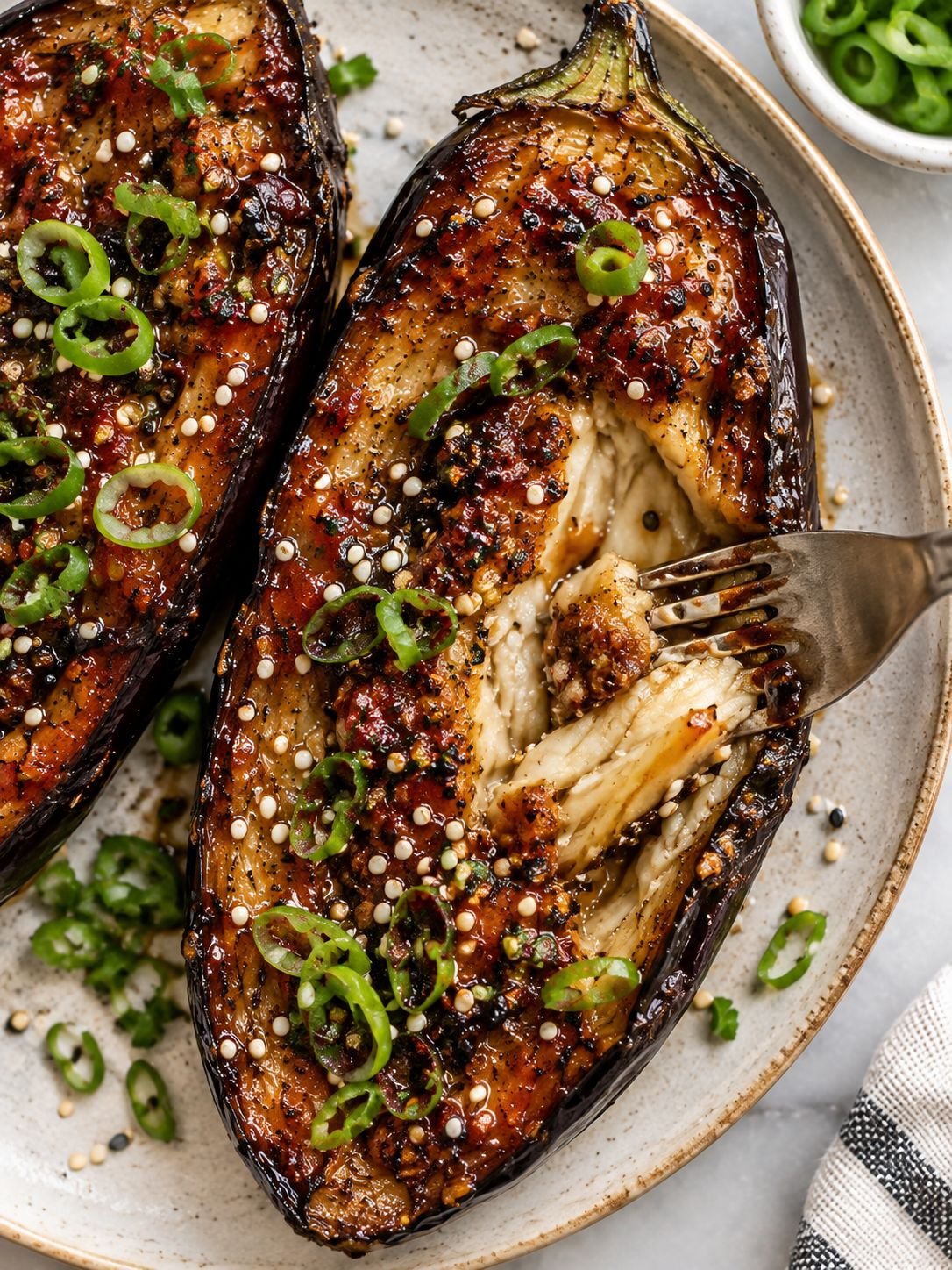
Crispy Miso Glazed Eggplant
Ingredients
Method
- Score the cut side of each eggplant half in a crosshatch pattern.
- Brush with oil and roast at 425°F for 20-25 minutes, until soft.
- Whisk together the miso glaze ingredients.
- Brush the glaze over the roasted eggplant and broil for 3-5 minutes, until bubbling and charred at the edges.
- Garnish with sesame seeds and green onions, and serve.
Notes
- Score the eggplant deeply enough to let the glaze soak in, not just coat the surface.
- Watch closely under the broiler, the glaze’s natural sugars can burn quickly.
- Leftovers keep in the fridge for up to 3 days; this dish doesn’t freeze well.