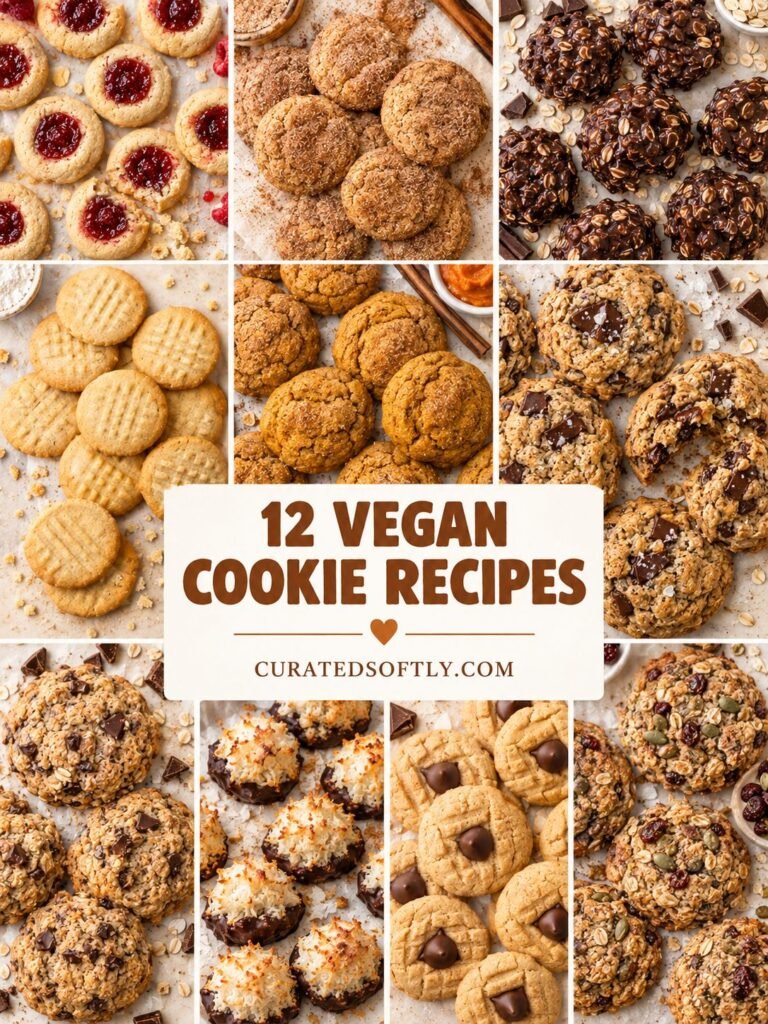
12 Vegan Cookie Recipes
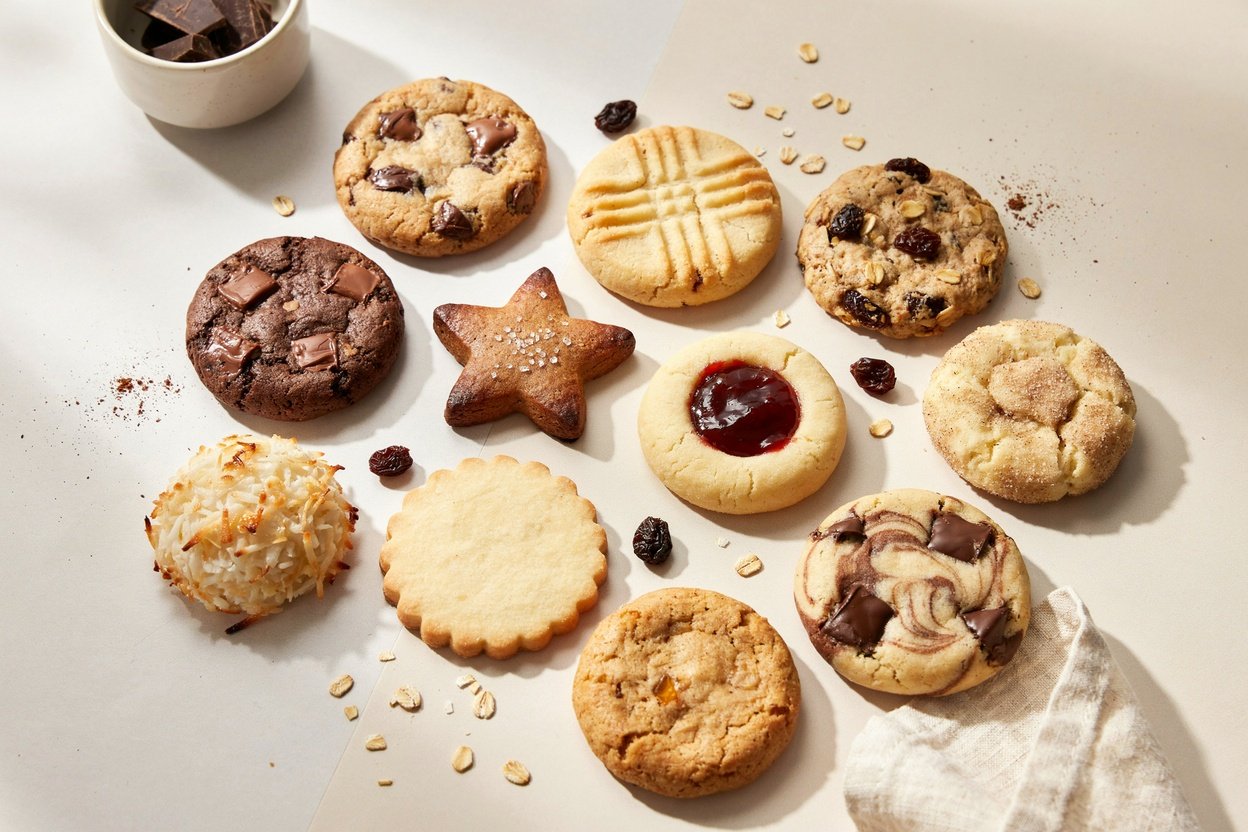
Cookies are one of the easiest things to veganize without losing any of what makes them good in the first place. Butter swaps in cleanly, eggs have several reliable stand-ins depending on the recipe, and good dairy-free chocolate is easier to find in a regular grocery store than it’s ever been.
This roundup covers 12 different styles, chewy, crispy, fudgy, no-bake, so there’s a cookie here for pretty much any craving. Each one includes the full ingredient list, step-by-step instructions, and an approximate calorie count, along with a few notes on what makes each recipe work the way it does.
If you’ve made my vegan jam tartlets, a couple of the techniques here, like the jam thumbprint cookies below, will feel familiar. I’ve tested each of these more than once to make sure the vegan versions actually hold up on their own, not just as a passable substitute for the dairy version, so you shouldn’t need to make any adjustments the first time through.
Common Vegan Baking Substitutes for Cookies
A small handful of ingredients do most of the substitution work across this roundup, and knowing what each one contributes makes it easier to adjust any recipe on your own.
Vegan butter. Swaps in at a 1:1 ratio for dairy butter in almost every cookie recipe. Stick brands designed for baking tend to perform more predictably than tub-style spreads, which often have a higher water content.
Flax egg. One tablespoon of ground flaxseed mixed with three tablespoons of water, left to sit for about 5 minutes until it thickens into a gel, replaces one egg in most cookie recipes. It works especially well in heartier, spiced, or chocolate-based cookies where a slightly nutty flavor blends in easily.
Aquafaba. The liquid from a can of chickpeas, three tablespoons replace one egg, whips up with a texture surprisingly similar to egg whites. This is the better choice for lighter, more delicate cookies like macaroons, where a flax egg’s texture and flavor would be more noticeable.
Mashed banana. Used in a few recipes below for both moisture and binding, ripe banana also adds a subtle sweetness, which is worth accounting for if you’re sensitive to how sweet a cookie turns out.
Choosing Your Vegan Butter
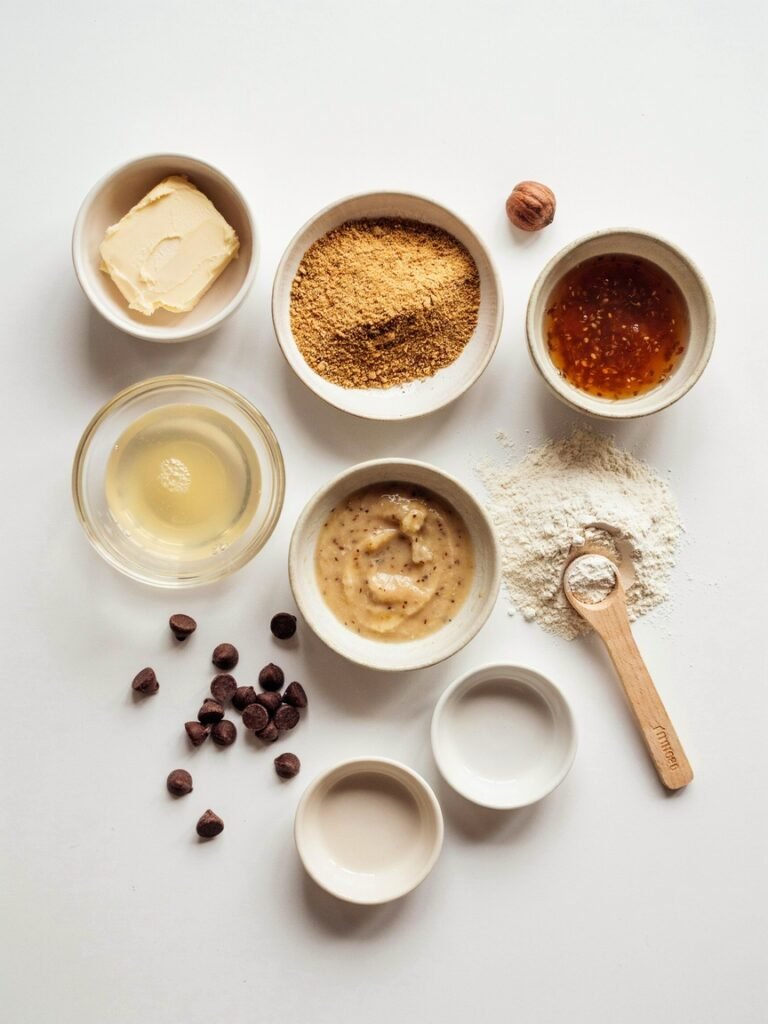
Vegan butter isn’t a single, uniform product, and the type you grab has a real effect on how a cookie bakes.
Stick-style vegan butter (recommended). Formulated specifically to behave like dairy butter in baking, with a similar fat and water content. This is what I’d reach for across every recipe in this roundup for the most predictable results.
Tub-style spreads. These often have a higher water content and are meant for spreading on toast rather than baking, so cookies made with them tend to spread more and turn out slightly greasier. If it’s all you have, chilling the dough for 20 to 30 minutes before baking helps counteract the extra moisture.
Coconut oil. Works as a substitute in a pinch, particularly in the no-bake and chocolate-heavy recipes here, but it firms up much harder than vegan butter once chilled and can make baked cookies taste faintly of coconut unless a refined, flavorless version is used.
Choosing Your Vegan Chocolate
Not all chocolate is automatically vegan, and the type you choose affects both flavor and how well it melts or holds its shape in a cookie.
Dairy-free chocolate chips. Widely available now in most grocery stores, these are formulated to hold their shape in baking, similar to regular chocolate chips.
Dark chocolate bars, chopped. Many dark chocolate bars, 70% cacao and above especially, are naturally dairy-free, just double check the label, since some still include milk fat or are processed on shared equipment. Chopped bar chocolate gives you uneven chunks and pools of melted chocolate that chips alone don’t.
Cacao nibs. Not a true chocolate substitute, but a good way to add chocolate flavor and crunch without the sweetness of chips, useful in recipes where you want depth without extra sugar.
1. Classic Vegan Chocolate Chip Cookies
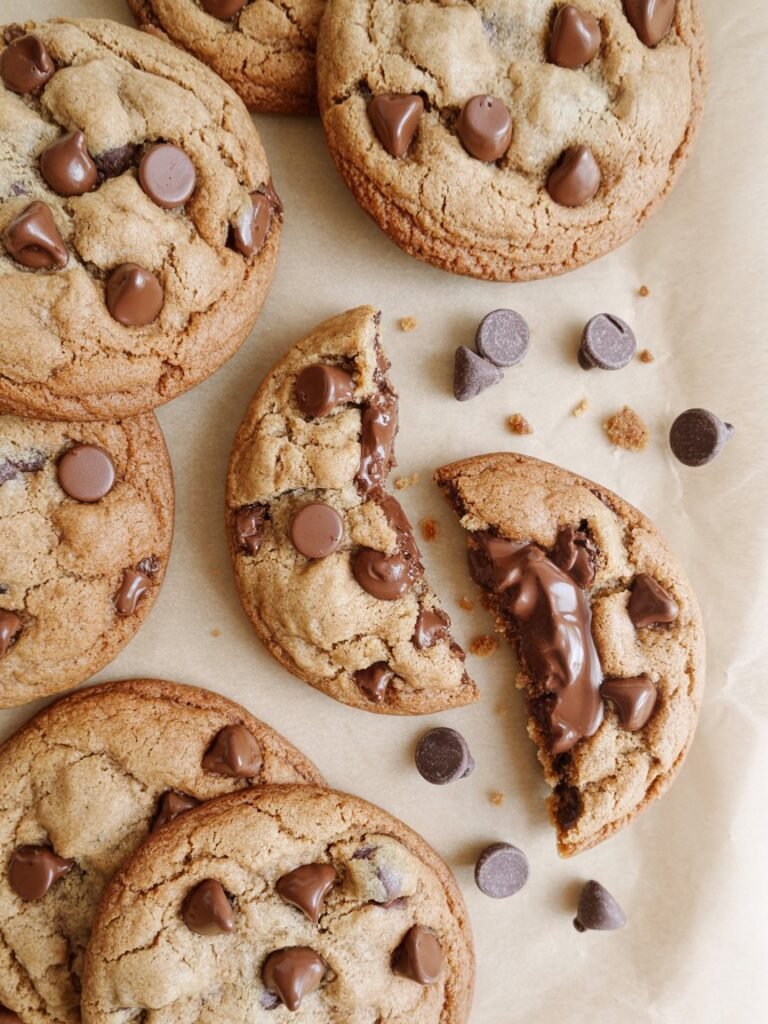
Crisp at the edges and chewy in the middle, this is the cookie every other one on this list gets compared to. Browning the vegan butter before mixing it into the dough adds a deeper, slightly nutty flavor that plain melted butter doesn’t give you, though it does mean letting the browned butter cool back down to room temperature before combining it with the sugars, adding it while still hot can start cooking the flax egg prematurely.
The ratio of brown to granulated sugar here matters more than it looks. Brown sugar’s higher moisture content is what keeps the centers soft and chewy, while the smaller amount of granulated sugar helps the edges crisp up properly, too much of either one throws off that contrast.
Ingredients
- 1/2 cup vegan butter, melted
- 3/4 cup brown sugar
- 1/4 cup granulated sugar
- 1 flax egg
- 1 teaspoon vanilla extract
- 1 1/4 cups all-purpose flour
- 1/2 teaspoon baking soda
- 1/2 teaspoon salt
- 1 cup dairy-free chocolate chips
How to Make It
- Whisk the melted vegan butter with the brown sugar and granulated sugar until smooth.
- Whisk in the flax egg and vanilla extract.
- Add the flour, baking soda, and salt, stirring just until combined.
- Fold in the chocolate chips.
- Scoop onto a lined baking sheet and bake at 350°F for 10 to 12 minutes, until the edges are golden but the centers still look slightly underdone.
Tip: if you have 30 minutes to spare, chill the scooped dough balls before baking. It deepens the flavor slightly and helps the cookies hold a thicker shape instead of spreading thin.
Calories: approximately 150 per cookie
2. Peanut Butter Cookies
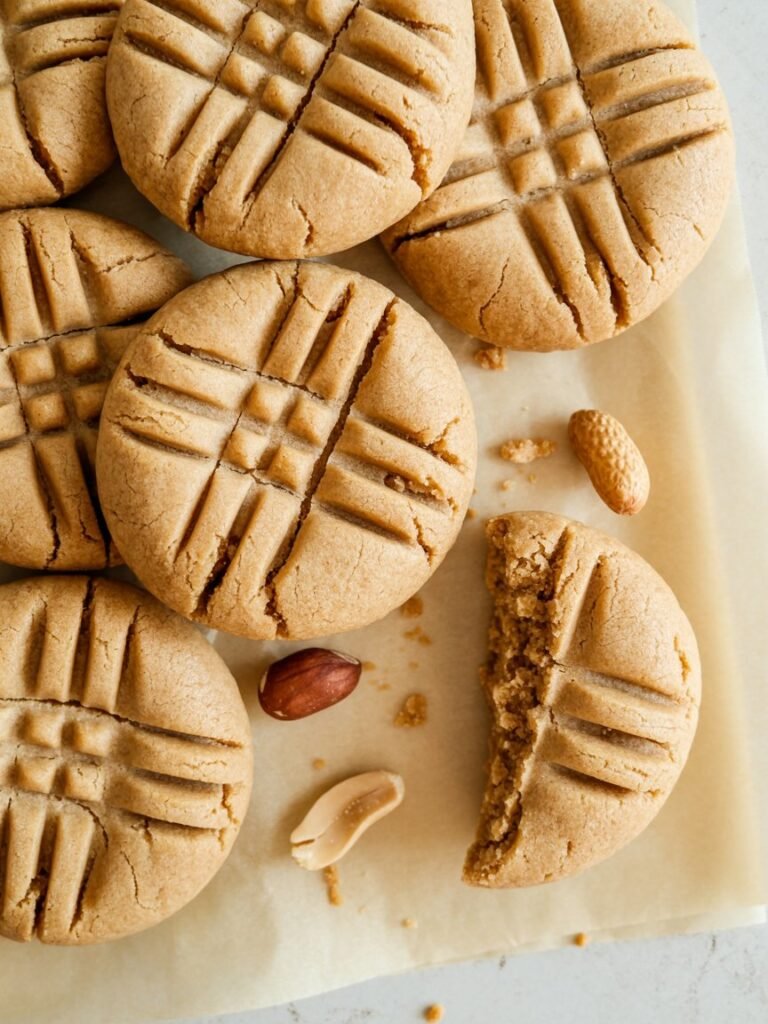
A simple, three-ingredient-base cookie built around peanut butter, with a soft, dense texture and that classic crisscross fork pattern on top.
Since there’s no flour-based structure doing much work here beyond a small amount to bind things, the type of peanut butter you use has an outsized effect. A standard, shelf-stable creamy peanut butter holds together far more reliably than a natural, oil-separated one, which can leave the dough greasy and prone to spreading.
Ingredients
- 1 cup creamy peanut butter
- 3/4 cup brown sugar
- 1 flax egg
- 1 teaspoon vanilla extract
- 1/4 teaspoon baking soda
- 1/4 teaspoon salt
How to Make It
- Mix the peanut butter and brown sugar together until smooth.
- Stir in the flax egg and vanilla extract.
- Add the baking soda and salt, mixing until fully combined.
- Roll into balls, place on a lined baking sheet, and press a crisscross pattern into each with a fork.
- Bake at 350°F for 9 to 10 minutes, until just set. These will firm up more as they cool.
Tip: dip your fork in a little water or sugar before pressing the crisscross pattern, this keeps the peanut butter dough from sticking to the tines and dragging instead of leaving a clean imprint.
Calories: approximately 130 per cookie
3. Chewy Oatmeal Raisin Cookies
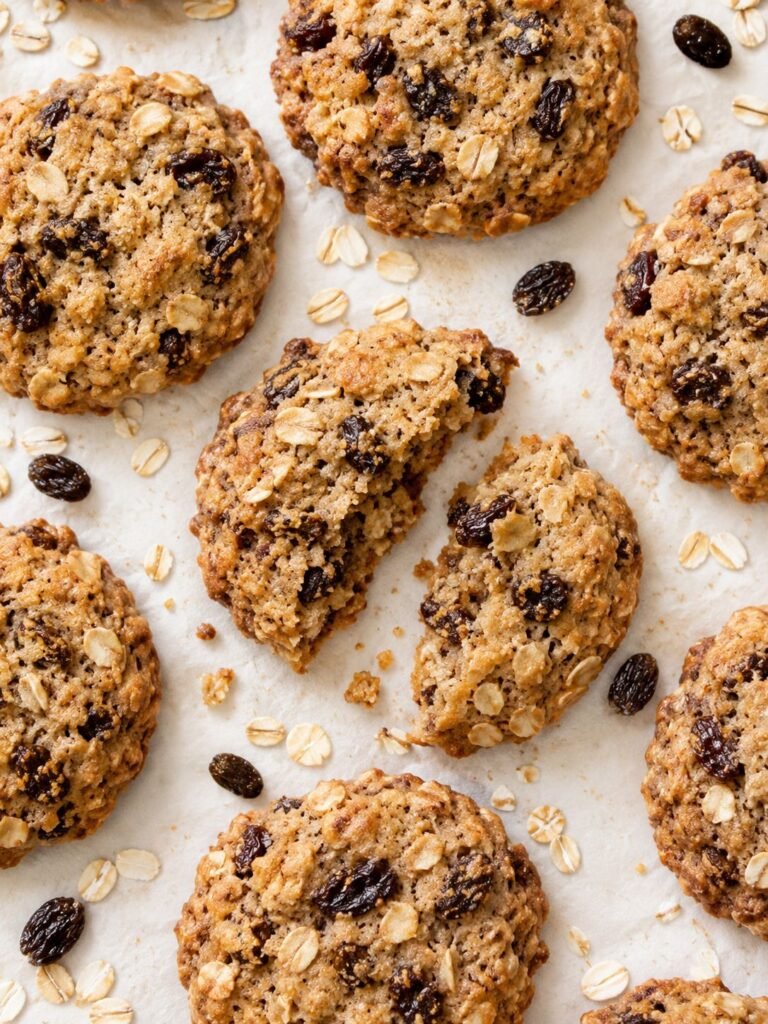
Soft in the center with just enough chew, thanks to a mix of rolled oats and a touch of extra brown sugar for moisture. Old-fashioned rolled oats hold their texture through baking far better than quick oats, which tend to dissolve into the dough and leave you with a softer, less distinct bite.
Ingredients
- 1/2 cup vegan butter, softened
- 3/4 cup brown sugar
- 1 flax egg
- 1 teaspoon vanilla extract
- 1 cup all-purpose flour
- 1/2 teaspoon baking soda
- 1/2 teaspoon cinnamon
- 1/4 teaspoon salt
- 1 1/2 cups rolled oats
- 3/4 cup raisins
How to Make It
- Cream the vegan butter and brown sugar together until fluffy.
- Mix in the flax egg and vanilla extract.
- Add the flour, baking soda, cinnamon, and salt, stirring until just combined.
- Fold in the rolled oats and raisins.
- Scoop onto a lined baking sheet and bake at 350°F for 11 to 13 minutes, until the edges are set.
Tip: soak the raisins in warm water for 10 minutes and pat them dry before folding them in. Plain, dry raisins can pull moisture out of the surrounding dough as they bake, which sometimes leaves the cookie drier right around each raisin.
Calories: approximately 160 per cookie
4. Double Chocolate Fudge Cookies
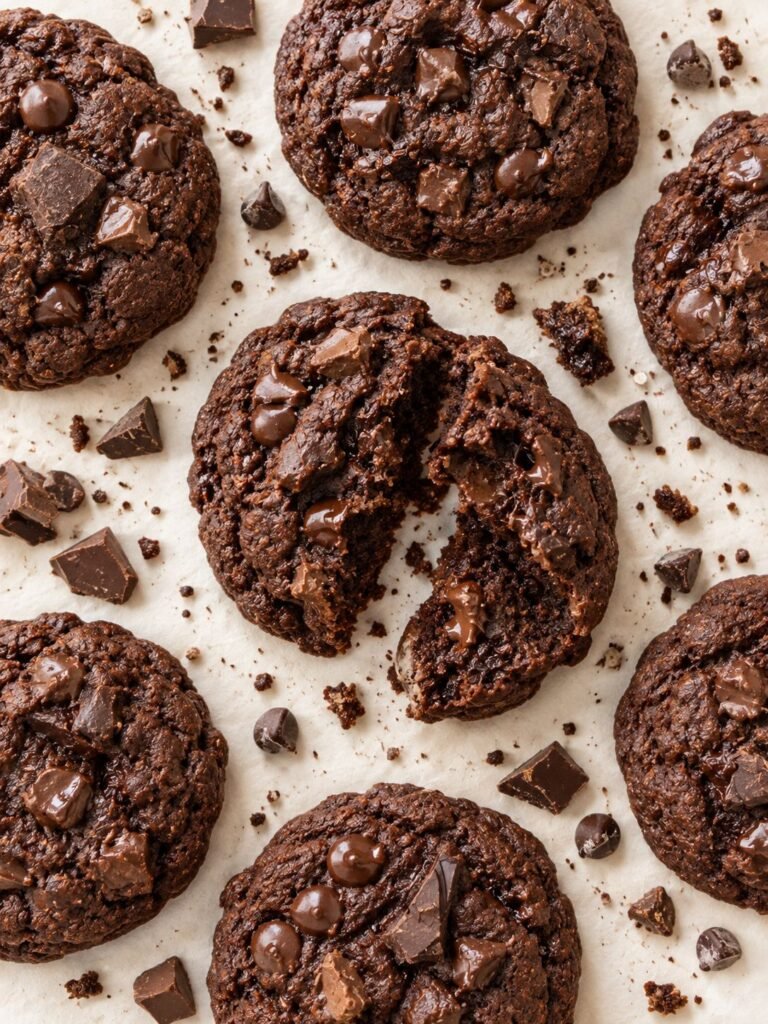
Rich, dense, and deeply chocolatey, these use both cocoa powder in the dough and chocolate chips folded through for a fudgy, brownie-like bite.
The dough comes together noticeably thicker and stiffer than a standard chocolate chip cookie dough, that’s expected, cocoa powder absorbs more moisture than an equivalent amount of flour would.
Ingredients
- 1/2 cup vegan butter, melted
- 3/4 cup brown sugar
- 1 flax egg
- 1 teaspoon vanilla extract
- 1 cup all-purpose flour
- 1/3 cup cocoa powder
- 1/2 teaspoon baking soda
- 1/4 teaspoon salt
- 3/4 cup dairy-free chocolate chips
How to Make It
- Whisk the melted vegan butter and brown sugar until smooth.
- Whisk in the flax egg and vanilla extract.
- Add the flour, cocoa powder, baking soda, and salt, stirring until just combined, the dough will be thick.
- Fold in the chocolate chips.
- Scoop onto a lined baking sheet and bake at 350°F for 9 to 11 minutes. These are meant to look slightly underbaked when they come out.
Tip: use natural, unsweetened cocoa powder rather than a Dutch-processed one unless your recipe is specifically balanced for it. Dutch-process cocoa is less acidic, which can slightly affect how well the baking soda reacts and how much the cookies rise.
Calories: approximately 170 per cookie
5. Soft Molasses Gingerbread Cookies
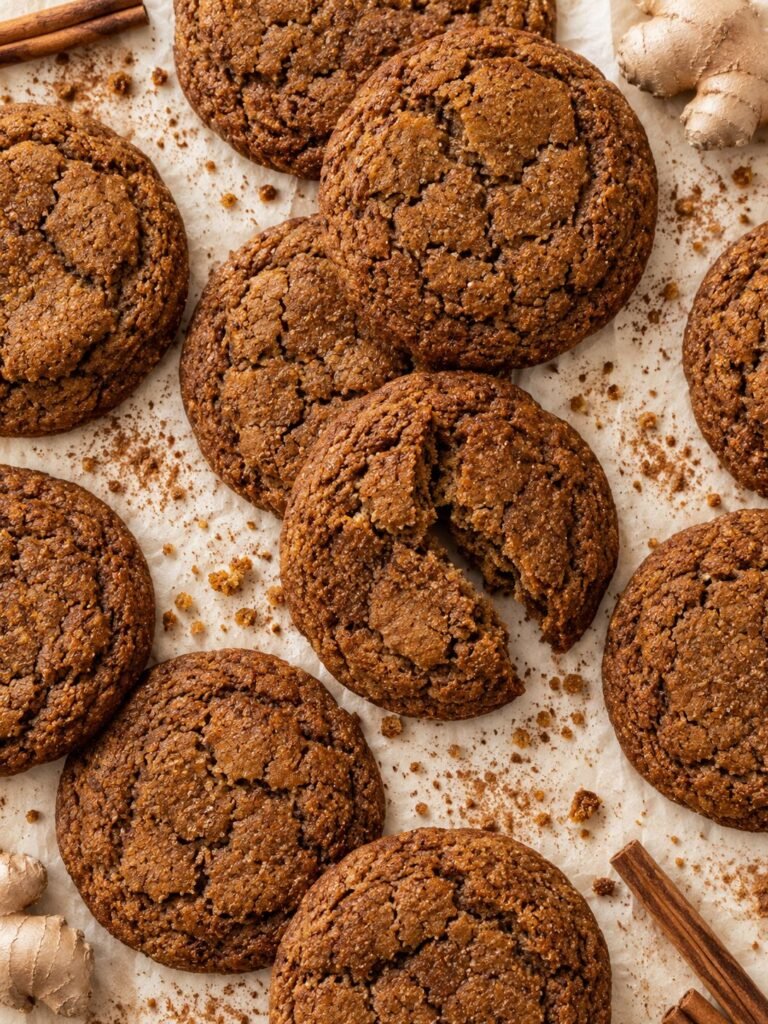
Warmly spiced with ginger, cinnamon, and cloves, molasses gives these both their deep color and a distinct, slightly bitter-sweet flavor that plain sugar can’t replicate.
Use regular unsulphured molasses rather than blackstrap here, blackstrap is significantly more bitter and intense and will throw off the balance of this particular spice blend.
Ingredients
- 1/2 cup vegan butter, softened
- 1/2 cup brown sugar
- 1/4 cup molasses
- 1 flax egg
- 2 cups all-purpose flour
- 2 teaspoons ground ginger
- 1 teaspoon cinnamon
- 1/2 teaspoon ground cloves
- 1 teaspoon baking soda
- 1/4 teaspoon salt
- Granulated sugar, for rolling
How to Make It
- Cream the vegan butter and brown sugar together, then mix in the molasses and flax egg.
- In a separate bowl, whisk together the flour, ginger, cinnamon, cloves, baking soda, and salt.
- Combine the wet and dry ingredients until a soft dough forms.
- Roll into balls and coat each in granulated sugar.
- Bake at 350°F for 10 to 12 minutes, until the tops crack slightly.
Tip: those characteristic surface cracks come from the dough expanding faster than the sugar coating can stretch. If your cookies aren’t cracking, the dough may be slightly too warm and spreading before it has a chance to set, chilling it for 15 minutes first usually brings the cracks back.
Calories: approximately 140 per cookie
6. Jam Thumbprint Cookies

A buttery, shortbread-style base with a thumbprint pressed into the center and filled with jam, similar in spirit to my vegan jam tartlets, just in cookie form. A thicker, higher-pectin jam holds its shape in the well much better than a thin, syrupy one, which can bubble over the edges during baking.
Ingredients
- 1/2 cup vegan butter, softened
- 1/3 cup granulated sugar
- 1 teaspoon vanilla extract
- 1 1/4 cups all-purpose flour
- 1/4 teaspoon salt
- 1/3 cup jam of choice
How to Make It
- Cream the vegan butter and granulated sugar together until light and fluffy.
- Mix in the vanilla extract.
- Add the flour and salt, stirring until a soft dough forms.
- Roll into balls, place on a lined baking sheet, and press a thumbprint into the center of each.
- Fill each indent with about 1/2 teaspoon of jam and bake at 350°F for 12 to 14 minutes, until the edges are lightly golden.
Tip: press the thumbprint indent again lightly right after the cookies come out of the oven, since the dough tends to puff back up slightly during baking and can shallow out the well you pressed before baking.
Calories: approximately 120 per cookie
7. Vegan Snickerdoodles

Soft, slightly tangy from a bit of cream of tartar, and rolled in a cinnamon-sugar coating for that classic crackled top.
Cream of tartar is doing more here than just adding tang, it also reacts with the baking soda to help the cookies rise and gives them their characteristically soft, slightly chewy crumb, so it’s worth seeking out rather than skipping if a store is out.
Ingredients
- 1/2 cup vegan butter, softened
- 3/4 cup granulated sugar
- 1 flax egg
- 1 teaspoon vanilla extract
- 1 1/2 cups all-purpose flour
- 1 teaspoon cream of tartar
- 1/2 teaspoon baking soda
- 1/4 teaspoon salt
- 2 tablespoons granulated sugar mixed with 1 teaspoon cinnamon, for rolling
How to Make It
- Cream the vegan butter and sugar together until fluffy.
- Mix in the flax egg and vanilla extract.
- Add the flour, cream of tartar, baking soda, and salt, stirring until combined.
- Roll into balls and coat each in the cinnamon-sugar mixture.
- Bake at 350°F for 9 to 10 minutes, until the edges are set but the centers still look soft.
Tip: roll the dough balls in the cinnamon sugar right before they go in the oven, not too far ahead of time, sugar coating that sits too long can start to dissolve into the dough’s surface moisture and lose its crackled texture.
Calories: approximately 135 per cookie
8. No-Bake Chocolate Oat Cookies
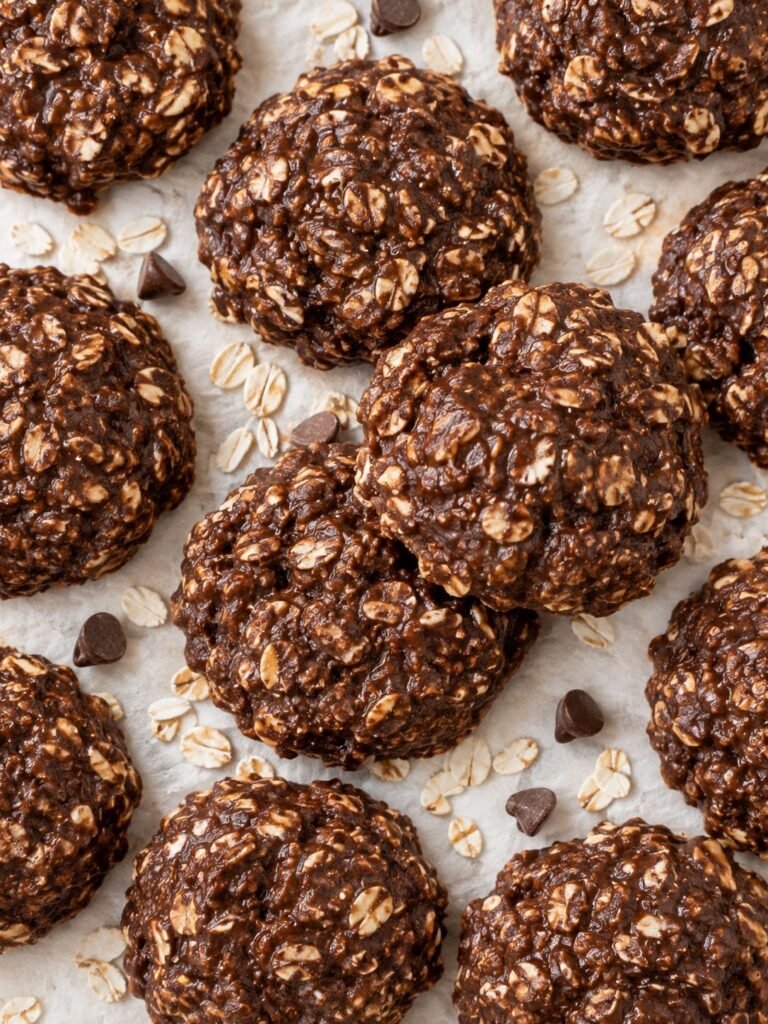
No oven required, these set up on the counter using a quick stovetop chocolate mixture poured over oats. Getting the boil time right is the single most important part of this recipe, it’s what determines whether the cookies set into a firm, fudgy texture or stay too soft and never fully firm up.
Ingredients
- 1/2 cup vegan butter
- 2 cups granulated sugar
- 1/2 cup plant milk
- 1/4 cup cocoa powder
- 1/2 cup peanut butter
- 1 teaspoon vanilla extract
- 3 cups rolled oats
How to Make It
- Combine the vegan butter, sugar, plant milk, and cocoa powder in a saucepan over medium heat.
- Bring to a boil and let it boil for exactly 1 minute, stirring constantly.
- Remove from heat and stir in the peanut butter and vanilla extract until smooth.
- Fold in the rolled oats until fully coated.
- Drop spoonfuls onto parchment paper and let set at room temperature for about 30 minutes, until firm.
Tip: use an actual timer for that 1-minute boil rather than guessing. Under-boiling is the most common reason these cookies stay too soft and never fully set, even after resting for hours.
Calories: approximately 180 per cookie
9. Vegan Shortbread Cookies
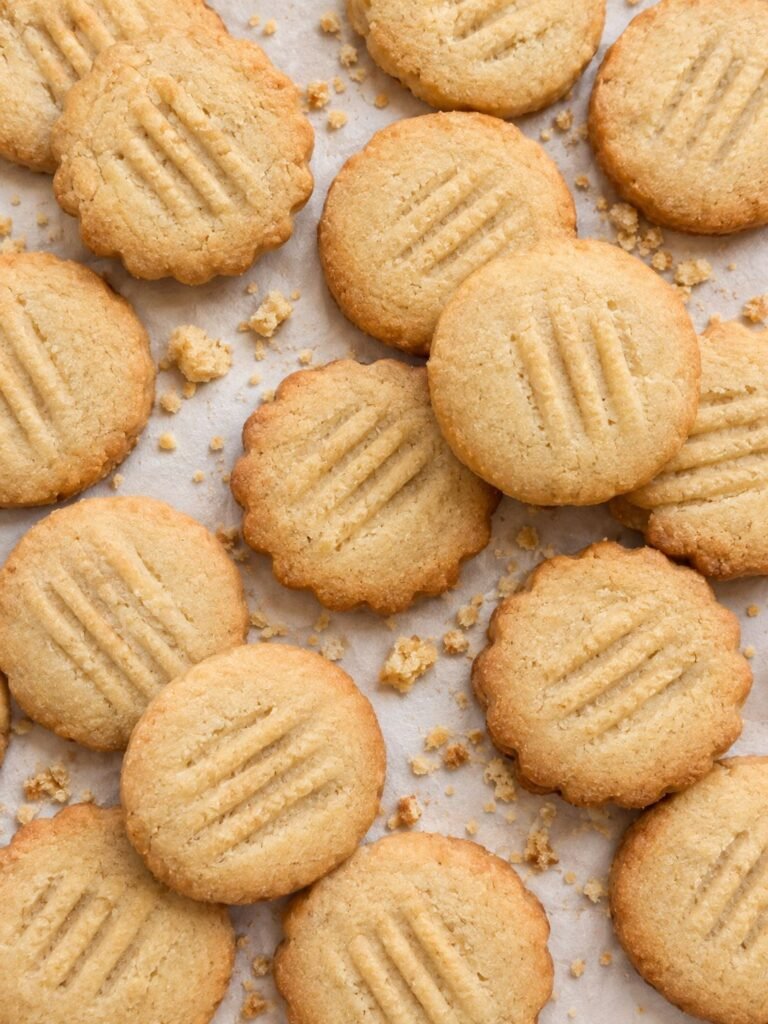
Simple, buttery, and only lightly sweetened, these rely entirely on good vegan butter for flavor, since there’s nowhere else for it to hide in such a short ingredient list.
With no eggs, leaveners, or strong flavors to mask an off ingredient, this is the recipe in this roundup where using a stick-style vegan butter specifically, rather than a tub spread, makes the most noticeable difference.
Ingredients
- 1 cup vegan butter, softened
- 1/2 cup powdered sugar
- 2 cups all-purpose flour
- 1/4 teaspoon salt
How to Make It
- Cream the vegan butter and powdered sugar together until smooth.
- Add the flour and salt, mixing until a soft dough forms.
- Roll the dough out to about 1/2 inch thick and cut into shapes, or slice into a log and cut into rounds.
- Place on a lined baking sheet and prick each cookie a few times with a fork.
- Bake at 325°F for 15 to 18 minutes, until very lightly golden at the edges.
Tip: the low, slow bake temperature here is intentional, shortbread is meant to set and dry out gently rather than brown quickly. Baking it hotter and faster gives you a cookie that’s colored on the outside but still soft and underbaked in the center.
Calories: approximately 140 per cookie
10. Pumpkin Spice Cookies
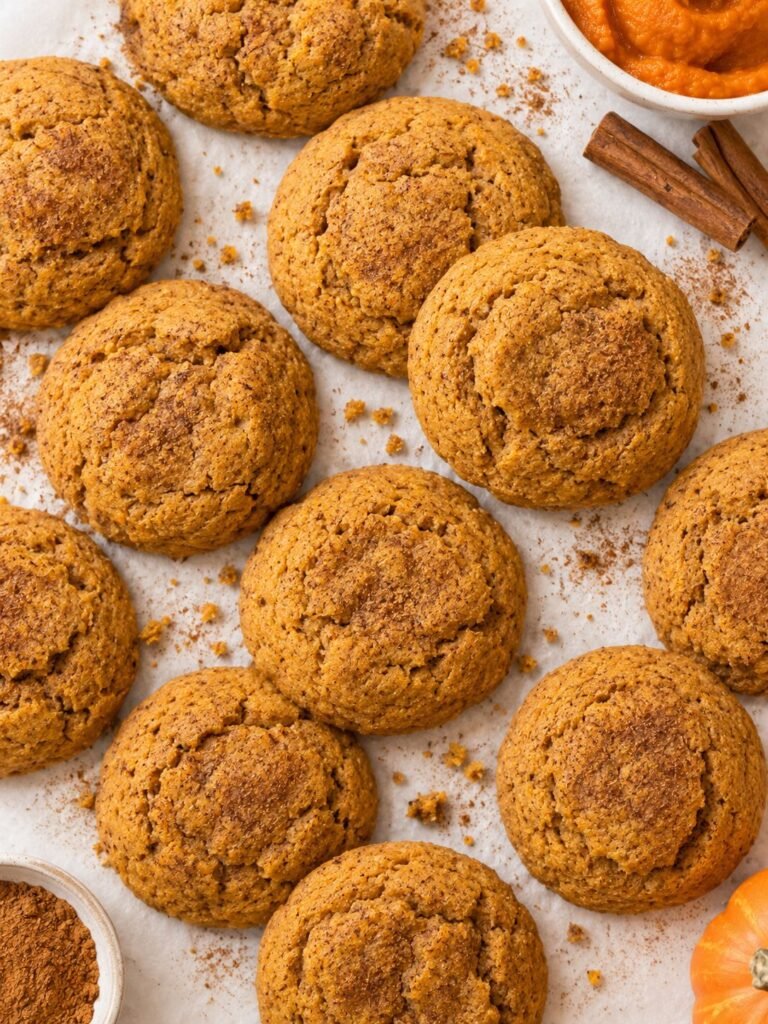
Soft and cake-like thanks to the moisture from pumpkin puree, spiced with the classic cinnamon, nutmeg, and ginger combination.
Make sure you’re using plain pumpkin puree and not pumpkin pie filling, which already contains added sugar and spices that will throw off the recipe’s balance.
Ingredients
- 1/2 cup vegan butter, softened
- 1 cup brown sugar
- 1/2 cup pumpkin puree
- 1 teaspoon vanilla extract
- 1 3/4 cups all-purpose flour
- 1 teaspoon baking powder
- 1/2 teaspoon baking soda
- 1 1/2 teaspoons pumpkin pie spice
- 1/4 teaspoon salt
How to Make It
- Cream the vegan butter and brown sugar together until fluffy.
- Mix in the pumpkin puree and vanilla extract, note the mixture may look slightly curdled, that’s normal.
- Add the flour, baking powder, baking soda, pumpkin pie spice, and salt, stirring until combined.
- Scoop onto a lined baking sheet.
- Bake at 350°F for 11 to 13 minutes, until the edges are set and the tops spring back lightly when touched.
Tip: if your pumpkin puree seems especially watery, straining it through a paper towel for a few minutes before measuring helps prevent the extra moisture from making these too cakey and dense.
Calories: approximately 145 per cookie
11. Tahini Chocolate Chunk Cookies
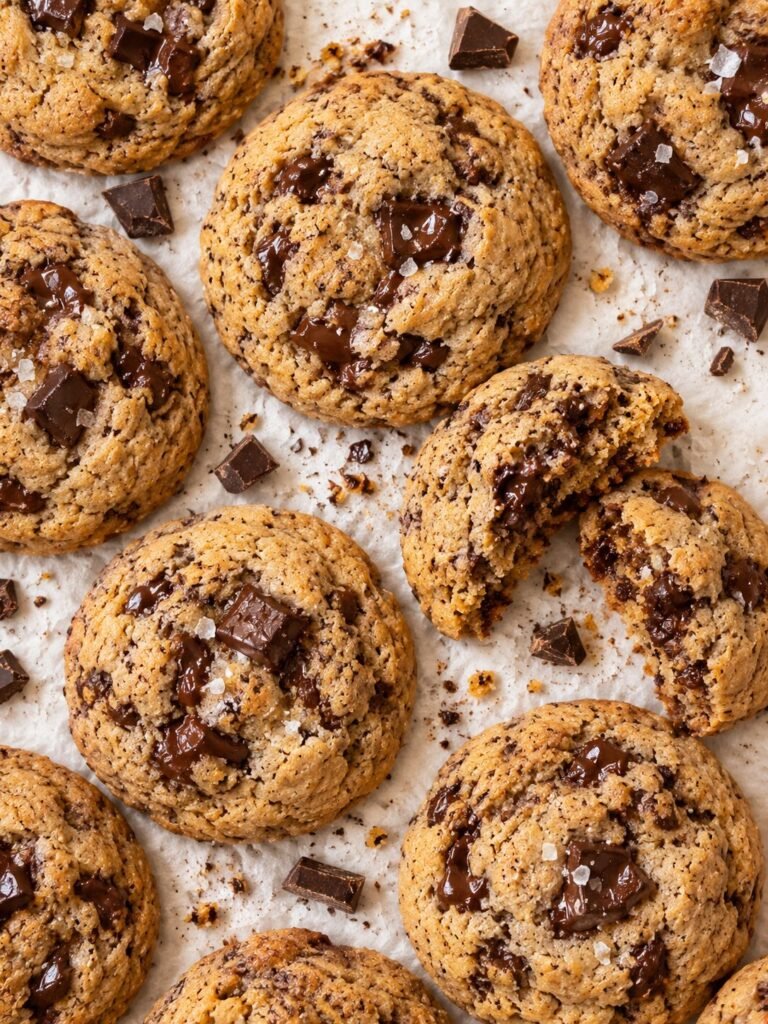
Tahini brings a subtle, nutty, slightly savory depth that pairs surprisingly well with dark chocolate, giving these a more grown-up flavor than a standard chocolate chip cookie.
Stir your tahini jar thoroughly before measuring, since the oil separates and settles at the top just like natural peanut butter, and an unstirred scoop will throw off both the texture and flavor balance.
Ingredients
- 1/2 cup tahini
- 1/4 cup vegan butter, softened
- 3/4 cup brown sugar
- 1 flax egg
- 1 teaspoon vanilla extract
- 1 1/4 cups all-purpose flour
- 1/2 teaspoon baking soda
- 1/4 teaspoon salt
- 3/4 cup chopped dark chocolate
- Flaky salt, for topping
How to Make It
- Mix the tahini and vegan butter together until smooth, then beat in the brown sugar.
- Mix in the flax egg and vanilla extract.
- Add the flour, baking soda, and salt, stirring until just combined.
- Fold in the chopped dark chocolate.
- Scoop onto a lined baking sheet, sprinkle with flaky salt, and bake at 350°F for 10 to 12 minutes.
Tip: chopped chocolate bar, rather than chocolate chips, gives you those uneven pools of melted chocolate throughout the cookie, which pair especially well with the flaky salt on top here.
Calories: approximately 165 per cookie
12. Coconut Macaroons

Naturally gluten-free and made with just a handful of ingredients, these get their structure from aquafaba instead of egg whites, whipped until foamy before folding in the coconut.
The aquafaba needs to actually hold soft peaks before you fold in the coconut, under-whipping it is the most common reason these spread flat instead of holding their mounded shape in the oven.
Ingredients
- 3 tablespoons aquafaba
- 1/4 teaspoon cream of tartar
- 1/3 cup granulated sugar
- 3 cups shredded coconut
- 1 teaspoon vanilla extract
- 1/4 teaspoon salt
- Dairy-free chocolate, melted, for dipping, optional
How to Make It
- Whip the aquafaba and cream of tartar together until foamy and slightly thickened.
- Gradually beat in the granulated sugar until the mixture holds soft peaks.
- Fold in the shredded coconut, vanilla extract, and salt.
- Scoop into small mounds on a lined baking sheet.
- Bake at 325°F for 20 to 25 minutes, until golden at the tips. Dip the bases in melted chocolate once cooled, if desired.
Tip: use unsweetened shredded coconut rather than sweetened flaked coconut, sweetened coconut has a much higher moisture content and will leave these noticeably softer and less structured.
Calories: approximately 110 per cookie
Tips for the Best Vegan Cookies
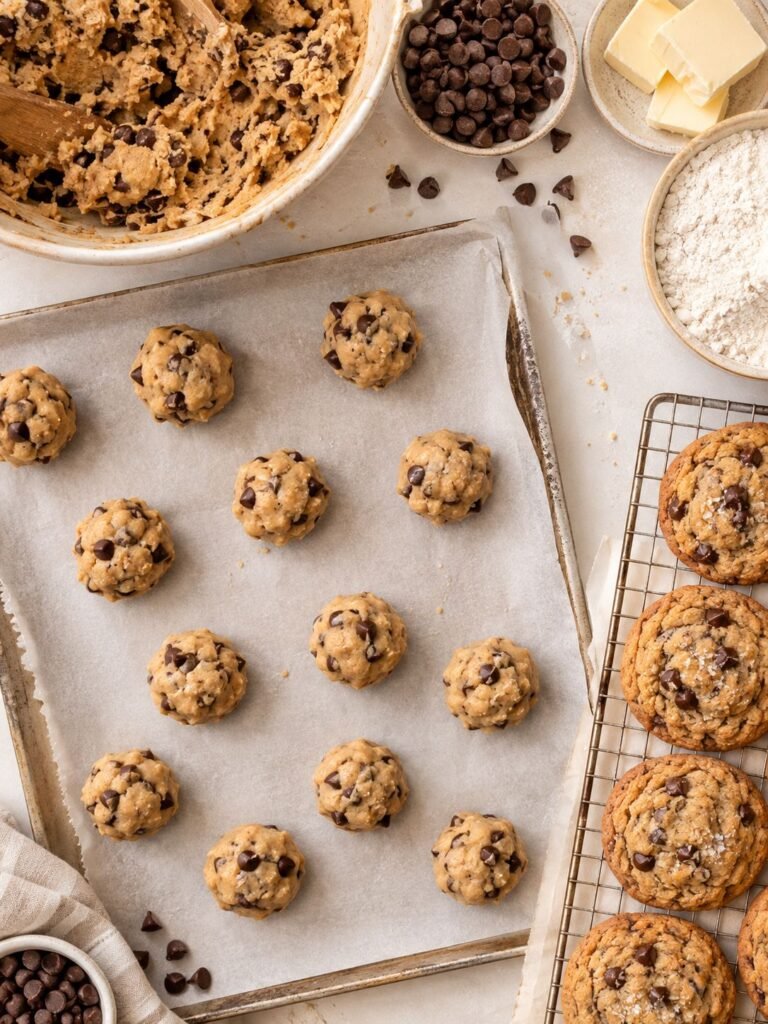
Don’t skip chilling the dough if a recipe calls for it. Some of these, especially the shortbread and thumbprint cookies, hold their shape much better after 20 to 30 minutes in the fridge before baking.
Use room-temperature vegan butter when creaming, not melted, unless specified. Melted butter changes how much a cookie spreads, so swapping the state called for in a recipe can throw off the texture.
Slightly underbake rather than overbake. Most cookies continue cooking on the hot pan for a couple of minutes after coming out of the oven, pulling them a touch early keeps the centers soft.
Let cookies cool on the pan before moving them. Many vegan cookie doughs are a bit more delicate straight out of the oven, since they don’t have egg proteins helping them set as firmly, and can break if moved too soon.
Common Mistakes in Vegan Cookie Baking
Using melted butter when a recipe calls for softened. This single swap is responsible for more flat, greasy cookies than almost anything else on this list. Softened butter still holds some structure, while melted butter behaves like an added liquid.
Substituting a flax egg 1:1 for aquafaba, or the reverse, without adjusting. They aren’t perfectly interchangeable, a flax egg adds more moisture and a denser texture, while aquafaba whips up lighter and airier. Swapping one for the other in a recipe built around the other’s properties can throw off the final texture.
Overmixing once the flour goes in. This develops gluten and makes cookies tougher and more cake-like than intended. Mix just until the flour disappears and stop.
Not measuring flour correctly. Scooping directly from the bag packs in extra flour and leads to dry, crumbly cookies. Spoon flour into your measuring cup and level it off instead.
Troubleshooting Vegan Cookies
My cookies came out cakey instead of chewy. This usually points to too much flour, either from measuring, overmixing, or a butter substitute with too little fat. Double-check your measuring method first.
My cookies spread into one giant sheet. The butter was likely too warm, or the dough wasn’t chilled when a recipe called for it. Popping the dough in the fridge for 20 to 30 minutes before baking almost always fixes this.
My cookies fell apart when I tried to move them. This is common with vegan cookies fresh out of the oven, since they lack the egg proteins that help conventional cookies set quickly. Give them the full cooling time on the pan before transferring.
My chocolate seized or turned grainy. This happens if a drop of water gets into melting chocolate, or if it’s overheated. Melt in short bursts and keep your bowl and utensils completely dry.
Scaling These Recipes
Every recipe in this roundup doubles cleanly, just double each ingredient and bake in batches rather than crowding multiple trays into the oven at once, which leads to uneven baking.
For a smaller batch, most of these can be halved as well, the trickiest ingredient to halve is usually the egg substitute, half a flax egg, about 1/2 tablespoon ground flaxseed and 1 1/2 tablespoons water, still works fine.
Dietary Adaptations
Gluten-free: a 1:1 gluten-free baking blend with xanthan gum works in most of these recipes. Chill the dough for 20 to 30 minutes before baking, since gluten-free doughs tend to spread more than wheat-based ones.
Nut-free: skip the tahini and peanut butter cookies, or swap in sunflower seed butter, and double-check that your dairy-free chocolate is processed in a nut-free facility if that’s a concern.
Oil-free: trickier here, since butter is doing real structural work in most of these. Applesauce can replace some of the butter in the softer, cake-like cookies, like the pumpkin spice or gingerbread, though texture and spread will change noticeably.
How to Store and Freeze These Cookies
Most of these keep well in an airtight container at room temperature for up to 5 days, with the exception of the no-bake cookies and macaroons, which do better stored in the fridge given their softer, less structured texture.
For longer storage, unbaked dough freezes well for the chocolate chip, peanut butter, oatmeal raisin, gingerbread, snickerdoodle, tahini, and pumpkin spice cookies, scoop into balls, freeze on a tray until solid, then transfer to a freezer bag for up to 3 months. Bake straight from frozen, adding an extra minute or two to the bake time.
Baked cookies also freeze well across the board, layer with parchment paper in an airtight container for up to 2 months, and thaw at room temperature before serving.
Frequently Asked Questions
Can I use a different egg substitute than what’s listed? In most cases, yes. Flax egg and aquafaba are largely interchangeable in these recipes, though aquafaba works better in lighter, more delicate cookies like the macaroons, and flax egg holds up better in denser, spiced cookies.
Why did my cookies spread more than expected? This is usually a butter temperature issue, if the vegan butter was too warm or melted when a recipe called for softened, the dough will spread more in the oven. Chilling the dough for 20 minutes before baking usually fixes this.
Is all dark chocolate automatically vegan? No, some dark chocolate bars still contain milk fat or are processed on equipment shared with dairy. Always check the label if this matters to you.
Can I make these gluten-free? Most of these can be adapted with a 1:1 gluten-free flour blend, though the macaroons are already naturally gluten-free as written.
Are the calorie counts exact? They’re estimates based on standard ingredient values and typical cookie sizes. Actual calories will vary depending on the specific brands you use.
More Recipes
Final Thoughts
None of these cookies ask you to compromise on flavor or texture to make them vegan, the substitutes here are doing real work, not just filling a gap.
Start with whichever one matches what you’re craving right now, and the rest are worth working through over time.
If you try one, I’d love to know which became your favorite.